A new device.
A familiar ritual.
A charcoal-free product. A culture built around gathering. I give the change a creative world people can understand and connect with.
Explore OOKA ↗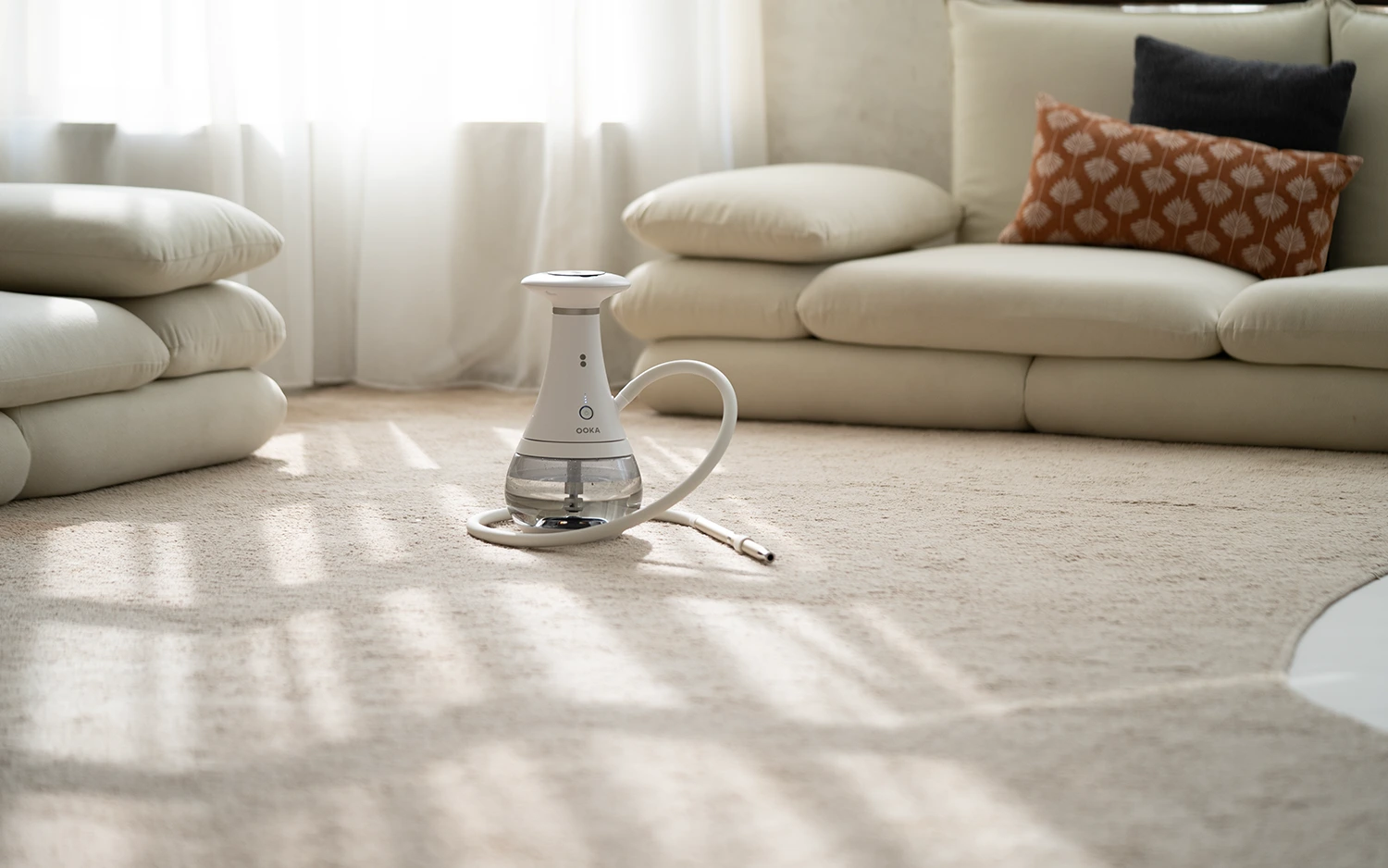
Art, ideas & things that grow.
Then direct the work that makes it visible.
Concept. Art direction. Brand worlds. Campaigns.
Based in Dubai. Working across cultures.
A charcoal-free product. A culture built around gathering. I give the change a creative world people can understand and connect with.
Explore OOKA ↗Millions of products. A brand people could recognise. I led creative teams across five countries, making work for the UAE, Saudi Arabia and Egypt.
Explore noon ↗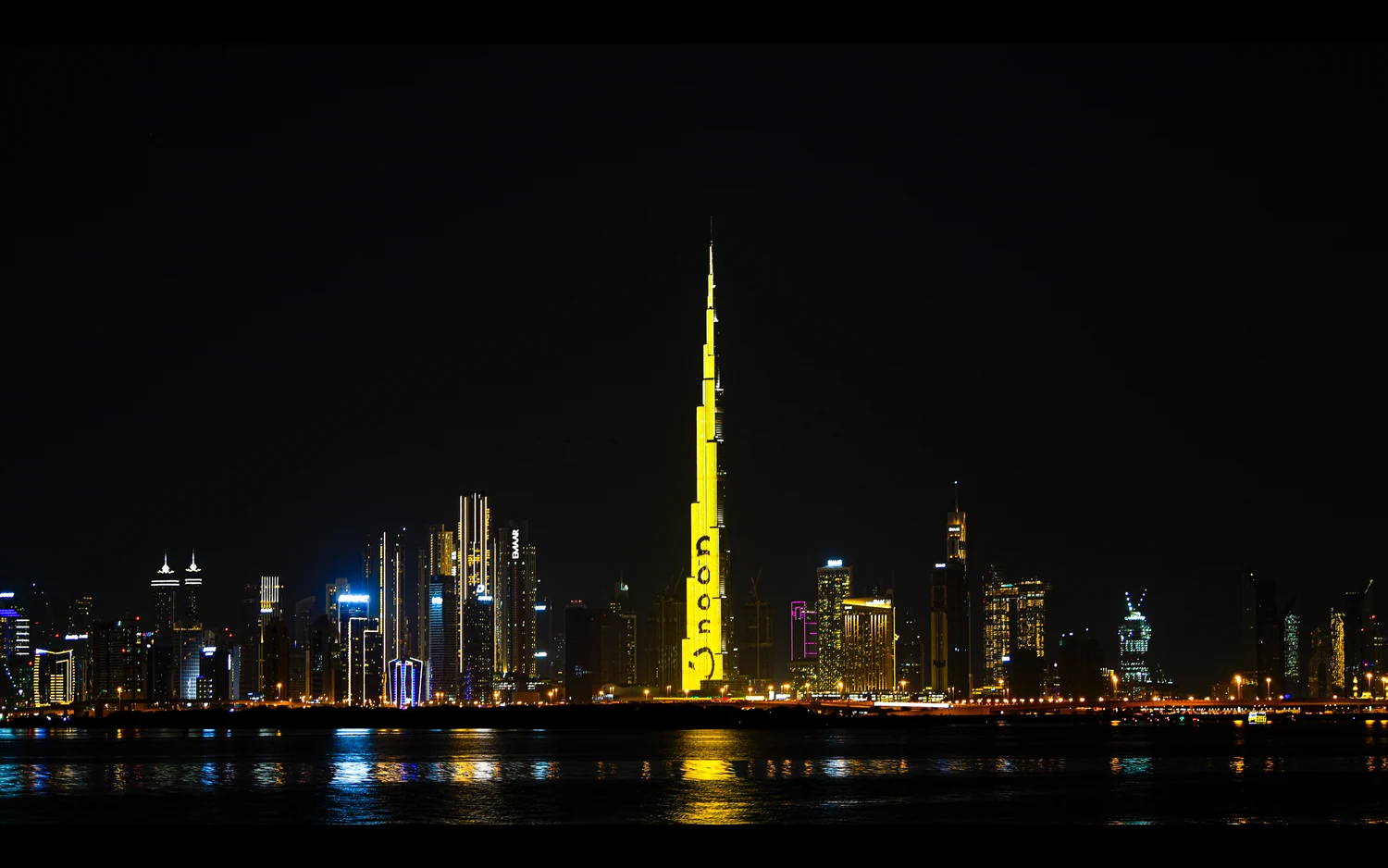
My music. Records. Drawings. Words. Places. Things I make and things I notice. They all find their way into the work.
Explore the practice ↗
Small things.
Used every day.
Records, books, cuttings and the things that come home in your pockets. Six objects drawn from the way I live and work.
I’m interested in what happens when an illustration becomes something you can hold. When a material gives an idea its weight. When a useful object has a little humour.
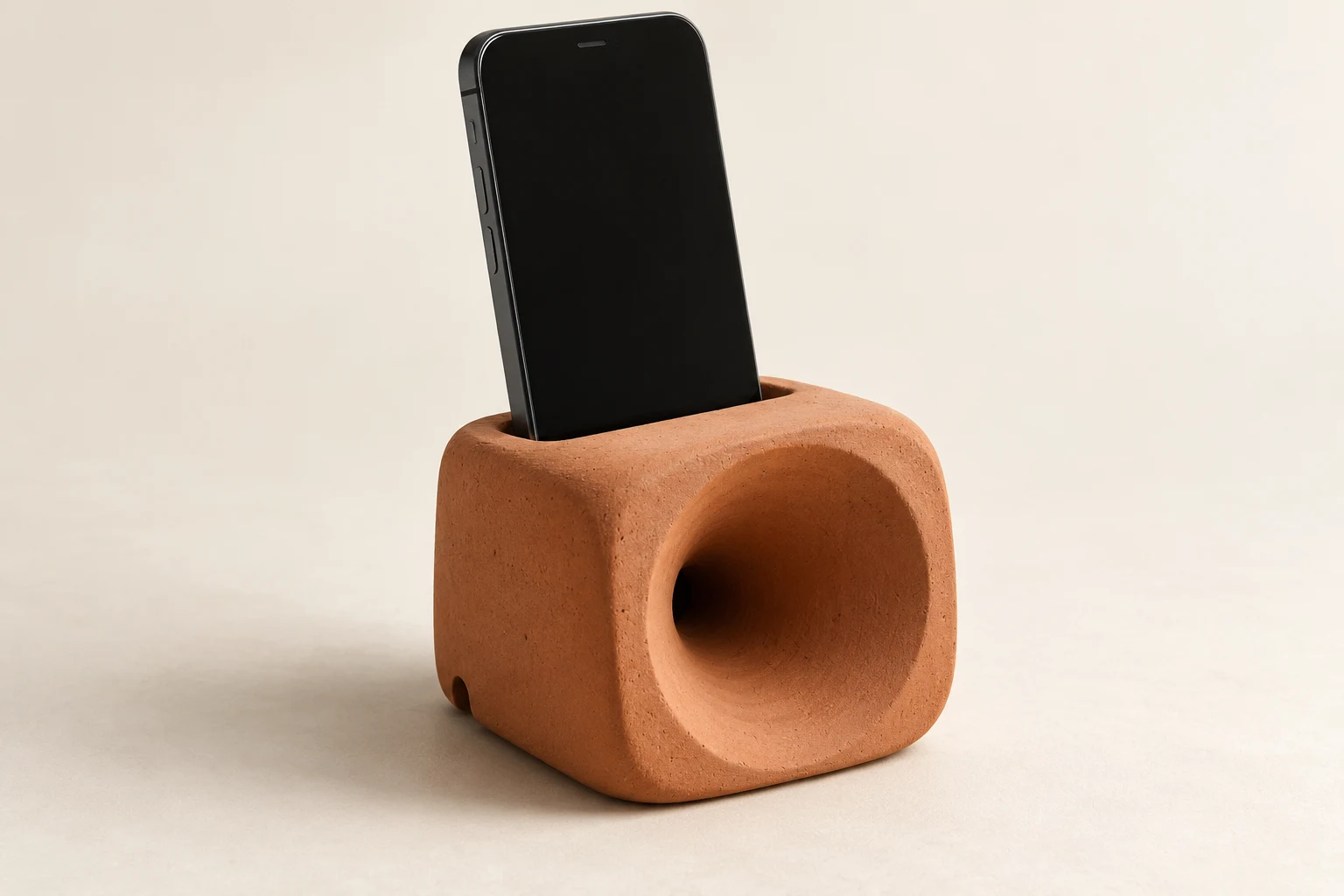
Sound, shaped in clay.
A small terracotta chamber that gives your phone somewhere to sit and its sound somewhere to travel. The flared opening explores passive amplification through form. No extra speaker to switch on.
Watch something begin.
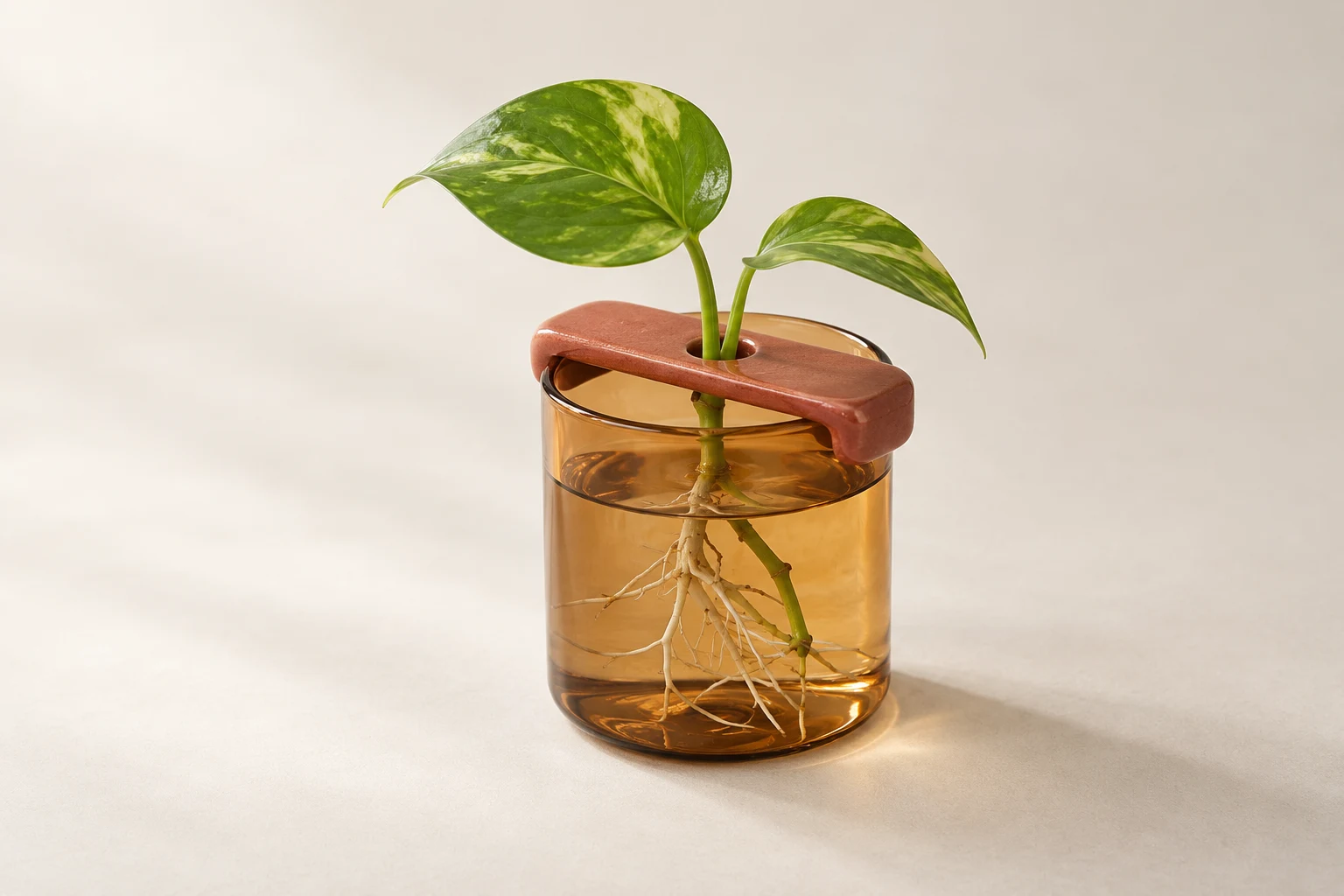
An amber glass vessel and a ceramic bridge. A cutting rests above the water while its roots become visible below. A small object for the patient part of growing.
It might become something.
A receipt. A seed. A guitar pick. A pocket tin with removable compartments for the things you bring home without quite knowing why. Inside the lid: “Usually while looking for something else.”
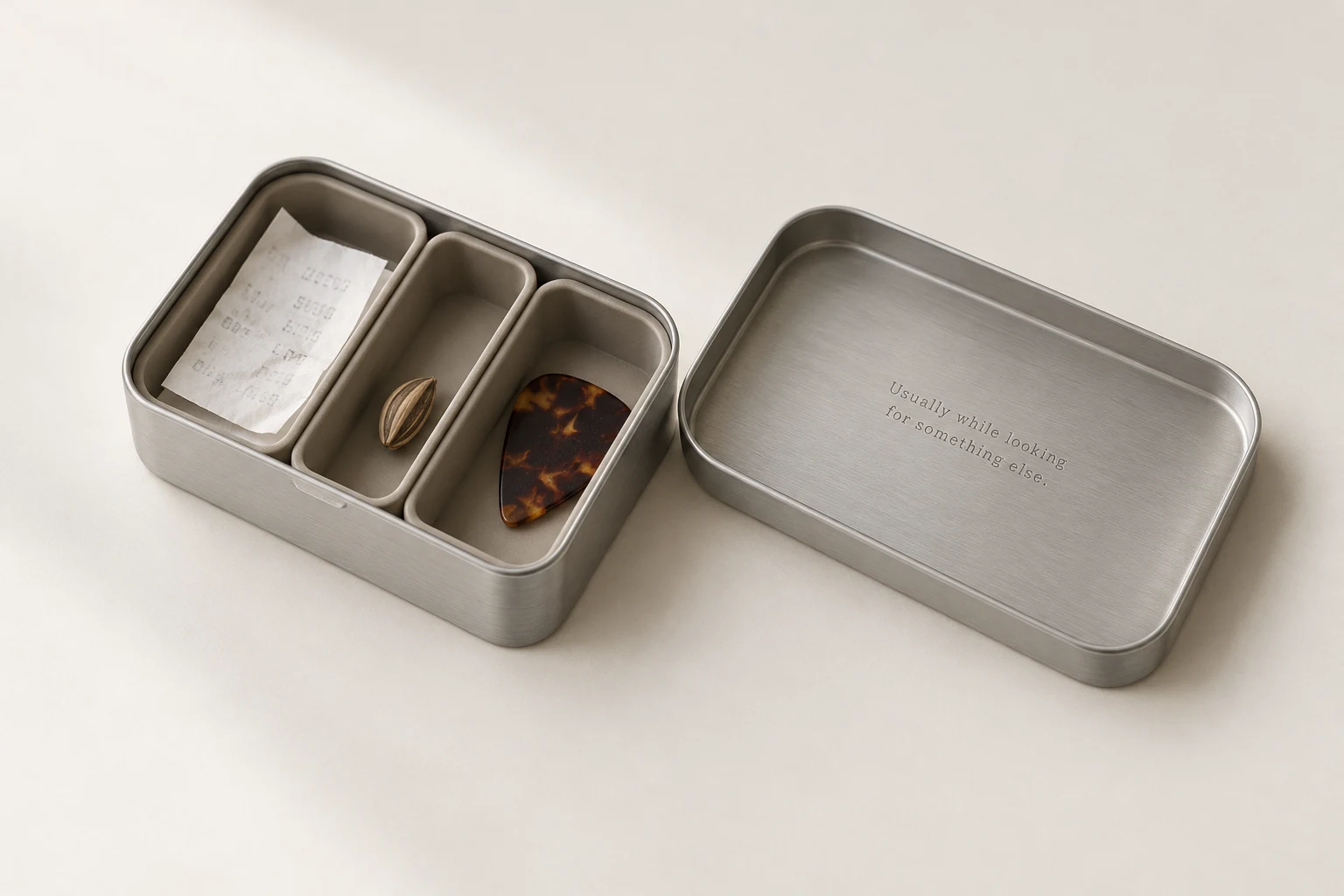
A place for what you return to.
A folded aluminium stand conceived around two familiar companions: records and books. One orientation presents the sleeve; the other supports an open spread. A study in making one piece of material do a little more.
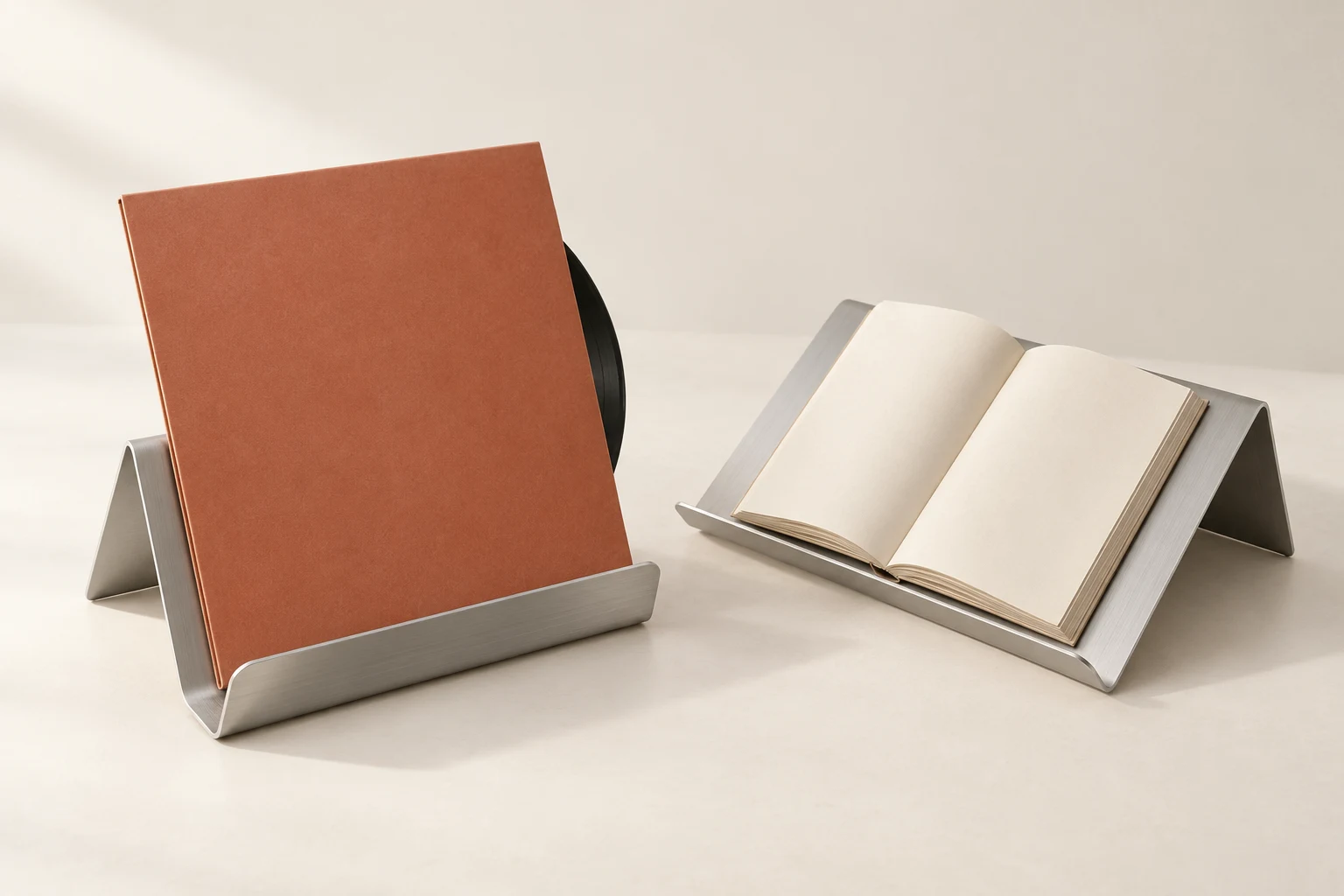
Keep your place. Free your hands.
Two rounded metal weights joined by a flexible leather strap hold a book open while you draw, cook or play. Lift it and a small botanical engraving appears underneath. A quiet detail for the person using it.
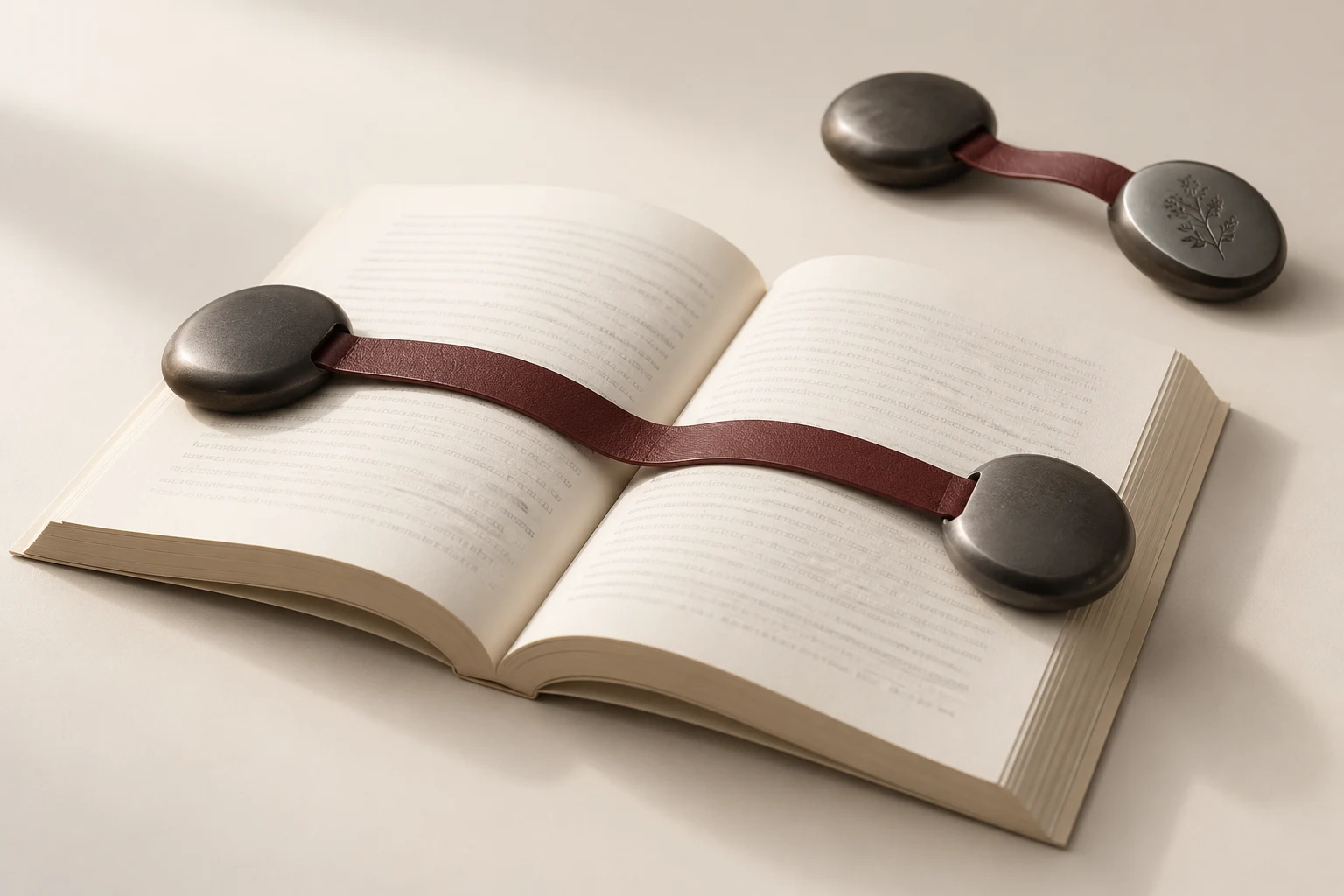
A little company at the desk.
A Chilean marine otter, reduced to a few generous shapes. Its weight holds things down; a groove carries a pencil and a narrow slot keeps a postcard upright. An everyday tool with a creature’s presence.
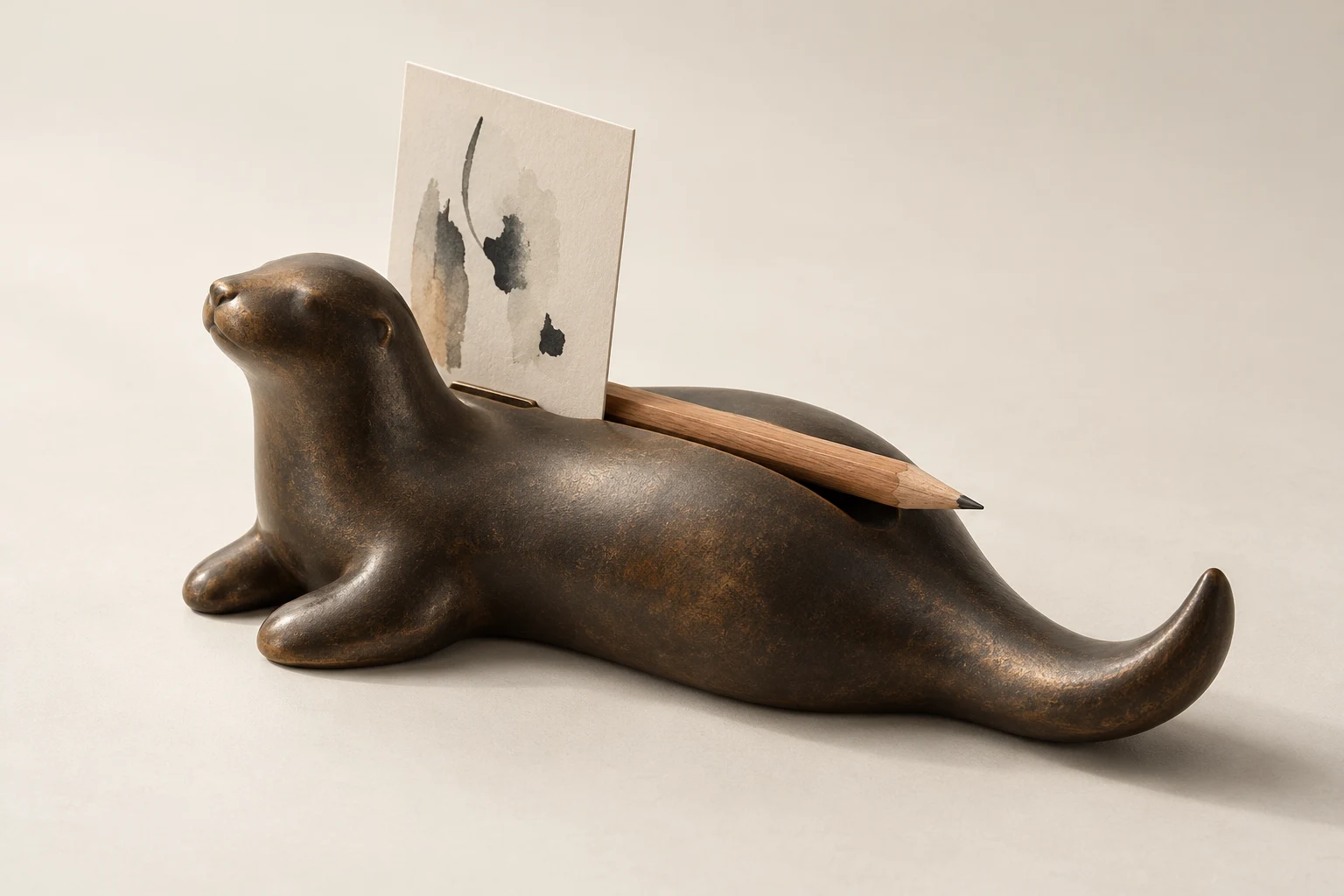
Concepts and art direction / Vicente David Gutiérrez · Byvice
Back to PracticeOne of my most lavish pastimes is writing in all manner of forms — poem, prose, anthology, lyric, rhetoric, quote, typescript. I’m not brilliant but I am prolific. All I need is a sheet of paper and something to write with and then I dance with words.
It’s so important to just write things down. We are so bombarded with information that forgetting something brilliant is an all too common occurrence.
Images, memory and being human in the age of representation.
I make images for a living. This is where I ask what they do after we make them.
Read Battery →A conversation with Vicente. Creativity, God and the ugly.
The power of hearing goes beyond the eye.
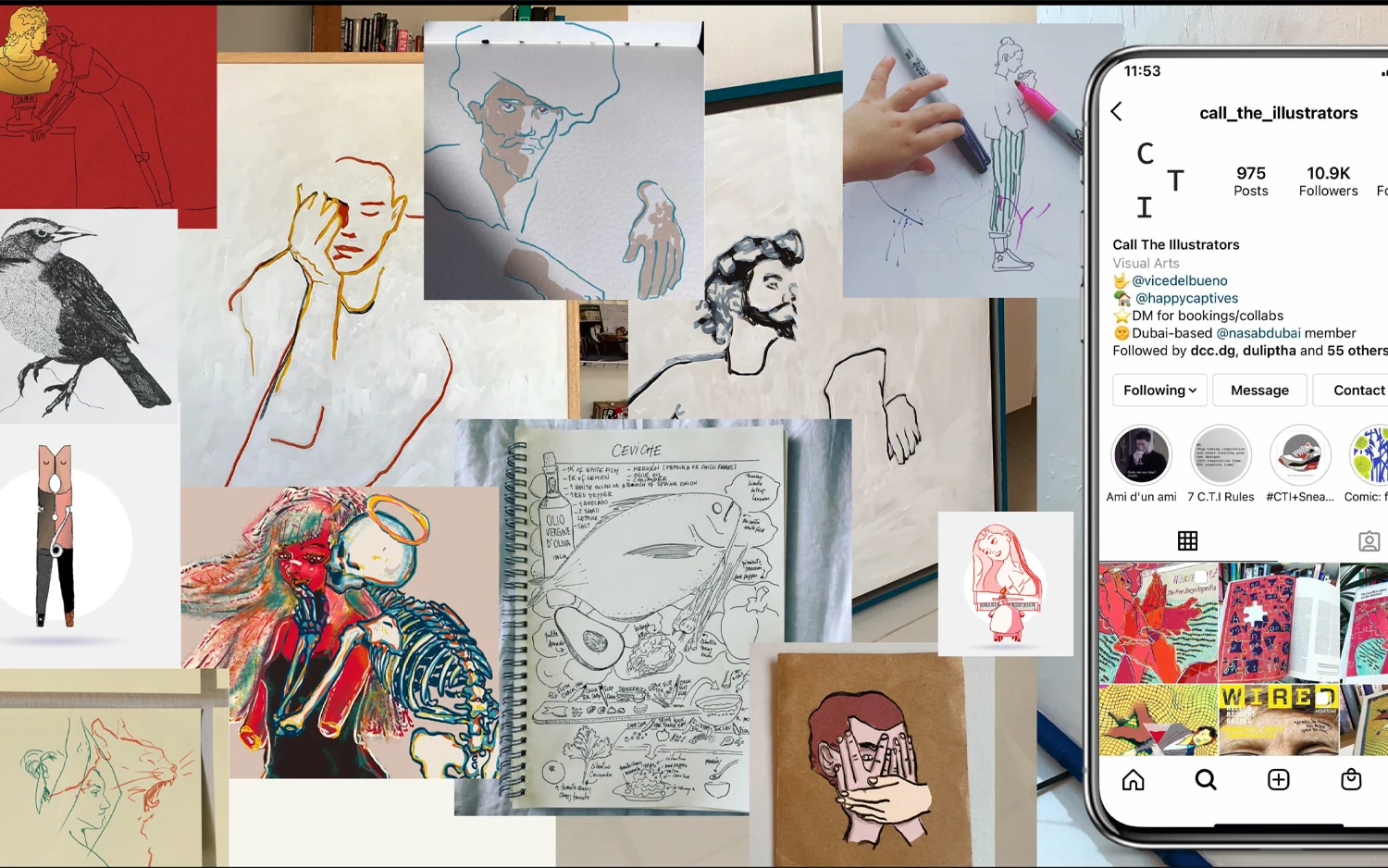
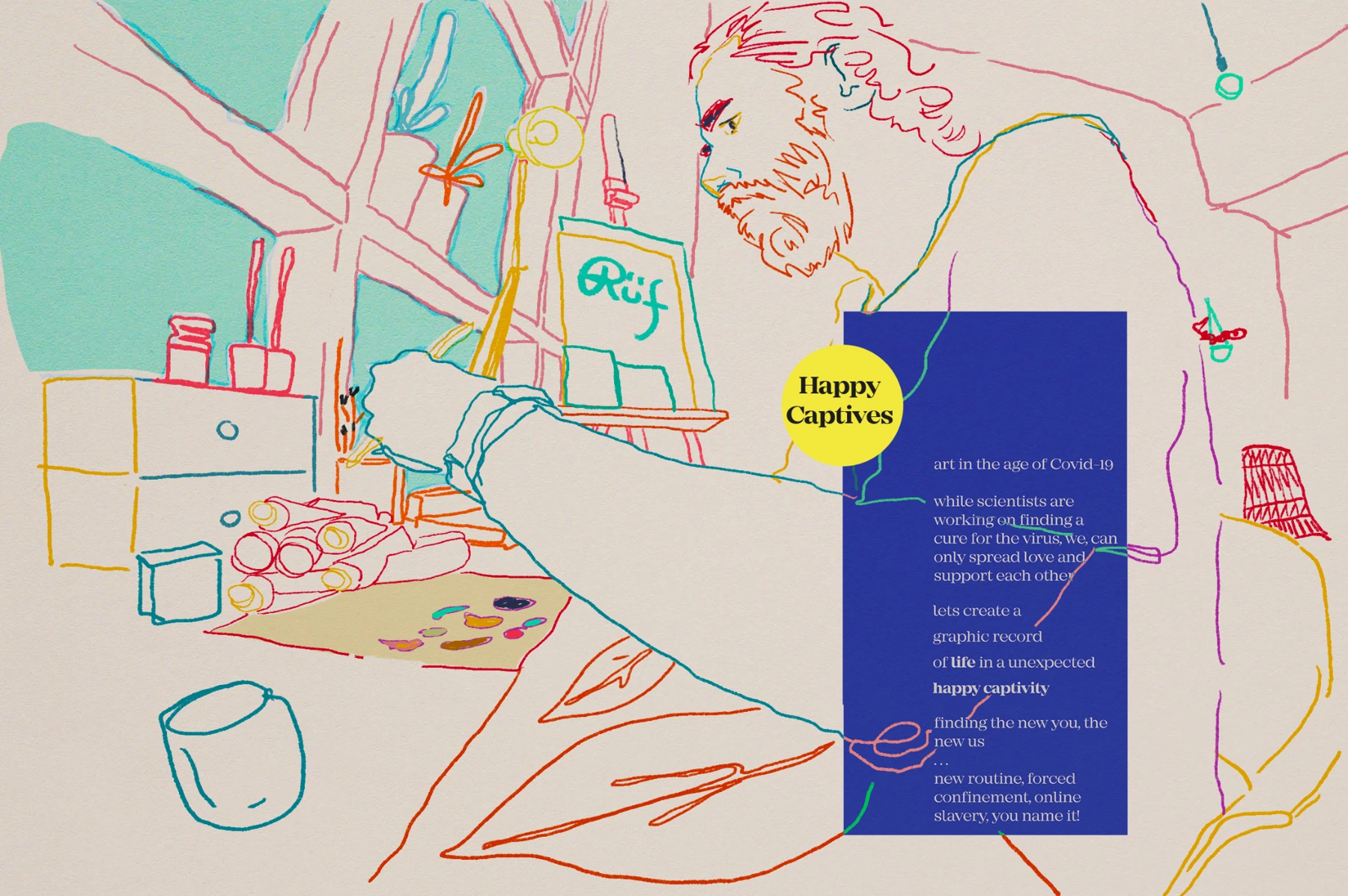
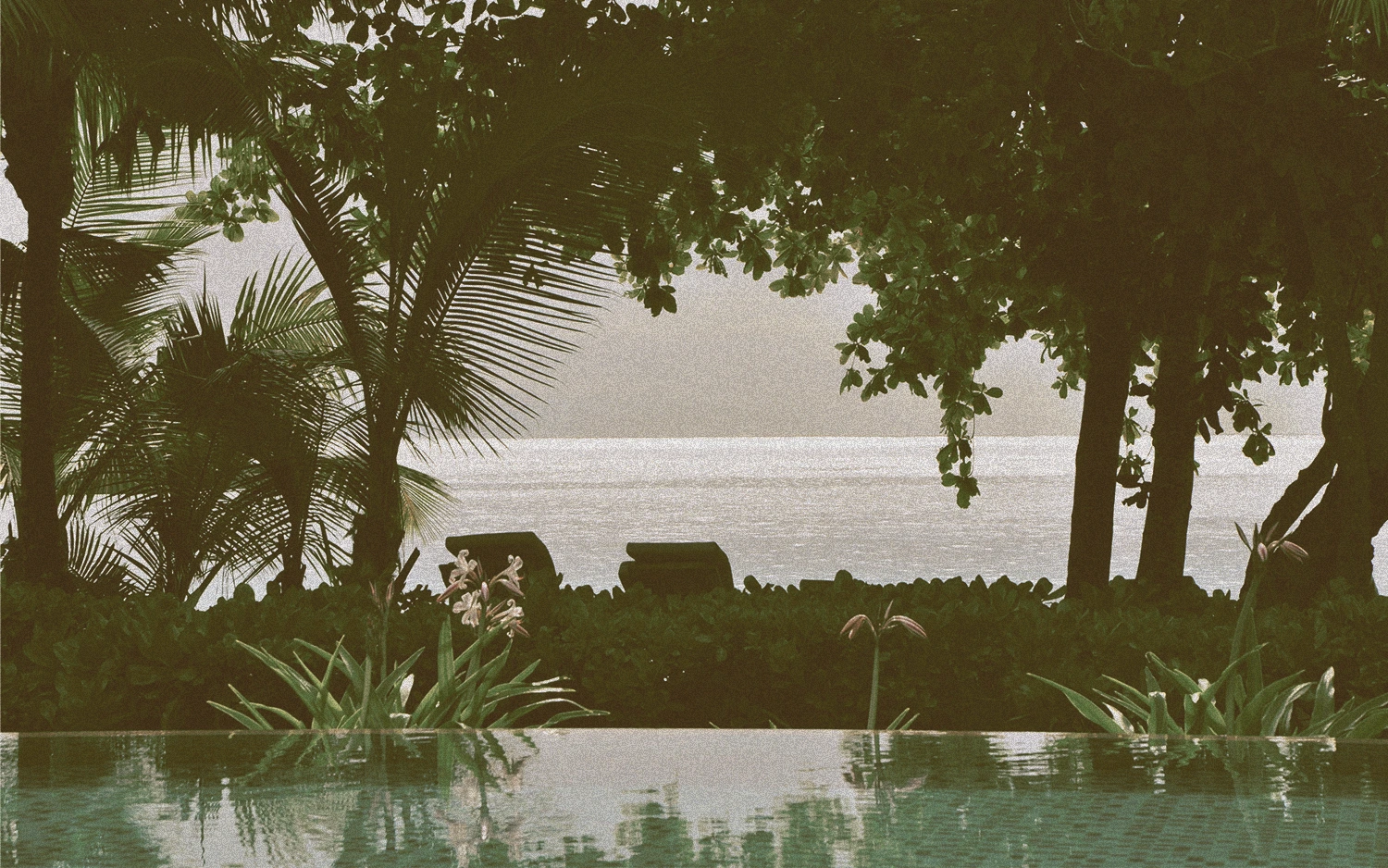
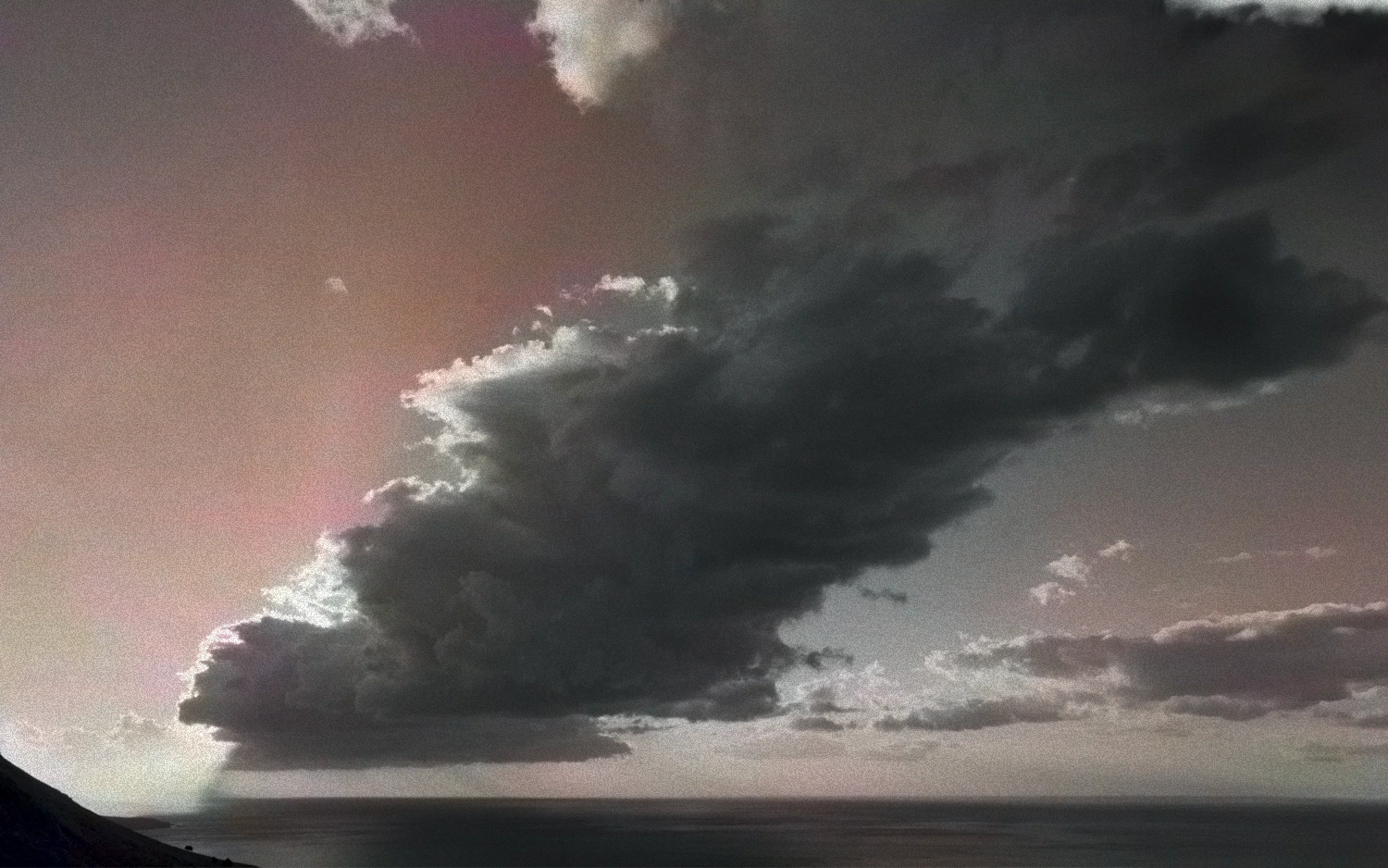
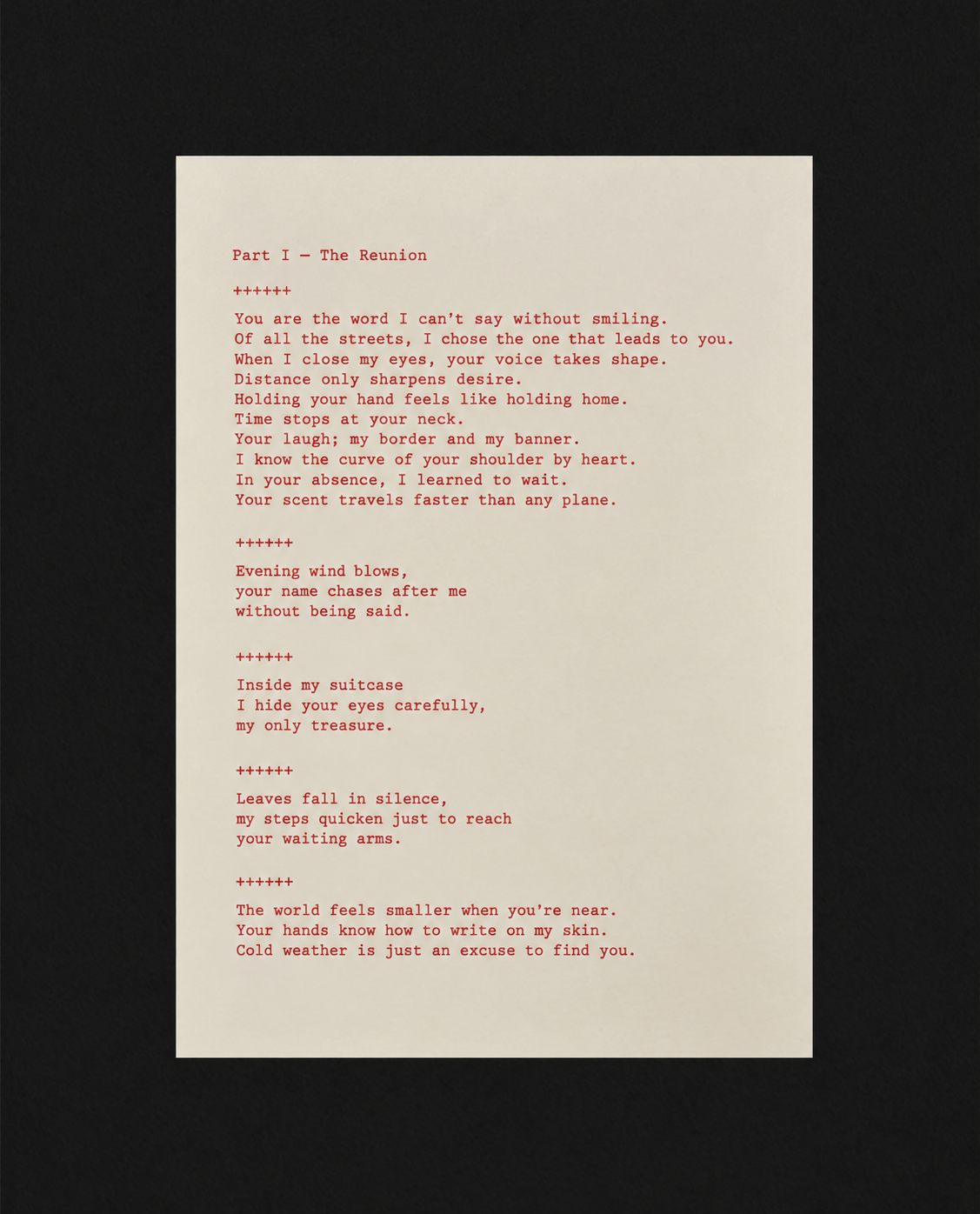
Poems / Prose / Lyrics
Before I could write, someone taught me how to hold a pencil.
The first marks were probably a mess. I still make those.
A line becomes a drawing. Another becomes a sentence. Sometimes it finds a rhythm and ends up in a song.
I write to spend longer with something. A place. A person. A small detail that refuses to leave.
Some of it stays in notebooks. Some of it gets said into a microphone. Here are a few pages.
Read Battery →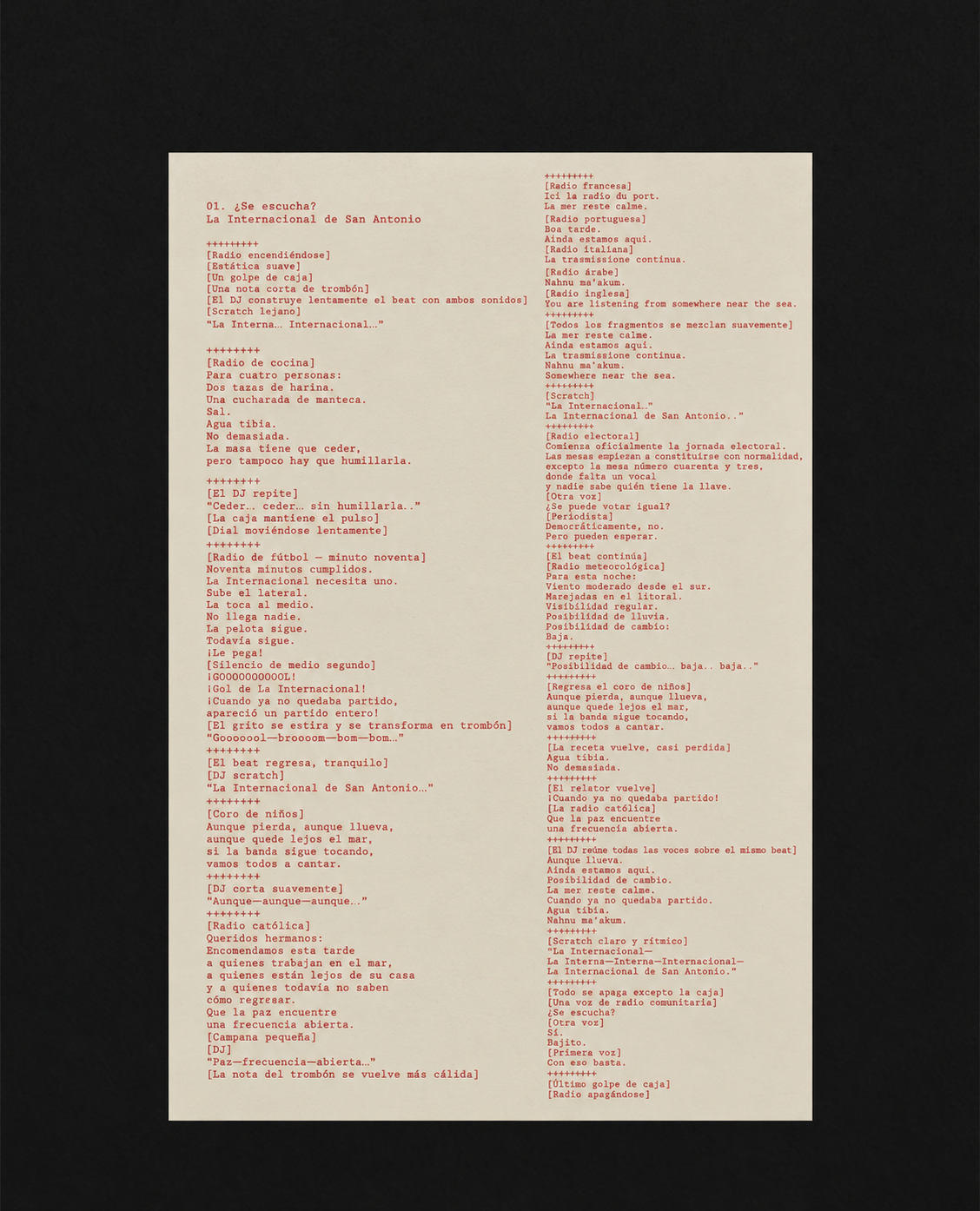
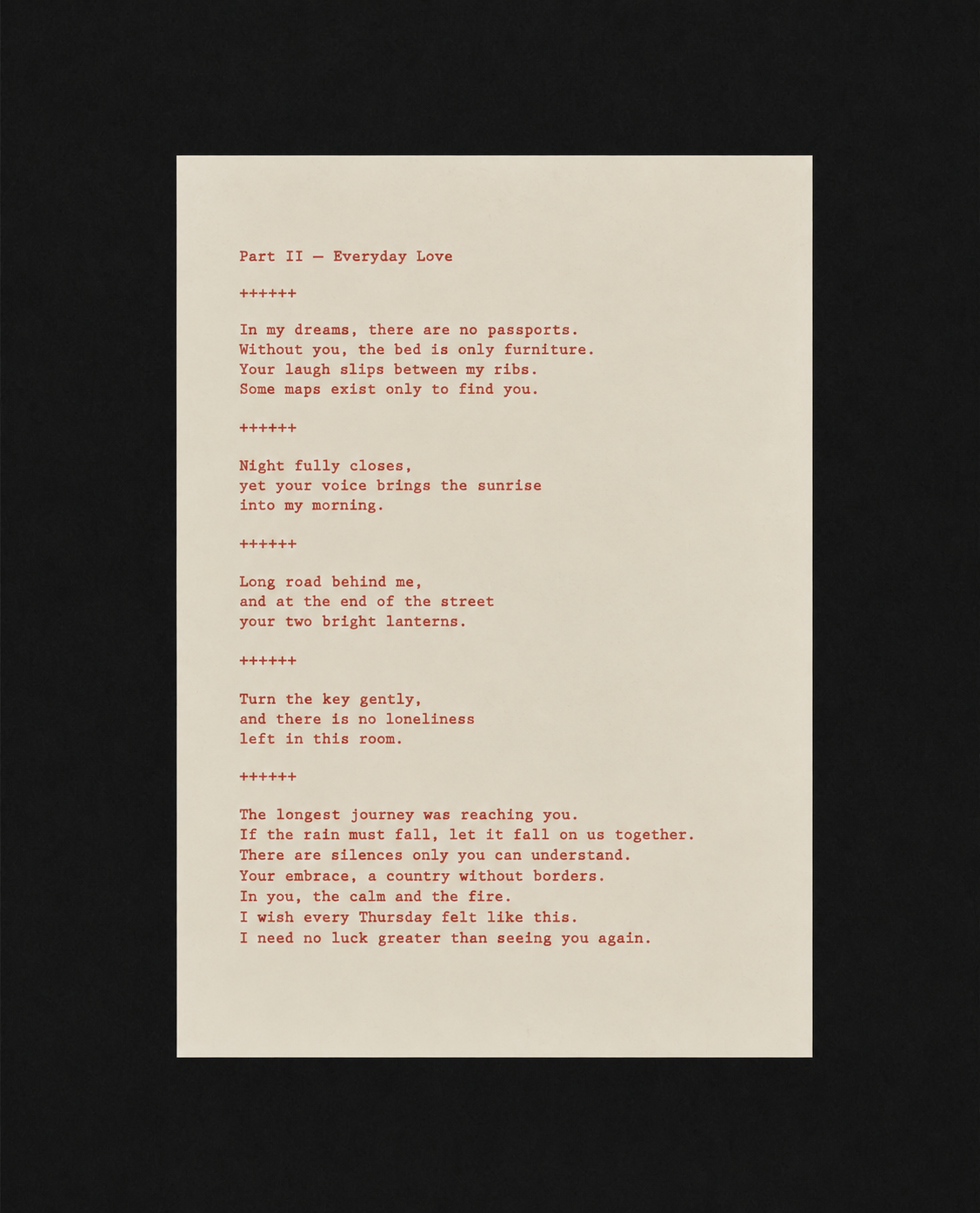
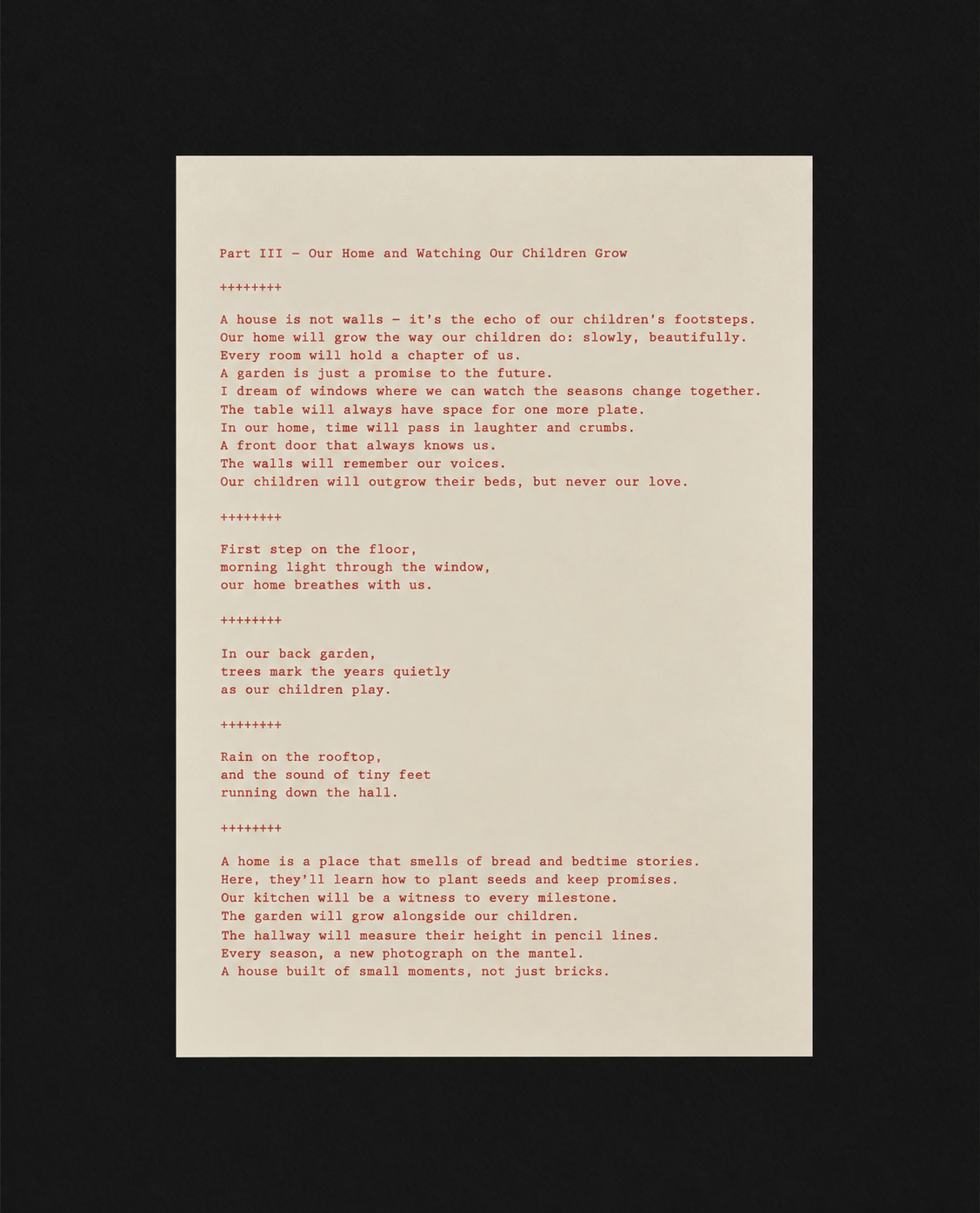
Every brief comes with a soundtrack. Sometimes I make it.
Old records. New noises. A sample chopped beyond recognition. Music follows me into the work, then takes over the room.
I build tracks, make mixtapes and shape the sound of places. Different jobs. Same ears.
And silence. Leave some.

La Internacional de San Antonio is my music project, named after the Chilean port. Old records, samples, my own voice, family and the sea. I make the music, write the words and shape the artwork. It started at home during the pandemic. Now it’s out in the world.
Discover the projectI give brands a sound. Music, atmosphere and rhythm shaped around their identity and the people listening. I bring the same ear I use in La Internacional de San Antonio: digging, sampling, writing and arranging until it feels like it belongs.
Read my creative processEvery brief comes with a soundtrack. Sometimes I make it.
Old records. New noises. A sample chopped beyond recognition. Music follows me into the work, then takes over the room.
I build tracks, make mixtapes and shape the sound of places. Different jobs. Same ears.
And silence. Leave some.
Back to MusicThe room has a sound. Choose it.
I create and curate music for commercial spaces. Restaurants, cafés, places where people spend time. The music has a job to do.
Tempo. Volume. Timing. What works with the first coffee rarely works with the last drink.
A Mediterranean restaurant in Dubai. Coffee in the morning. Plates crossing the room at lunch. A table that stays a little longer after dark.
I approach the music like another ingredient. It has to sit with the food, the light and the pace of service. A beautiful track at the wrong hour is still the wrong track.
Breakfast starts with acoustic records and room to wake up. Lunch leans into instrumentals. Enough rhythm to keep things moving, enough space to hear the person across the table. After dark, jazz and bossa nova give the room a warmer grain. The weekend gets more movement.
The work is in the joins. What follows what. When to lift the tempo. When to leave a little air. Volume matters as much as selection. Nobody came to shout over lunch.
A playlist is a list. A soundscape has to live through service. First coffee to last glass.
A voice. A radio.
An open frequency.
Music / Words / Art direction
A kitchen radio. A port. Something someone said years ago.
Explore each album, track by track. Listen and read the stories behind the songs.
Kitchen radio. Vinyl dust. Something coming in from the street. Port stories, old boleros and cumbias, brass and scratches. The DJ carries the conversation.
Read more about Radio Barro ↗Listen to Radio Barro on YouTubeEleven songs about looking, imagining and making. A sheet of paper, a camera, a bicycle. An open notebook. A path still to make.
Read more about Verde ↗Listen to Verde on YouTubeA little of the Andes. A little folk. A little dust from the DJ’s records. Nature, family and the small rituals that bring us together.
Read more about Brethren ↗Listen to Brethren on YouTubeLa Internacional de San Antonio is my music project. I make the music, write the words and give each release its visual world.
It carries a little of everything that came before: a rock band with my brother and friends, VJing, underground parties, poetry with my cousins. Old records, family, distance and the sea.
The name comes from the Chilean port. I never lived there. I visited as a kid, and the place stayed with me.
Between 1998 and 2001, I played electric guitar in a rock band with my brother and friends. The others were better at it. I stayed closer to the pedals.
Distortion, delay, a sound held a little too long. I could do something with those. I sang alongside an old AM radio. It had more to say than any of us.
I turned the dial while we played. War news. People calling about traffic. Rural stations drifting through the signal. Whatever came through became part of our avant-garde rock. We never knew what the next voice would be.
I started making 8-bit music on my PC. Small electronic sounds, patterns, repetition. Then came a drum machine. Another way to build a song without having to play every instrument.
After that, bits and pieces from samples. Cut something out of a record. Move it. Repeat it. Put it beside something that should not belong there.
The Prodigy opened a door for me. That collision of electronic sound and raw energy made sense. A machine could have the urgency of a band.
Living in southern Chile, surfing and snowboarding brought more punk and rock into the mix. The music travelled with the landscape. Coast, mountains, long journeys. Whatever was playing came along.
At university, I found Chilean hip-hop and the underground. Another way to listen to my own country. The words, the accent, the things people were saying outside the official conversation.
Chilean music and the Andes were in there too. Different rhythms, different ways of carrying a voice. They would eventually find their way into the same tracks.
Nick Drake and Opeth belong near the beginning of this story. The biggest influences of all. A quiet voice, an acoustic guitar, then the weight of a band. I keep coming back to that range: how intimate a song can feel, how far it can open.
Jack Johnson, Gorillaz, The Smiths, New Order, Joy Division, The Skatalites. These were among the first records I bought with my first wages. Most of the money went on music and books.
It still does.
Andrés Calamaro, Manu Chao, Calambre, Chyste MC. José González, El Búho, Blanco White, Beirut. Different voices, different distances from home. I keep moving between them.
Then Pantera. Death’s The Sound of Perseverance. That belongs here too. The weight, the precision, the feeling that a song might come apart and somehow holds.
The Prodigy, Beastie Boys, DJ Shadow. Los Jaivas, Inti-Illimani, Tiro de Gracia, Makiza. The Four Owls from the UK. A huge mix. I have never felt the need to make it agree with itself.
The British corner has room for indie too: Radiohead, Pulp, Blur. Then the darker edges of Portishead and Massive Attack. Different ways to leave a mark on a room.
There is reggae in the bag. Bob Marley and the Wailers, Peter Tosh, Burning Spear, Toots and the Maytals. Then Lee “Scratch” Perry and King Tubby: the desk becomes an instrument, a voice disappears, the space keeps playing.
And funk. A lot of funk. The bass gets its own say. The drums leave a gap and someone finds a way into it. James Brown, Parliament-Funkadelic, Sly and the Family Stone, The Meters. More records to put beside the others. I like music that can carry a complicated feeling and still make you move.
Miles Davis. Chet Baker. And around them, John Coltrane, Thelonious Monk, Charles Mingus, Bill Evans. Brass, breath, an awkward turn, the space before the next note. Sometimes that space is what I take away.
Papá Heidegger. Nietzsche. Bernard Stiegler. My regular company on the page.
I hear something musical in them too. A thought returns with a different weight. A sentence makes you stop. An idea takes time before it opens.
They do not need to appear in a lyric by name. They are there in the questions. Time, memory, technology. What we inherit. What we make of it.
Records and books still end up on the same table. The first wages went there. The shelves kept filling. I take bits from both, then listen for what belongs together.
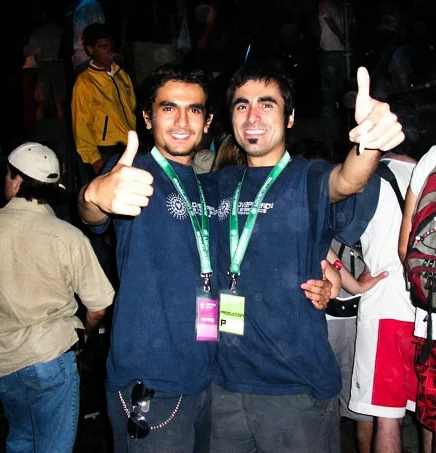
I started working with live visuals, VJing at Love Parade in Santiago. In the early 2000s, I also DJed at underground parties. Music and images belonged in the same room.
Cinema belongs in that room too. Tarkovsky’s Stalker and Solaris. Kieślowski’s Three Colours. The space a film gives you to wait, listen and notice something you missed.
Then Carpenter: The Thing, They Live. Jodorowsky’s El Topo and The Holy Mountain. Under the Skin, Cure, Akira, Blade Runner. Very different worlds. I am drawn to images that keep working after the film has ended.
There is room for Kurosawa’s Ikiru and Studio Ghibli too. Ordinary gestures, imagined worlds, the feeling that a life is happening beyond the edge of the frame.
I write about films because I find questions about myself inside them. Time, memory, belief, the body, what technology does to the way we see. Those questions travel into the music.
A cut can work like a sample. Two fragments meet and a third idea appears. A voice enters late. A pause changes the scene. That is part of what I was doing with live visuals, and part of what I still listen for in a track.
Later, my cousins and I made a band that mixed Latin music with poetry. Another way to put words inside the rhythm. That was fun.
During the pandemic, I began shaping the project that became La Internacional. Maschine, Ableton, samples and my own voice. Time to disappear into sound.
For years, it stayed between me and the headphones. My family pushed me to put it out. So here we are.
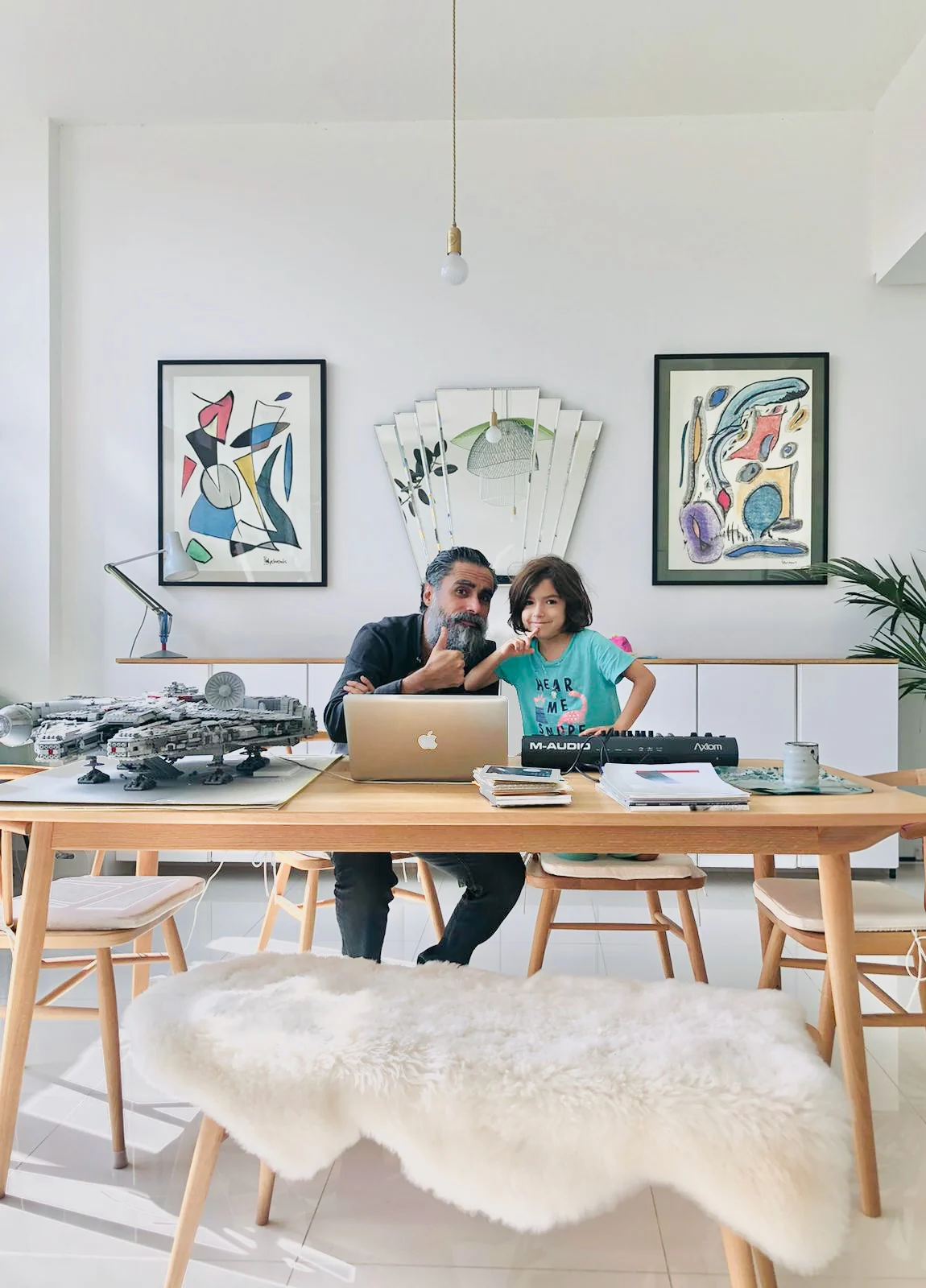
I write, build tracks, shape the sound and give each release its visual world. Lyrics, covers, films, sequencing. The whole thing belongs together.
The process keeps changing. Samples, recordings, electronic production and, more recently, AI tools. I choose what stays, rewrite, arrange and keep working until it sounds like it belongs here.
Growing up in Patagonia gifted me the language of nature. Cooking by fire, knife in hand, sipping mate. Most of my food memories live outdoors amongst the mountains, the native voices, the Huasos y Gauchos.
Collectively, this has left a strong cellular imprint, which I interpret as a form of muscle memory, or a residue from my ancestors that has remained despite a new environment. Home is a tribute to my cultural heritage and my longer term hope to grow food and store seeds. Home (my museum of ego) is everything.
I’m seeking, at the deepest level, to inwardly resemble, the places and objects that have touched me. My background is intrinsically bound to my creativity, and so I wouldn’t be me if I didn’t draw this reference.
For me nature and art cannot be unfastened since good ingredients are universal — storytelling, democracy of thought, respect for product, simplicity, seasonality … and the beat goes on.
The craft of cooking or designing always comes with repetition for me; with practice; and it’s the same gestures repeated throughout that give me a sense of home.

A garden you can eat.
I studied permaculture design at the Permaculture Research Institute in 2022. It gave me a different way of looking at a place: where the water goes, how the sun moves, what the soil needs and what’s already doing well. Plenty to observe before picking up a pencil.
I combine that knowledge with illustration and a sense of location. Drawings help me explore ideas and help people picture what could grow there. Food gardens, useful planting, shade and spaces to gather, shaped around the land and the people living with it.
I like a garden you can eat. Herbs by the kitchen. Fruit worth waiting for. An empty corner suddenly contributing to lunch.
What excites me is giving a space more to do. Feed someone. Welcome birds. Catch water. Get the kids outside investigating a suspiciously large courgette. A garden becomes part of everyday life, with things to pick, cook, share and occasionally argue about who planted.
A kitchen radio. Someone making lunch. A football match going badly. Ships leaving the port.
Radio Barro lives between those things.
Ten tracks moving through cumbia, jazz huachaca, foxtrot, Balkan brass and beats built from fragments. The radio keeps interrupting. The DJ picks up what it leaves behind.
Music, words and art direction
Vicente David Gutiérrez
There is humour here. Families who carry on eating through a tremor. An election nobody can open because someone lost the key. Two people who miss their boat because they are busy dancing.
There is waiting, too. For a call. For someone to come home. For the sea to give people back.
I never lived in San Antonio. I visited as a child. The sea, surfing and the industry around the port stayed with me. A place where people arrive, leave, work and wait.
The musical history goes further back. Between 1998 and 2001, I sang in a rock band with my brother and friends. We had an AM radio scanning signals alongside us. Another voice in the room, saying things none of us had written.
Later came underground DJ sets, VJing at Santiago’s Love Parade, and a band with my cousins that brought Latin music and poetry together.
La Internacional carries those experiences into the same room. Radio Barro gives that room a window onto the port.
The project began at home during the pandemic, with Maschine, Ableton and time to get lost in sound.
I build the rhythmic foundations in Maschine. Work out a beat. Find a fragment worth keeping. Cut it, repeat it and see what happens when it lands somewhere else. Ableton is part of the process of developing and arranging those ideas into tracks.
Piano, clarinet, accordion, trumpet, trombone and tuba give the record its changing cast. Sometimes they behave like an orchestra. Sometimes a single brass note gets cut down until it becomes a bass line.
A dry snare and a trombone can carry a surprising amount. Change the length of the note, its pitch, the space around it, and the same small collection of sounds starts speaking differently.
The voices combine my own recordings with AI-generated singers and spoken parts. I write the words and the directions for how they should be delivered: who is speaking, how close they feel, where they hesitate, when another voice interrupts.
The sonic scripts belong to the writing. A weather announcement needs a different delivery from a man trying to explain why the refrigerator is shaking. Both have to belong to the same station.
Across the album, the DJ acts as another character. He interrupts the announcer, catches a word and makes it repeat. A football shout stretches into a brass sound. Static becomes part of the percussion. The station’s name gets pulled apart and put back together.
Radio Barro took shape over a year. The ideas behind the lyrics had been collecting for much longer.
Pieces of language. Family scenes. Things people say without noticing how strange they sound. Leaving home and continuing to speak about someone as if they might walk through the door.
Those ideas became songs through writing and returning to them. Finding the scene, then finding the words that could carry it.
The small details matter: an unfinished football sticker album, a cassette rewound with a Bic pen, soup moving towards the window during a tremor. They give the characters somewhere to live.
Humour runs through the record because it runs through the language. Someone says something moving. Someone else mentions that the doorbell is broken. Both things can be true.
The songs were not written in their listening order. That order gives the finished record its movement: opening the signal, walking through the town, going out to sea and waiting for an answer.
I found this photograph when the record was already taking shape. Beats, brass, voices coming through the radio. I’d spent so long listening that my eyes were tired before I opened the screen.
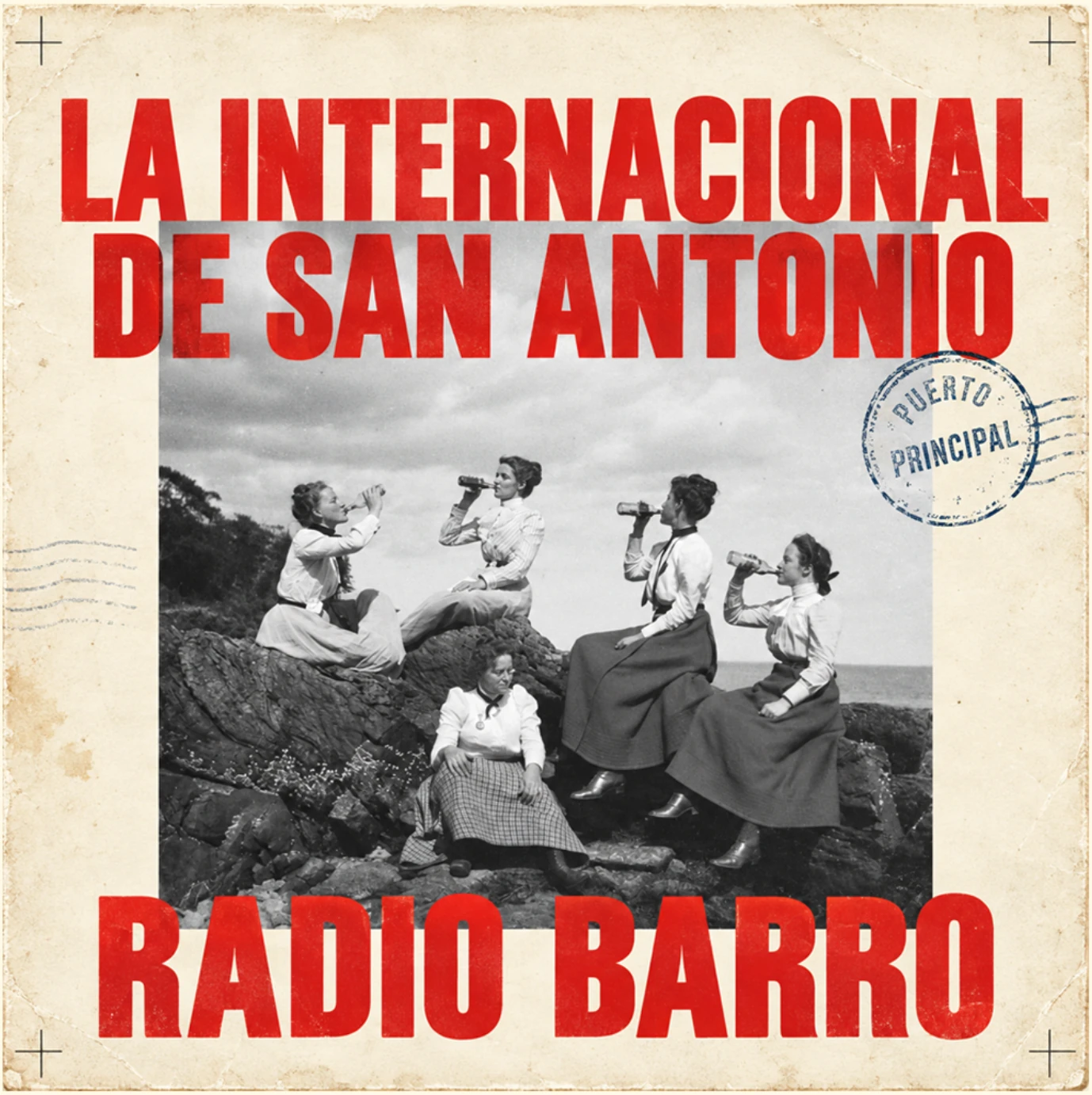
Then these women. Drinking on the rocks. An afternoon by the water, with time to sit down and finish the bottle.
I kept looking. The daily pressure loosens a little in that image. Work can wait. Someone has said something stupid. Nobody needs to get up yet.
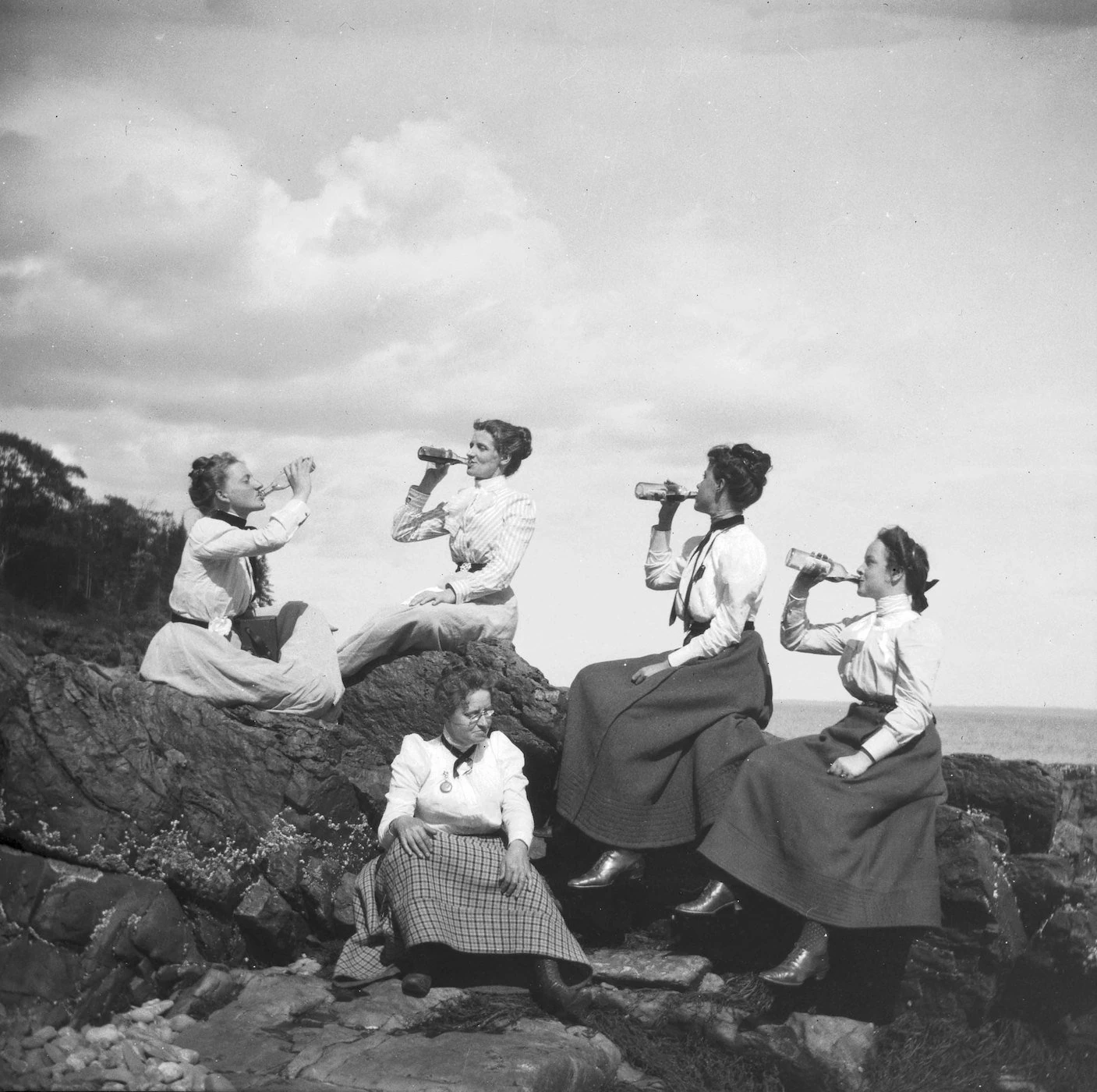
That was the feeling I’d been working towards. All those songs about leaving, waiting, carrying on. Here were people making an afternoon out of being together.
The photograph gave the record somewhere to sit.
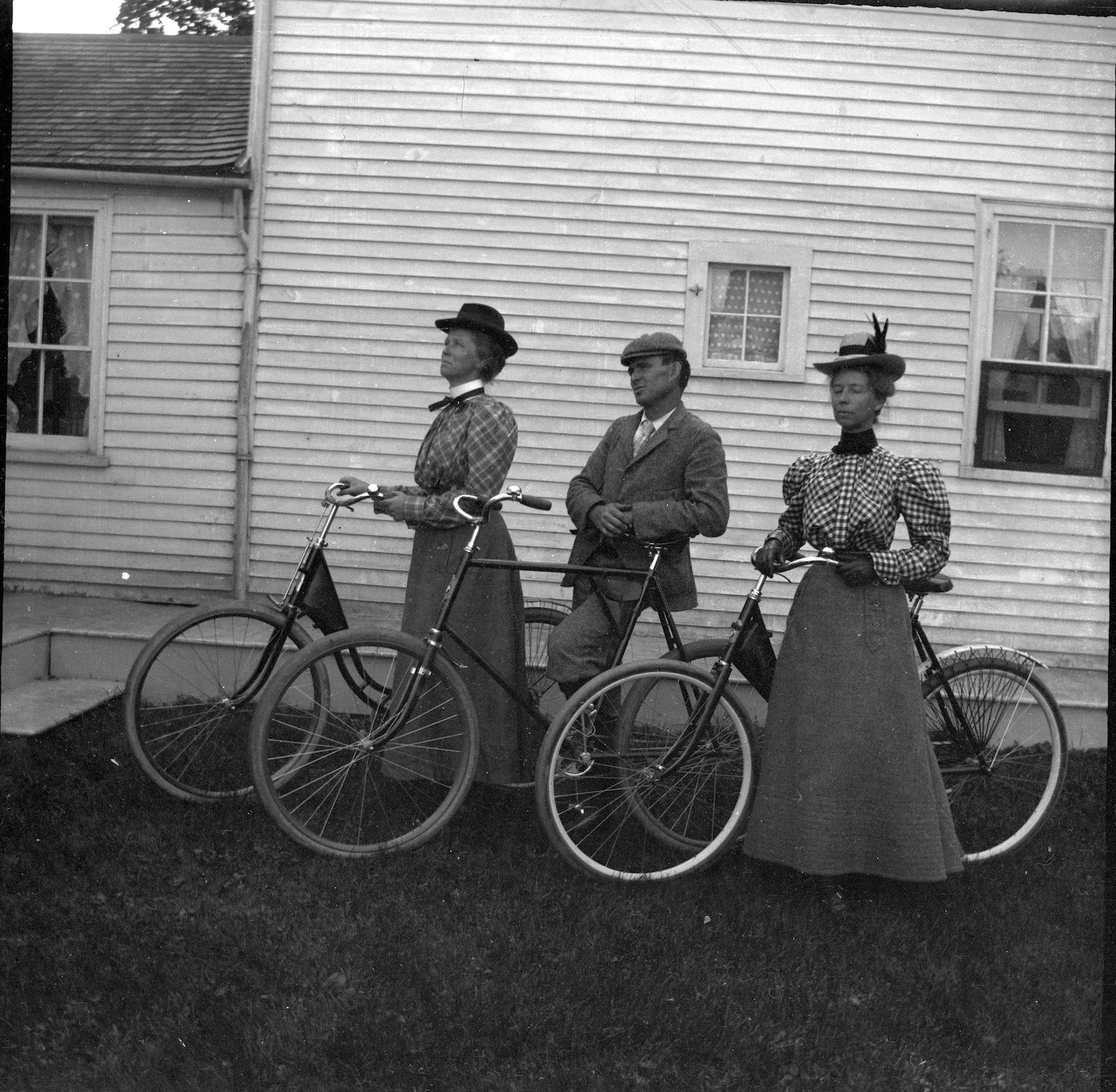
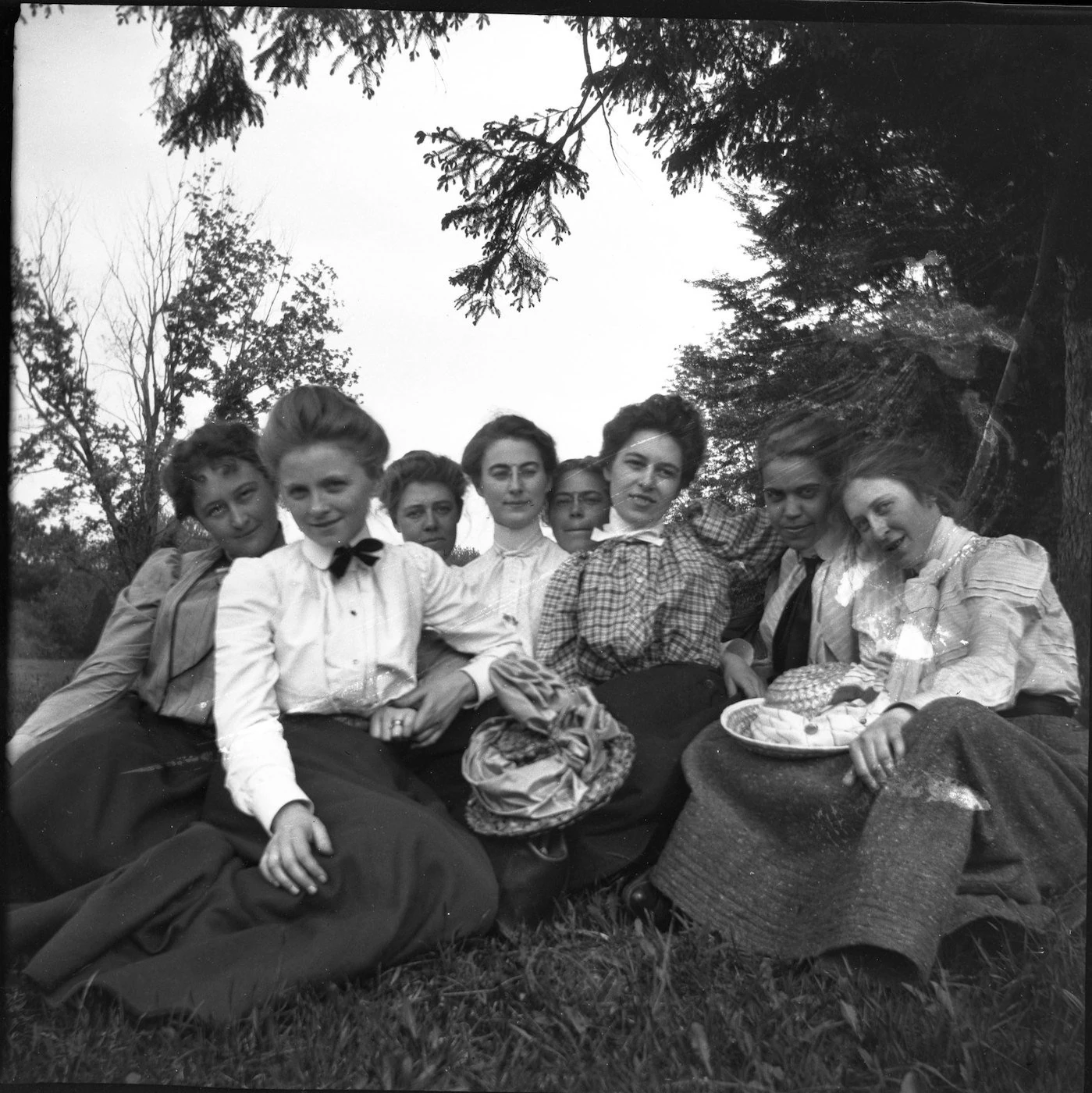
Photograph by Theresa Babb, 1900. Public domain. Camden Public Library, via The Public Domain Review ↗.
Track 01 / 10
The opening sets up the station through the people passing through it. A cooking programme, a football commentator, a prayer, an election report. Each voice has its own urgent business.
Underneath, a snare hit and a short trombone note begin building a shared pulse. The DJ catches phrases and brings them back. Gradually, the interruptions start belonging together.
The recipe carries its own advice: the dough has to give, but there is no need to humiliate it. The weather report offers little chance of change. Then a goal arrives when the match seems finished.
That is the atmosphere of Radio Barro: ordinary life, a little absurd, still capable of surprising you.
At the end, someone asks whether the signal can be heard. Quietly is enough.
“La Interna… Internacional…”
Para cuatro personas:
Dos tazas de harina.
Una cucharada de manteca.
Sal.
Agua tibia.
No demasiada.
La masa tiene que ceder,
pero tampoco hay que humillarla.
“Ceder… ceder… sin humillarla…”
Noventa minutos cumplidos.
La Internacional necesita uno.
Sube el lateral.
La toca al medio.
No llega nadie.
La pelota sigue.
Todavía sigue.
¡Le pega!
¡GOOOOOOOOOOL!
¡Gol de La Internacional!
¡Cuando ya no quedaba partido,
apareció un partido entero!
“Gooooool—broooom—bom—bom…”
“La Internacional de San Antonio…”
Aunque pierda, aunque llueva,
aunque quede lejos el mar,
si la banda sigue tocando,
vamos todos a cantar.
“Aunque—aunque—aunque…”
Queridos hermanos:
Encomendamos esta tarde
a quienes trabajan en el mar,
a quienes están lejos de su casa
y a quienes todavía no saben
cómo regresar.
Que la paz encuentre
una frecuencia abierta.
“Paz—frecuencia—abierta…”
Ici la radio du port.
La mer reste calme.
Boa tarde.
Ainda estamos aqui.
La trasmissione continua.
Nahnu ma’akum.
You are listening from somewhere near the sea.
La mer reste calme.
Ainda estamos aqui.
La trasmissione continua.
Nahnu ma’akum.
Somewhere near the sea.
“La Internacional…
La Internacional de San Antonio…”
Comienza oficialmente la jornada electoral.
Las mesas empiezan a constituirse con normalidad,
excepto la mesa número cuarenta y tres,
donde falta un vocal
y nadie sabe quién tiene la llave.
¿Se puede votar igual?
Democráticamente, no.
Pero pueden esperar.
Para esta noche:
Viento moderado desde el sur.
Marejadas en el litoral.
Visibilidad regular.
Posibilidad de lluvia.
Posibilidad de cambio:
Baja.
“Posibilidad de cambio… baja… baja…”
Aunque pierda, aunque llueva,
aunque quede lejos el mar,
si la banda sigue tocando,
vamos todos a cantar.
Agua tibia.
No demasiada.
¡Cuando ya no quedaba partido!
Que la paz encuentre
una frecuencia abierta.
Aunque llueva.
Ainda estamos aqui.
Posibilidad de cambio.
La mer reste calme.
Cuando ya no quedaba partido.
Agua tibia.
Nahnu ma’akum.
“La Internacional—
La Interna—Interna—Internacional—
La Internacional de San Antonio.”
¿Se escucha?
Sí.
Bajito.
Con eso basta.
English translation for reading.
“La Interna… Internacional…”
Serves four:
Two cups of flour.
One tablespoon of lard.
Salt.
Warm water.
Not too much.
The dough has to give,
but there's no need to humiliate it.
“Give… give… without humiliating it…”
Ninety minutes are up.
La Internacional needs one.
The full-back pushes forward.
Plays it into the middle.
Nobody gets there.
The ball keeps going.
Still going.
He shoots!
GOOOOOOOOOAL!
A goal for La Internacional!
Just when there was no game left,
a whole game appeared!
“Goooooal—broooom—bom—bom…”
“La Internacional de San Antonio…”
Even if we lose, even if it rains,
even if the sea is far away,
if the band keeps playing,
we'll all sing along.
“Even if—even if—even if…”
Dear brothers and sisters:
This afternoon we commend
those who work at sea,
those who are far from home
and those who still don't know
how to return.
May peace find
an open frequency.
“Peace—frequency—open…”
This is the port radio.
The sea remains calm.
Good afternoon.
We're still here.
The broadcast continues.
We are with you.
You are listening from somewhere near the sea.
The sea remains calm.
We're still here.
The broadcast continues.
We are with you.
Somewhere near the sea.
“La Internacional…
La Internacional de San Antonio…”
Election day is officially under way.
Polling stations are being set up as usual,
except for polling station forty-three,
where a polling officer is missing
and nobody knows who's got the key.
Can we vote anyway?
Democratically speaking, no.
But you can wait.
For tonight:
Moderate winds from the south.
Heavy swells along the coast.
Moderate visibility.
Chance of rain.
Chance of change:
Low.
“Chance of change… low… low…”
Even if we lose, even if it rains,
even if the sea is far away,
if the band keeps playing,
we'll all sing along.
Warm water.
Not too much.
Just when there was no game left!
May peace find
an open frequency.
Even if it rains.
We're still here.
Chance of change.
The sea remains calm.
When there was no game left.
Warm water.
We are with you.
“La Internacional—
La Interna—Interna—Internacional—
La Internacional de San Antonio.”
Can you hear it?
Yes.
Quietly.
That's enough.
Track 02 / 10
After all those voices, the words step back.
Bajito builds its movement around chopped trombone, a dry snare and a hypnotic cumbia groove. Muted trumpet appears in short bursts. Brass fragments get scratched and pitched into different shapes.
The spaces are part of the arrangement. Openings where a voice could arrive. A station identification heard between loops. The feeling of a radio left playing in another room.
The title carries something from the opening conversation: it can be quiet and still hold your attention.
Instrumental.
Instrumental.
Track 03 / 10
A port hears more than one language.
Maritime warnings and fragments of broadcasts pass between Spanish, French, English, Portuguese, Italian, Arabic, Japanese and Croatian. Each transmission briefly changes where the listener seems to be.
The script keeps returning to the same basic materials: snare and trombone. Around them, the rhythm moves through boom-bap, cumbia, tango, samba, dabke and Balkan seven-eight.
The movement comes from what those sounds can become. A long brass note turns into bass. Static takes on the work of a güiro.
The signal is damaged. Someone says it sounds bad. Someone else answers that it can still be heard.
Atención, embarcaciones menores.
La visibilidad será reducida durante la madrugada.
“La In—In—Interna…”
Ici Radio Maritime.
La transmission continue.
“Brom—brom—bom—bom…”
This is not a test.
“Not—not—not a test…”
Boa noite.
Estamos no ar.
“No ar—no ar—San Anto—”
La trasmissione continua.
Nessuno conosce la destinazione.
Huna al-idha’a.
Nahnu ma’akum.
“La Internacional… Inter—Inter—nacional…”
Kochira wa rajio desu.
Tsūshin o tsuzukemasu.
Ovdje radio luka.
Još smo ovdje.
“Pa—pa—pam—pa-pa—pam…”
Estamos no ar.
La transmission continue.
This is not a test.
Nessuno conosce la destinazione.
Nahnu ma’akum.
Još smo ovdje.
“La Internacional—
La Interna—Interna—Internacional—
de San—San—San Antonio…”
¿Se escucha?
Se escucha mal.
Pero se escucha.
“La Internacional de San Antonio.”
“La Internacional de San Antonio.”
“La—La—La—La Internacional…”
Cumbia.
Tango.
Samba.
Dabke.
Siete octavos balcánicos.
Dub.
Foxtrot.
Boom-bap.
LA INTERNACIONAL DE SAN ANTONIO.
Pip.
Pip.
Pip.
La hora exacta:
Nadie sabe.
English translation for reading.
Attention, small craft.
Visibility will be reduced in the early hours.
“La In—In—Interna…”
This is Maritime Radio.
The transmission continues.
“Brom—brom—bom—bom…”
This is not a test.
“Not—not—not a test…”
Good evening.
We are on air.
“On air—on air—San Anto—”
The broadcast continues.
Nobody knows the destination.
This is the radio.
We are with you.
“La Internacional… Inter—Inter—nacional…”
This is the radio.
We will continue transmitting.
This is the port radio.
We're still here.
“Pa—pa—pam—pa-pa—pam…”
We are on air.
The transmission continues.
This is not a test.
Nobody knows the destination.
We are with you.
We're still here.
“La Internacional—
La Interna—Interna—Internacional—
de San—San—San Antonio…”
Can you hear it?
The reception is bad.
But we can hear it.
“La Internacional de San Antonio.”
“La Internacional de San Antonio.”
“La—La—La—La Internacional…”
Cumbia.
Tango.
Samba.
Dabke.
Balkan seven-eight time.
Dub.
Foxtrot.
Boom-bap.
LA INTERNACIONAL DE SAN ANTONIO.
Beep.
Beep.
Beep.
The exact time:
Nobody knows.
Track 04 / 10
The earth moves. First, the family has to agree that it is moving.
The song follows a lunch interrupted by a tremor: the lamp, the soup, the uncle insisting it was a truck. Everyone measures the event against the inconvenience of getting up.
Warm piano, double bass and worn vinyl place the scene close to the table. Later, the arrangement begins to shake with it. The piano slips out of tune, the pulse loosens, glasses and plates enter the percussion.
The humour eventually gives way to a little care. Hug the children. Check the neighbourhood. Familiarity with earthquakes does not make anyone immortal.
Movimiento telúrico percibido
entre las regiones de—
“Percibido…”
“Percibido…”
“Pero no por todos.”
Primero cruje la ventana,
después se mueve el comedor.
Mi viejo mira la lámpara
como un técnico superior.
Mi vieja afirma: “Está temblando”.
Nadie le quiere confirmar.
Porque aceptar que está temblando
significa tener que parar.
El perro duerme bajo la mesa,
la radio pierde la señal.
La sopa forma una pequeña ola
con dirección hacia el ventanal.
Mi tío dice: “Fue un camión”.
No pasa un camión desde ayer.
La tierra mueve media cuadra
y él sigue untando el pan también.
Fue temblor nomás,
no se cayó ni la cuchara.
Fue temblor nomás,
sigue conversando, no fue nada.
Si la lámpara vuelve al centro,
nadie se tiene que parar.
Aquí la tierra nos saluda
moviendo un poco el living-comedor.
“Cinco punto ocho…”
“¿Dónde fue?”
“Lejos.”
“Ah, ya.”
En otros lados salen todos
con bata blanca hacia la calle.
Acá calculan la distancia
por cuánto se movió el detalle.
Si tintinearon las botellas:
moderado, puede esperar.
Si se cayó el control remoto:
conviene un poco investigar.
Si el vecino sale en short
abrazando el televisor,
recién entonces alguien cambia
la radio por información.
La abuela sirve más ensalada.
El primo sigue en el celular.
Un niño pregunta: “¿Fue terremoto?”
“Come primero y deja de alegar.”
Fue temblor nomás,
la tele sigue en su repisa.
Fue temblor nomás,
se abrió una puerta en la cocina.
Si todavía hay pan tostado,
si queda vino en el jarro,
que siga hablando el presidente:
nosotros seguimos almorzando.
Se recomienda mantener la calma.
¿Quién está nervioso?
Tú, que llevas diez minutos
afirmando el refrigerador.
“Calma—calma—calma…”
“La Inter—Inter—Internacional…”
“San Antonio…”
“Fue un camión…”
Vivimos sobre una costura
que nunca termina de cerrar.
El mar conoce nuestras casas.
La tierra sabe dónde están.
Por eso hacemos sobremesa
aunque se mueva la ciudad.
No es valentía ni inconsciencia:
es demasiada familiaridad.
Fue temblor nomás,
pero abracemos a los cabros.
Fue temblor nomás,
y revisemos igual el barrio.
Que una cosa es no asustarse
y otra es hacerse el inmortal.
La tierra puede contar un chiste,
pero también puede hablar en serio.
“Fue temblor…”
“Temblor…”
“Tem—tem—temblor nomás…”
Magnitud corregida: seis coma uno.
Ah…
igual estuvo más o menos fuerte.
English translation for reading.
Seismic activity felt
between the regions of—
“Felt…”
“Felt…”
“But not by everyone.”
First the window creaks,
then the dining room moves.
My dad studies the lamp
like a senior technician.
My mum declares: “It's an earthquake.”
Nobody wants to confirm it.
Because admitting there's an earthquake
means having to stop.
The dog sleeps under the table,
the radio loses its signal.
The soup forms a little wave
heading towards the window.
My uncle says: “It was a truck.”
There hasn't been a truck since yesterday.
The earth shifts half a block
and he's still dipping his bread.
It was just a tremor,
not even the spoon fell down.
It was just a tremor,
keep talking, it was nothing.
If the lamp swings back to centre,
nobody needs to get up.
Here the earth says hello
by shaking the living-dining room a little.
“Five point eight…”
“Where was it?”
“Far away.”
“Oh, right.”
Elsewhere everyone runs out
into the street in white dressing gowns.
Here they work out the distance
by how much the little things moved.
If the bottles clinked:
moderate, it can wait.
If the remote control fell:
best look into it a little.
If the neighbour runs out in shorts
hugging the television,
only then does someone switch
the radio over to the news.
Grandma serves more salad.
My cousin stays on his phone.
A child asks: “Was that a big earthquake?”
“Eat first and stop complaining.”
It was just a tremor,
the TV's still on its shelf.
It was just a tremor,
a door swung open in the kitchen.
If there's still toast,
if there's wine left in the jug,
let the president keep talking:
we're carrying on with lunch.
People are advised to remain calm.
Who's nervous?
You are. You've spent ten minutes
holding the fridge in place.
“Calm—calm—calm…”
“La Inter—Inter—Internacional…”
“San Antonio…”
“It was a truck…”
We live along a seam
that never quite closes.
The sea knows our houses.
The earth knows where they are.
That's why we linger after lunch
even when the city moves.
It's neither courage nor recklessness:
it's being far too familiar.
It was just a tremor,
but let's give the kids a hug.
It was just a tremor,
and let's check the neighbourhood anyway.
Not being scared is one thing;
pretending we're immortal is another.
The earth can tell a joke,
but it can also mean business.
“It was a tremor…”
“Tremor…”
“Just—just—just a tremor…”
Revised magnitude: six point one.
Ah…
it was fairly strong, actually.
Track 05 / 10
The title track gives the station an address, even if the announcer cannot find it on a map.
A clarinet opens over accordion and static. Tuba takes the low end. Cumbia and Balkan brass carry a town full of stalled traffic, improvised commerce, bad announcements and people calling to complain.
The radio reports on a republic that cannot quite organise itself. Meanwhile, someone needs a fish recipe and a child wants to send a greeting.
Under the jokes is a simple idea: the place survives through people answering each other. If the electricity goes, they can keep singing.
Transmitiendo desde un lugar
que no aparece en el mapa.
Frecuencia desconocida.
Pronóstico: barro.
Esto es Radio Barro.
La mañana llegó tarde,
con un ojo sin abrir.
Un carguero tapa el cielo.
Nadie piensa discutir.
En la esquina venden cables,
pescado, santos y control.
Un cabro escucha el partido
en una radio sin botón.
El alcalde da instrucciones
desde un auto que no parte.
La patrulla prende luces.
El perro vuelve a ladrarle.
Si nos buscas en el dial,
vas a escuchar primero el mar.
Después una voz diciendo:
“Todavía estamos acá”.
Radio Barro,
nadie sabe dónde estás.
Suena debajo de la lluvia,
desde el Puerto Principal.
Radio Barro,
transmitiendo sin señal.
Si la ciudad desaparece,
la volvemos a nombrar.
Reporte del tránsito:
Todo detenido.
Reporte del tiempo:
El cielo arrepentido.
Reporte deportivo:
Perdimos por llegar tarde.
Reporte de la república:
No conseguimos fundarla.
Hay una receta de pescado
interrumpiendo la elección.
Un niño manda un saludo.
El DJ pierde la dirección.
Una señora llama al aire:
“Quiero alegar contra el ruido”.
Le preguntan desde cuándo.
“Desde que lo dejaron bajito”.
“Radio—Radio—Barro…”
“Puerto Principal…”
“Todavía estamos…”
“Estamos acá…”
Radio Barro,
nadie sabe dónde estás.
Suena debajo de la lluvia,
desde el Puerto Principal.
Radio Barro,
transmitiendo sin señal.
Si la ciudad desaparece,
la volvemos a nombrar.
Atención, habitantes de la costa:
La marea está subiendo.
La cancha está cerrada.
La república volvió a fracasar.
La fiesta continúa normalmente.
Pasa un barco sin bandera.
Pasa otro que volverá.
Pasan nombres por la radio.
Los que faltan suenan más.
Una frecuencia no es un sitio.
Es la gente al contestar.
Uno dice: “¿Me reciben?”
Todo el puerto dice:
“Ya”.
Radio Barro,
sube un poco la señal.
Que lo escuchen en Barrancas,
en los cerros y en el mar.
Radio Barro,
La Internacional.
Aunque pierda, aunque llueva:
¡Puerto Principal!
Radio Barro,
nadie nos puede apagar.
Si se corta la corriente,
lo cantamos igual.
“Radio Barro…”
“La Internacional…”
“San Antonio…”
Son las doce de la noche.
O las tres de la tarde.
Nuestro reloj está malo.
Seguimos transmitiendo.
English translation for reading.
Broadcasting from a place
that doesn't appear on the map.
Frequency unknown.
Forecast: mud.
This is Radio Barro.
Morning arrived late,
with one eye still closed.
A cargo ship blocks out the sky.
Nobody plans to argue.
On the corner they sell cables,
fish, saints and remote controls.
A kid listens to the match
on a radio with no knob.
The mayor gives instructions
from a car that won't start.
The patrol car flashes its lights.
The dog barks at it again.
If you look for us on the dial,
you'll hear the sea first.
Then a voice saying:
“We're still here.”
Radio Barro,
nobody knows where you are.
It plays beneath the rain,
from the Principal Port.
Radio Barro,
broadcasting without a signal.
If the city disappears,
we'll name it into being again.
Traffic report:
Everything at a standstill.
Weather report:
The sky is full of regret.
Sports report:
We lost because we arrived late.
Report on the republic:
We couldn't get it founded.
There's a fish recipe
interrupting the election.
A child sends a greeting.
The DJ loses his bearings.
A woman calls in on air:
“I want to complain about the noise.”
They ask her since when.
“Since they turned it down.”
“Radio—Radio—Barro…”
“Principal Port…”
“We're still…”
“We're here…”
Radio Barro,
nobody knows where you are.
It plays beneath the rain,
from the Principal Port.
Radio Barro,
broadcasting without a signal.
If the city disappears,
we'll name it into being again.
Attention, coastal residents:
The tide is rising.
The pitch is closed.
The republic has failed again.
The party continues as usual.
A ship goes by without a flag.
Another passes that will return.
Names pass through the radio.
The missing ones sound louder.
A frequency isn't a place.
It's the people answering.
One says: “Do you read me?”
The whole port says:
“Yeah.”
Radio Barro,
turn the signal up a little.
Let them hear it in Barrancas,
in the hills and out at sea.
Radio Barro,
La Internacional.
Even if we lose, even if it rains:
Principal Port!
Radio Barro,
nobody can switch us off.
If the power goes out,
we'll sing it anyway.
“Radio Barro…”
“La Internacional…”
“San Antonio…”
It's twelve at night.
Or three in the afternoon.
Our clock is broken.
We're still broadcasting.
Track 06 / 10
An unfinished sticker album. A jacket still hanging there. A mother buying more stickers in case her son comes back.
The absence in this song belongs to people who left. Three months became six. Then another year. The family learns to speak about them in the future.
Piano, guitar, clarinet and accordion surround the story. An intimate voice opens it; the chorus makes the waiting something shared.
The spoken passage lets the years accumulate through excuses and practical details. Papers, children, airfares. Even the broken water heater gets fixed eventually.
The door stays available. The doorbell needs work.
Tu pieza sigue igual,
la cama contra el muro,
el póster despegado
y el clóset medio oscuro.
El álbum del Mundial
quedó sin terminar.
La vieja todavía compra láminas
por si quieres regresar.
La radio perdió el dial,
el techo se llovió.
Tu nombre sigue escrito
donde el tiempo no alcanzó.
Tu taza tiene una triz,
tu chaqueta sigue acá.
En esta casa nadie ha muerto,
pero falta casi todo el mundo ya.
Bailamos por los que no volvieron,
por los que dijeron “un tiempo no más”.
Por los que mandaron dos cartas,
una foto
y después dejaron de llamar.
Bailamos por los que no volvieron,
aunque nadie sepa dónde están.
La puerta nunca estuvo cerrada.
Sólo aprendió a no preguntar.
Se fue por tres meses.
Después fueron seis.
Después alguien dijo que estaba bien.
No recordaba quién se lo había dicho,
pero sonaba bastante seguro.
Y con eso alcanzó para otro año.
Acá aprendimos a hablar de él en futuro:
Cuando vuelva.
Cuando pueda.
Cuando tenga los papeles.
Cuando los niños estén grandes.
Cuando baje el pasaje.
Cuando arreglen el calefón.
El calefón se arregló.
Él no volvió.
Cada familia tiene un nombre
conjugado en mañana.
Y una silla
que nadie se atreve a ocupar
porque, además, está media mala.
El casete se devuelve
con un lápiz Bic azul.
Tu voz quedó grabada
sobre un partido sin señal.
Dijiste: “espérenme despiertos”.
Nadie supo hasta qué hora.
Hay promesas que no mienten.
Simplemente se demoran.
Bailamos por los que no volvieron,
por los que dijeron “un tiempo no más”.
Por los que mandaron dos cartas,
una foto
y después dejaron de llamar.
Bailamos por los que no volvieron,
aunque nadie sepa dónde están.
La puerta nunca estuvo cerrada.
Sólo aprendió a no preguntar.
No brindamos por los muertos.
Ellos saben dónde están.
Brindamos por los vivos
que aprendimos a esperar.
Bailamos por los que no volvieron.
Algún día volveremos los demás.
Porque nadie se va para siempre
mientras alguien le guarde su lugar.
¿Y si vuelve?
Que golpee fuerte.
El timbre tampoco funciona.
En esta casa nadie ha muerto.
Pero falta casi todo el mundo.
English translation for reading.
Your room is still the same,
the bed against the wall,
the poster peeling off
and the wardrobe half in darkness.
The World Cup sticker album
was never finished.
Mum still buys stickers
in case you want to come back.
The radio lost its dial,
the roof began to leak.
Your name is still written
where time couldn't reach.
Your cup has a crack,
your jacket's still here.
Nobody has died in this house,
but almost everyone's already missing.
We dance for those who never came back,
for those who said “just for a while.”
For those who sent two letters,
a photograph
and then stopped calling.
We dance for those who never came back,
even if nobody knows where they are.
The door was never closed.
It simply learned not to ask.
He left for three months.
Then it was six.
Then someone said he was doing well.
They couldn't remember who had told them,
but they sounded fairly sure.
And that was enough for another year.
Here we learned to speak of him in the future:
When he comes back.
When he can.
When he gets his papers.
When the children are grown.
When the fare comes down.
When they fix the water heater.
The water heater got fixed.
He didn't come back.
Every family has a name
conjugated in tomorrow.
And a chair
that nobody dares sit in
because it's also a bit broken.
The cassette rewinds
with a blue Bic pen.
Your voice was recorded
over a match with no reception.
You said: “Stay up for me.”
Nobody knew until what time.
Some promises don't lie.
They simply take their time.
We dance for those who never came back,
for those who said “just for a while.”
For those who sent two letters,
a photograph
and then stopped calling.
We dance for those who never came back,
even if nobody knows where they are.
The door was never closed.
It simply learned not to ask.
We don't raise a glass to the dead.
They know where they are.
We raise a glass to the living
whom we've learned to wait for.
We dance for those who never came back.
One day the rest of us will return.
Because nobody leaves forever
while someone keeps their place.
And if he comes back?
Tell him to knock hard.
The doorbell doesn't work either.
Nobody has died in this house.
But almost everyone's missing.
Track 07 / 10
An instrumental built around the physical language of records: cuts, repeated fragments, changes in pitch and a damaged slowdown.
Trombone opens the piece and returns as its heavy centre. Dry snare, cumbia pulse and muted trumpet give it movement, with room between them for the radio to enter.
The arrangement shares materials with Bajito. In the sequence of the album, those familiar sounds bring us back to the DJ’s hands after the long family story.
Instrumental.
Instrumental.
Track 08 / 10
Two people have tickets. The furniture has been sold. Everything is ready for departure.
Then they start dancing.
Piano, guitar and a playful clarinet carry the scene towards the last boat. The chorus makes staying sound like a grand decision. Later, the characters admit they missed it because they failed to ask.
That gap gives the song its humour. They are prepared to found the country again tonight, but someone still has to settle the bill.
The orchestra grows around them while their practical situation gets worse. For the length of the song, they keep dancing.
Compré dos pasajes,
vendí el comedor,
dejé las maletas
junto al mostrador.
Usted llegó tarde,
yo llegué después.
El barco tocaba
las diez menos diez.
Bailamos un poco
por educación.
Un paso hacia Europa,
dos al corazón.
Sonaron las diez,
las diez y después.
El puerto se hizo humo
debajo de sus pies.
Que se vaya el último barco,
yo me quedo bailando con usted.
Que mañana rematen la casa,
esta noche no hay nada que perder.
Que se vaya el último barco,
que se lleve las ganas de volver.
Si la vida nos deja en el puerto,
que nos encuentre bailando al amanecer.
Cerraron la aduana,
barrieron el bar.
El mozo, aburrido,
nos vino a cobrar.
Le dimos las llaves,
la mesa y el reloj.
Se quedó con todo.
Con el baile, no.
Que se vaya el último barco,
yo me quedo bailando con usted.
Que mañana rematen la casa,
esta noche no hay nada que perder.
Que se vaya el último barco,
que se lleve las ganas de volver.
Si la vida nos deja en el puerto,
que nos encuentre bailando al amanecer.
No fue por valientes.
Ni por lealtad.
Perdimos el barco
por no preguntar.
Que se vaya el último barco,
yo me quedo bailando con usted.
Que mañana se acabe la patria.
Esta noche la fundamos otra vez.
Que se vaya el último barco,
ya no queda razón para correr.
Si este puerto será nuestra ruina,
que nos cobre la cuenta al amanecer.
El barco se fue.
Nosotros también.
Pero más lento.
English translation for reading.
I bought two tickets,
sold the dining room set,
left the suitcases
beside the counter.
You arrived late,
I arrived later.
The ship was sounding
at ten to ten.
We danced a little
out of politeness.
One step towards Europe,
two towards the heart.
Ten o'clock struck,
then ten and beyond.
The port turned to smoke
beneath your feet.
Let the last ship leave,
I'm staying here to dance with you.
Let them auction off the house tomorrow,
tonight there's nothing left to lose.
Let the last ship leave,
let it take the longing to return.
If life leaves us stranded in the port,
let it find us dancing at dawn.
They closed the customs house,
swept out the bar.
The bored waiter
came over to collect.
We gave him the keys,
the table and the clock.
He took everything.
But not the dance.
Let the last ship leave,
I'm staying here to dance with you.
Let them auction off the house tomorrow,
tonight there's nothing left to lose.
Let the last ship leave,
let it take the longing to return.
If life leaves us stranded in the port,
let it find us dancing at dawn.
It wasn't courage.
Or loyalty.
We missed the ship
because we didn't ask.
Let the last ship leave,
I'm staying here to dance with you.
Let the homeland end tomorrow.
Tonight we'll found it all again.
Let the last ship leave,
there's no reason left to run.
If this port will be our ruin,
let it bring us the bill at dawn.
The ship left.
So did we.
But more slowly.
Track 09 / 10
The streets are addressed by name.
Barros Luco wakes up with trucks on its back. Barrancas starts sweeping. Llolleo talks to the Maipo. The place becomes a collection of daily movements rather than a distant view of the coast.
Foxtrot huachaca opens into port cumbia, rap and accelerating brass. Bus brakes, footsteps and gulls bring the street into the arrangement. The neighbourhood roll call gives the chorus people to answer it.
There are jokes about parking the orchestra in double file. There is also Tejas Verdes keeping quiet.
The song leaves space for both. A town holds more than one history.
“San Antonio…”
“Calle por calle…”
“La Internacional…”
“Puerto Principal…”
Esta canción no tiene dueño.
Tiene dirección.
Buenos días, Barros Luco,
¿cómo amaneciste hoy?
Con camiones en la espalda
y bocinas en la voz.
Independencia va apurada,
avenida Chile también.
Una lleva los encargos.
La otra no sabe de quién.
Antofagasta abre las puertas.
Barrancas empieza a barrer.
Cada casa saca una silla
para mirar el día crecer.
Las calles saben nuestros nombres,
aunque los nombres cambien después.
Saben quién volvió borracho
y quién no pudo volver.
Calle por calle,
te canta La Internacional.
Desde los cerros hasta el puerto,
desde la feria hasta el mar.
Calle por calle,
que se escuche en la ciudad:
¡San Antonio, Puerto Principal!
¡San Antonio, Puerto Principal!
Por Pedro Montt cruza una micro
con un letrero medio caído.
El chofer conoce cada hoyo
por nombre, apellido y ruido.
En El Molo espera un viejo
que lleva cuarenta años ahí.
Dice que el puerto era distinto.
Después dice: “Siempre fue así”.
Curicó dobla la esquina.
Centenario sale a vender.
Un cabro pinta una muralla
que mañana pintarán otra vez.
La calle guarda lo importante:
la pelota, el primer amor,
la ambulancia, la protesta,
la bicicleta sin sillín.
Un negocio que cerró temprano.
Otro que nunca quiso cerrar.
Una deuda escrita con lápiz
que nadie se atreve a borrar.
Calle por calle,
te canta La Internacional.
Desde los cerros hasta el puerto,
desde la feria hasta el mar.
Calle por calle,
aunque te quieran ordenar,
tú conoces los atajos
que no aparecen en el plano municipal.
¡San Antonio, Puerto Principal!
¡San Antonio, Puerto Principal!
Señoras calles:
La orquesta pide disculpas
por estacionarse en doble fila.
La tuba no cabía en la vereda.
La tuba nunca cabe en ninguna parte.
Llolleo conversa con el Maipo.
Los Ojos de Mar miran también.
Las aves no pagan permiso.
Por ahora las dejan volver.
La Boca remienda sus redes.
Los Aromos se pone a jugar.
Tejas Verdes guarda silencio.
Lo Gallardo prepara el pan.
En la Treinta de Marzo
un parlante empieza a sonar.
Un vecino grita: “¡Más bajo!”
y abre la ventana para escuchar.
¡Barrancas!
¡Presente!
¡Llolleo!
¡Presente!
¡Los cerros!
¡Presentes!
¡San Antonio!
¡Puerto Principal!
Hay calles donde fuimos niños.
Calles donde aprendimos a arrancar.
Calles donde enterramos a los viejos.
Calles que nos vieron regresar.
No todas tienen árboles.
No todas llegan hasta el mar.
Pero hasta la más olvidada
sabe dónde queda nuestro hogar.
“Nuestro hogar…”
“Calle por calle…”
“Puerto Principal…”
Calle por calle,
te canta La Internacional.
Con la pintura descascarada
y la ropa puesta a secar.
Calle por calle,
desde el Maipo al terminal.
Si alguna vez nos vamos lejos,
nos vas a saber encontrar.
¡Que lo repitan los cerros!
¡Que lo responda el canal!
¡San Antonio, Puerto Principal!
¡San Antonio, Puerto Principal!
No son las calles las que pasan.
Somos nosotros los que nos vamos.
Las calles quedan.
El puerto queda.
¡Puerto Principal!
“Calle por calle…”
“Barrancas…”
“Llolleo…”
“San Antonio…”
“La Inter—Inter—Internacional
del Puerto Principal…”
Última parada.
Para nosotros, no.
English translation for reading.
“San Antonio…”
“Street by street…”
“La Internacional…”
“Principal Port…”
This song has no owner.
It has an address.
Good morning, Barros Luco,
how did you wake up today?
With trucks on your back
and horns in your voice.
Independencia is in a hurry,
so is Avenida Chile.
One carries the errands.
The other doesn't know whose.
Antofagasta opens its doors.
Barrancas starts sweeping.
Every house puts out a chair
to watch the day grow.
The streets know our names,
even if the names change later.
They know who came home drunk
and who couldn't come home.
Street by street,
La Internacional sings to you.
From the hills down to the port,
from the market to the sea.
Street by street,
let the city hear it:
San Antonio, Principal Port!
San Antonio, Principal Port!
A bus crosses Pedro Montt
with a sign hanging half off.
The driver knows every pothole
by first name, surname and sound.
At El Molo an old man waits;
he's been there forty years.
He says the port used to be different.
Then he says: “It's always been like this.”
Curicó turns the corner.
Centenario goes out to sell.
A kid paints a wall
they'll paint over again tomorrow.
The street keeps what matters:
the ball, the first love,
the ambulance, the protest,
the bicycle without a saddle.
A shop that closed early.
Another that never wanted to close.
A debt written in pencil
that nobody dares erase.
Street by street,
La Internacional sings to you.
From the hills down to the port,
from the market to the sea.
Street by street,
even if they try to put you in order,
you know the shortcuts
that don't appear on the municipal map.
San Antonio, Principal Port!
San Antonio, Principal Port!
Dear streets:
The orchestra apologises
for double-parking.
The tuba wouldn't fit on the pavement.
The tuba never fits anywhere.
Llolleo talks with the Maipo.
The Ojos de Mar are watching too.
The birds don't pay for permits.
For now they're allowed to return.
La Boca mends its nets.
Los Aromos starts to play.
Tejas Verdes keeps silent.
Lo Gallardo prepares the bread.
On Treinta de Marzo,
a speaker starts playing.
A neighbour shouts: “Turn it down!”
and opens the window to listen.
Barrancas!
Here!
Llolleo!
Here!
The hills!
Here!
San Antonio!
Principal Port!
There are streets where we were children.
Streets where we learned to run away.
Streets where we buried our elders.
Streets that watched us come back.
Not all of them have trees.
Not all of them reach the sea.
But even the most forgotten
knows where our home is.
“Our home…”
“Street by street…”
“Principal Port…”
Street by street,
La Internacional sings to you.
With peeling paint
and washing hung out to dry.
Street by street,
from the Maipo to the terminal.
If we ever go far away,
you'll know how to find us.
Let the hills repeat it!
Let the channel answer!
San Antonio, Principal Port!
San Antonio, Principal Port!
It's not the streets that pass.
We're the ones who leave.
The streets remain.
The port remains.
Principal Port!
“Street by street…”
“Barrancas…”
“Llolleo…”
“San Antonio…”
“La Inter—Inter—Internacional
of the Principal Port…”
Last stop.
Not for us.
Track 10 / 10
The record closes with a request for the people working at sea to return safely.
A weather report sets the conditions: rough water, reduced visibility, a long night. The prayer then travels between languages. Different voices ask for the same thing.
A distant harbour bell and nighttime static give the words space. As the voices cross, the repeated request begins to form its own rhythm.
Then the prayer turns towards the people waiting ashore. They are crossing something too, without leaving the house.
The album ends with the question that opened it.
¿Se escucha?
From far away, an answer.
Atención a todas las embarcaciones:
Viento del suroeste.
Mar gruesa.
Visibilidad reducida.
La noche será larga.
Señor:
Cuida a quienes trabajan en el mar.
A quienes salieron antes del amanecer.
A quienes todavía no ven la costa.
A quienes no saben si alguien los espera.
Dales una estrella.
Una luz.
Una frecuencia abierta.
Y cuando termine la noche,
que vuelvan.
Protege quem trabalha no mar.
Guia-os de volta para casa.
Veille sur ceux qui sont en mer.
Ramène-les à la maison.
Proteggi chi lavora in mare.
Riportali a casa.
Watch over those who are at sea.
Bring them safely home.
احفظ من في البحر.
وأعدهم إلى بيوتهم.
Ihfaz man fi al-bahr.
Wa a‘id’hum ila buyutihim.
Φύλαγε όσους είναι στη θάλασσα.
Φέρε τους πίσω στο σπίτι.
Ingatan mo ang mga nasa dagat.
Iuwi mo silang ligtas.
海にいる人たちを守り、
無事に家へ帰してください。
Walinde walio baharini.
Warudishe nyumbani salama.
De volta para casa.
À la maison.
A casa.
Safely home.
إلى بيوتهم.
Στο σπίτι.
Silang ligtas.
家へ。
Nyumbani salama.
Cuida también a quienes esperan.
Porque ellos también cruzan el mar,
pero sin moverse.
Que vuelvan.
Que vuelvan.
Que vuelvan.
“Vuelvan—vuelvan—vuelvan…”
“La Internacional de San Antonio…”
¿Se escucha?
Sí.
English translation for reading.
Attention, all vessels:
Southwesterly wind.
Rough seas.
Reduced visibility.
The night will be long.
Lord:
Watch over those who work at sea.
Those who left before dawn.
Those who still can't see the coast.
Those who don't know if anyone is waiting.
Give them a star.
A light.
An open frequency.
And when the night is over,
let them return.
Protect those who work at sea.
Guide them back home.
Watch over those at sea.
Bring them home.
Protect those who work at sea.
Bring them home.
Watch over those who are at sea.
Bring them safely home.
Protect those at sea.
And return them to their homes.
Protect those at sea.
And return them to their homes.
Watch over those at sea.
Bring them back home.
Watch over those at sea.
Bring them safely home.
Protect those at sea,
and bring them safely home.
Protect those at sea.
Bring them home safely.
Back home.
Home.
Home.
Safely home.
To their homes.
Home.
Them safely.
Home.
Home safely.
Watch over those who wait, too.
Because they also cross the sea,
without moving.
Let them return.
Let them return.
Let them return.
“Return—return—return…”
“La Internacional de San Antonio…”
Can you hear it?
Yes.
A little of the Andes.
A little folk.
A little dust from the DJ’s records.
Brethren is an album by La Internacional de San Antonio about nature, family and the small rituals that bring us together.
The kettle going on. Bare feet on the grass. Someone passing a cup. Leaving the window open and staying a little longer.
La Internacional de San Antonio
Music and creative direction by Vicente David / Byvice.
Charango and Irish fiddle meet warm bass, gentle drums, quiet electronic textures and the occasional trumpet. The DJ moves between them, adding scratches and fragments that feel like memories passing through the room. English vocals carry stories close to home.
People finding room for each other, and a little room to breathe.
Listen from beginning to end, or let it keep you company through a slow morning, a quiet afternoon or the road out of town.
Created with Ableton Live, Maschine and Suno, bringing together AI-assisted generation, production, arrangement and editing.
Music and creative direction by Vicente David / Byvice.
La Internacional de San Antonio.
An open notebook.
A path still to make.
Eleven songs about looking, imagining and making. Taking an idea to paper. Going out to find an image. Finding a form of your own. Letting something you made begin its life in another house.
Verde follows that process from the inside. The excitement, the doubt, the craft and the distractions. A sheet of paper, a camera, a bicycle. A phrase still looking for its rhythm.
The name carries the energy of something growing. Still open to change.
La Internacional de San Antonio
Lyrics, music and creative direction by Vicente Gutiérrez / Byvice.
Creating happens on a walk, over lunch, following someone along a trail. Then you return to the table with something you hadn’t seen before.
La Flaca crosses a bridge and slips out of frame. A drawing finds its own shape. An artwork leaves the place where it began.
Someone spends the night imagining success. At dawn, they finally write one bad sentence. The earth shakes during lunch, and the family argues about whether it was a truck.
Chilean humour keeps the ambition human. Conversations, accidents, unfinished things. There is room to get it wrong, laugh at yourself and keep working before everything is resolved.
Framing, gesture, texture and space become rhythm, words and silence. A dry snare, chopped trombone, worn records and fragments of radio carry the songs.
The DJ takes small sounds — scissors, a camera click, a pencil moving across paper — and turns them into a pulse. Voices speak, recite and sing. Thoughts finding their form as they go.
The port, the rain and the urge to get out of the city follow the record. A change of landscape gives you a different perspective. Coming back lets you recognise what was close all along.
Where do ideas come from? How much do we need to begin? What happens when an image starts existing beyond our hands?
The album ends with a blue bicycle. Martial arts, mountains and rivers. A child’s curiosity and movement carry the impulse forward: explore, practise, invent, try again.
Eleven songs. A field notebook of observations, tests, detours and discoveries. A path still to make.
Created with Ableton Live, Maschine and Suno, bringing together AI-assisted generation, production, arrangement and editing.
Lyrics, music and creative direction by Vicente Gutiérrez / Byvice.
La Internacional de San Antonio.
Some things stay.
Some come out blurred.
A street. Two dogs. Someone’s back. Small things that ask for nothing. I look, and sometimes I take the picture.
Sometimes I draw it instead. A camera in my hands doesn’t mean I know what to do with the moment.
I like what slips through. A little movement. Rain arriving. Something half seen that stays with you longer than a perfect image.
These photographs are part of how I look. At places, at people, at the ordinary things a brief can’t tell you.
The light moves. The place changes. I keep a little of it.
Not everything
comes out clear.
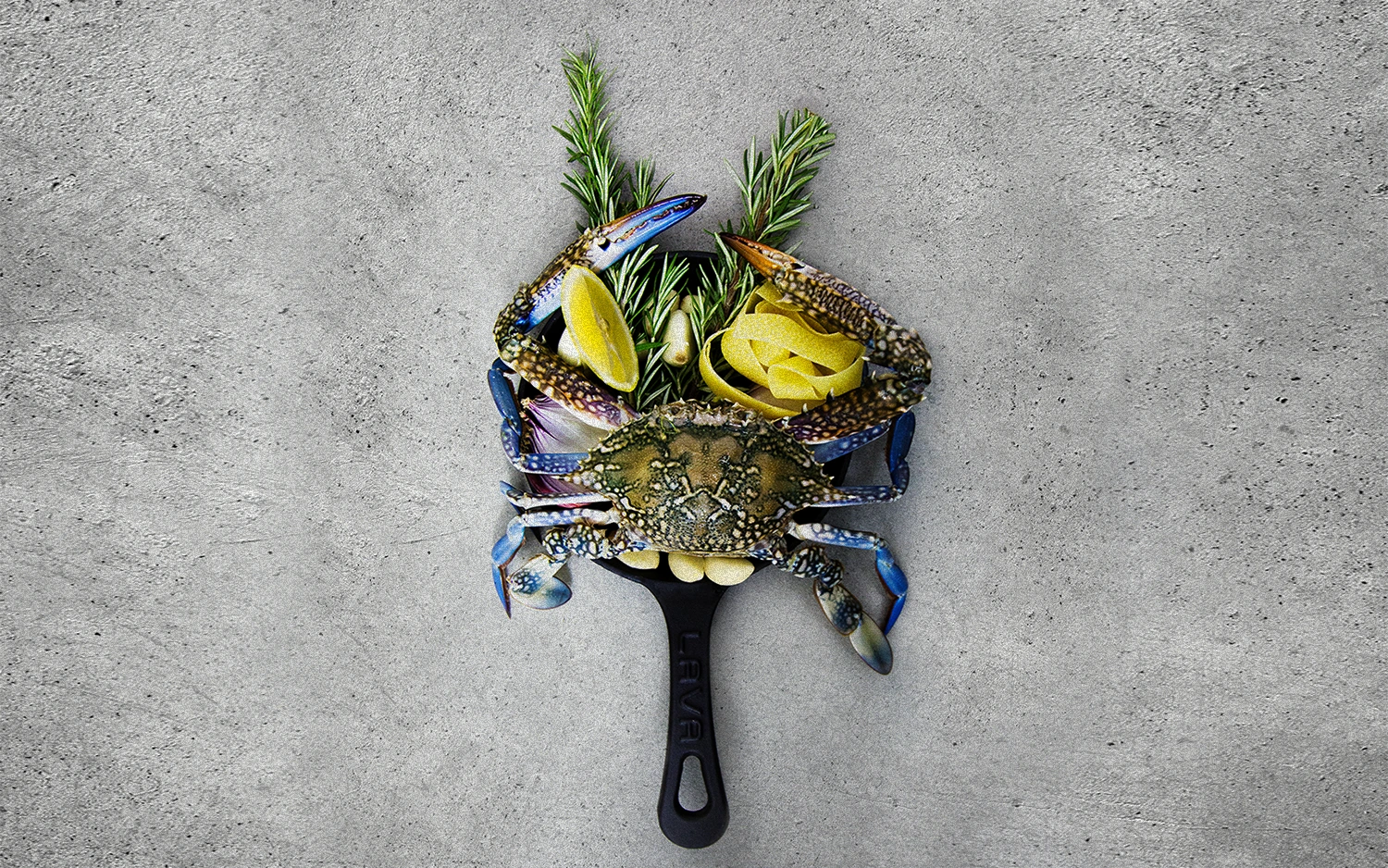
A table. Something to eat. A reason to gather.
The familiar things. Before they disappear.
Since antiquity, images have shaped our perception of reality, conveying information, and expressing a depth of emotion and desire. A few years back I decided to explore the timeline of image, from cave paintings to the art of a.i , examining the philosophical ideas that underpin our understanding of this powerful medium. Drawing on phenomenology, I looked at the ways in which images affect our perception of the world, our relationships with others, and our sense of self. Such context has shifted my work as an art director into consciousness, allowing me to comprehend the mysteries and wonders of the image.
In the dark room, I watch an image come to life.
First, chaos. Colours and shapes.

Then something starts to appear.
Old reels. Empty frames. Violet tones.
The same place. A different afternoon.
Trying to fix a little of life in a photograph.
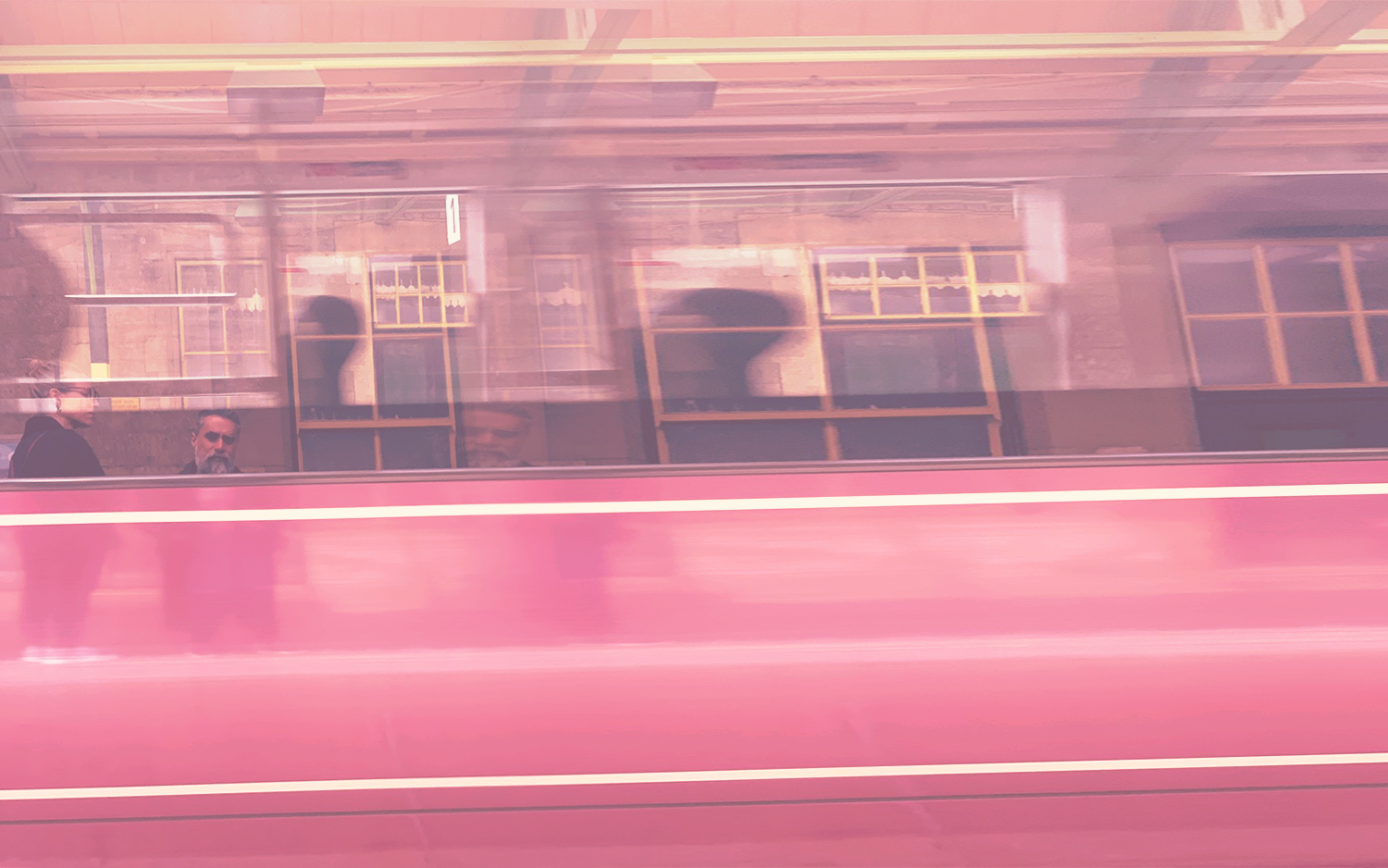
Something I know I’ll never see again.
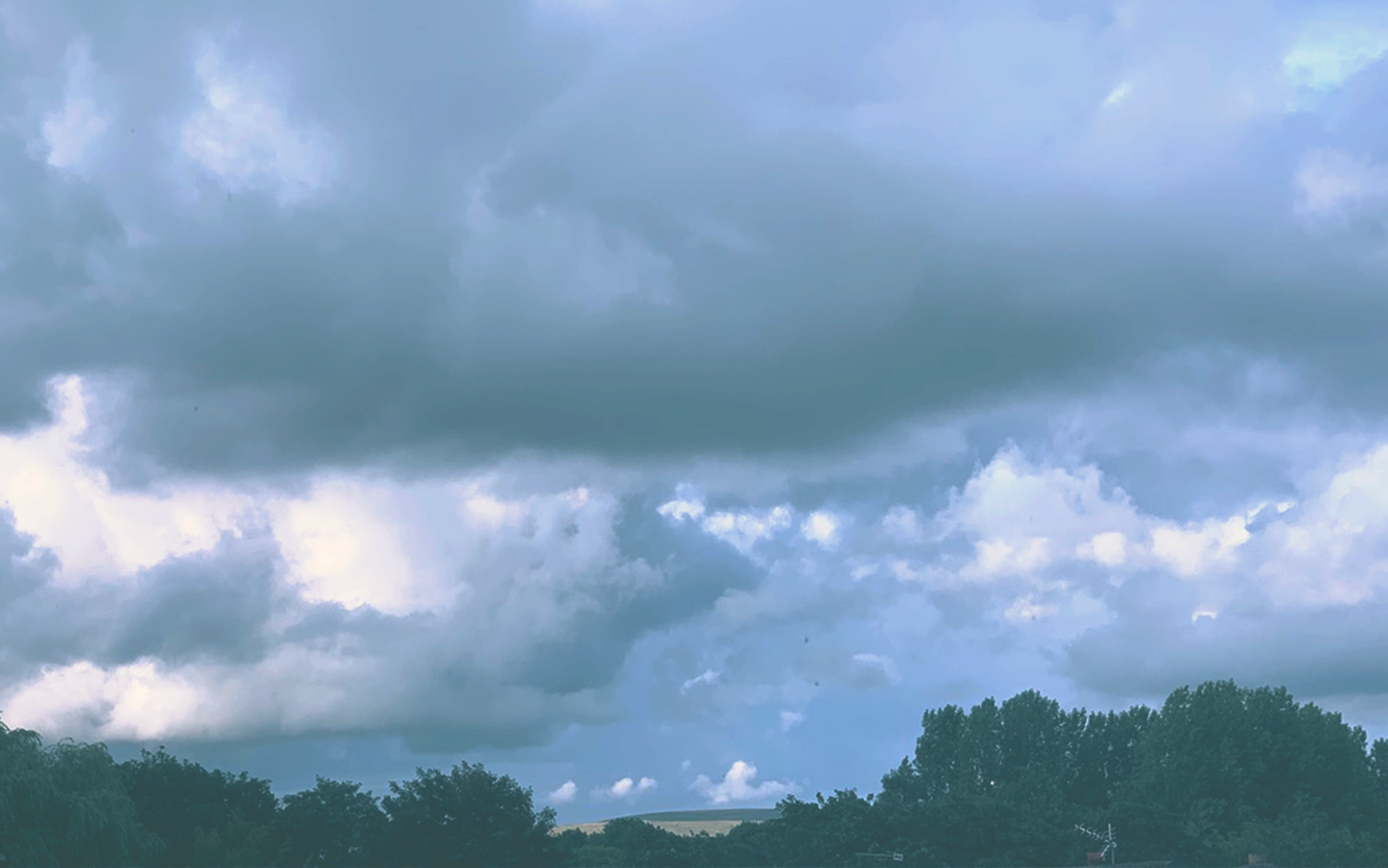
Like a picture of water, I hold on.
A creative department is a kitchen.
The business sends an order. We call it a brief. Someone works the meat. Someone handles the vegetables. Each person has a station, a set of tools and something they know how to do properly.
My job is to get the whole thing to the pass. Good work, on time, with a reason to be there. We are there to serve the business. The craft matters because somebody has to eat.
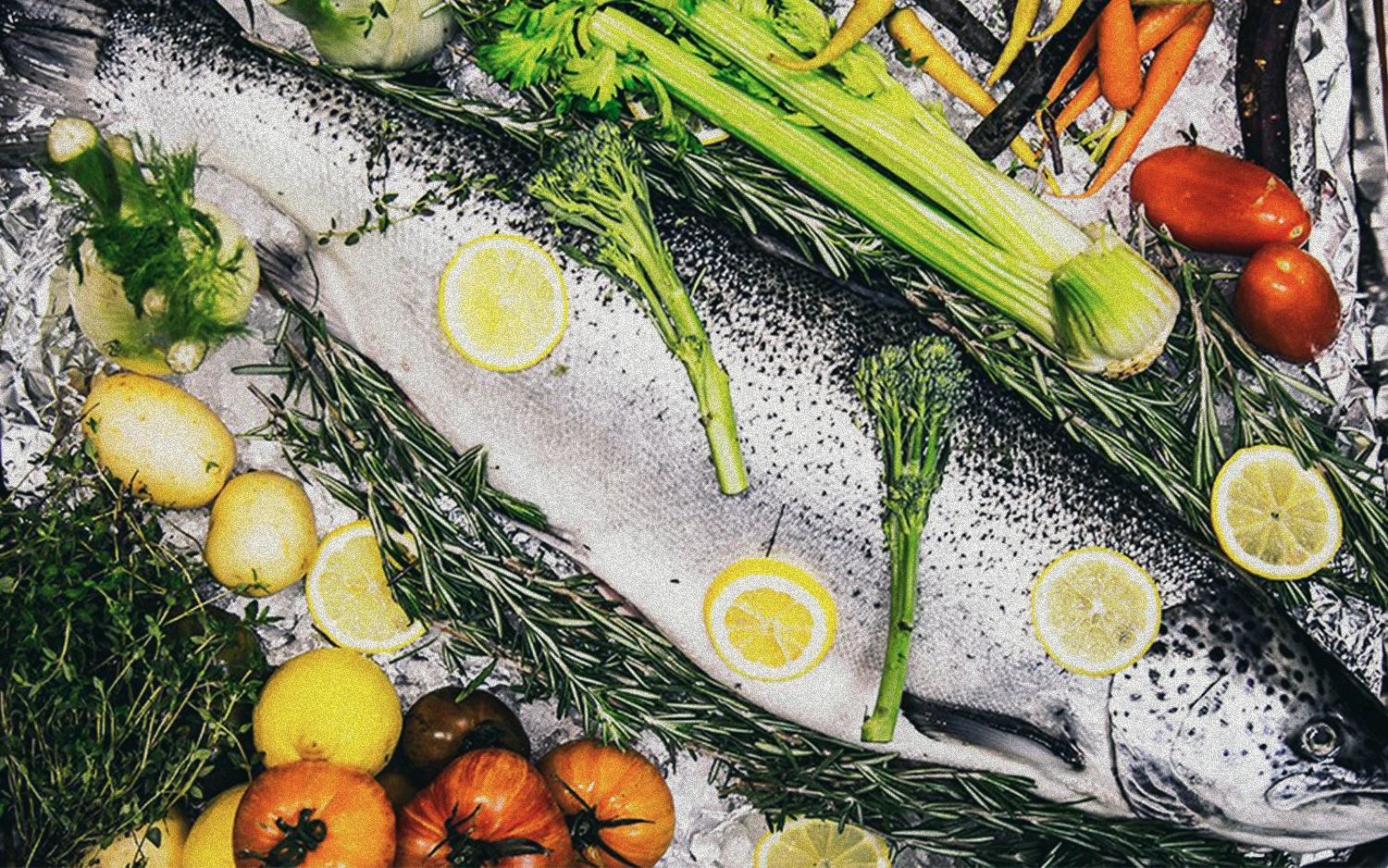
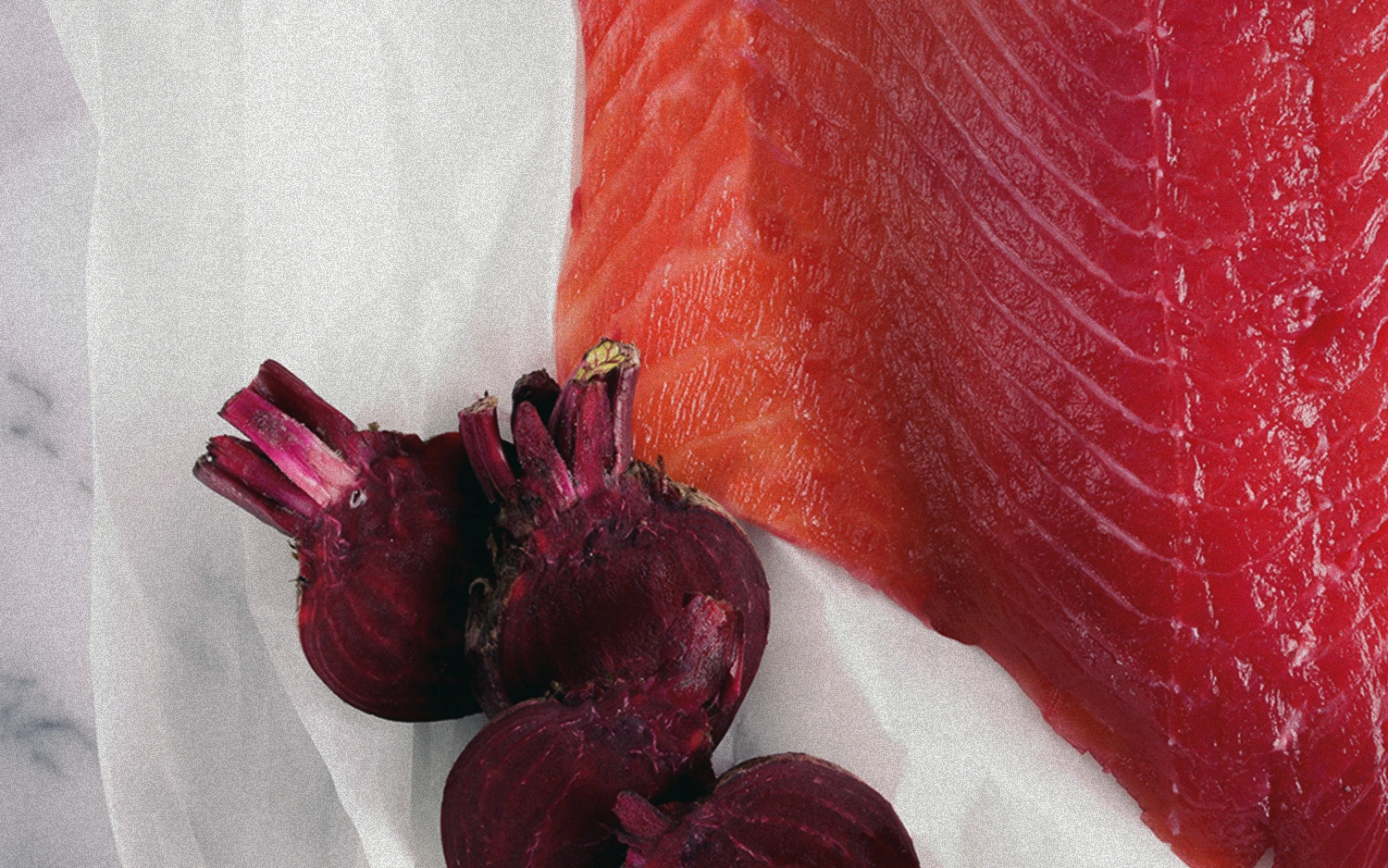
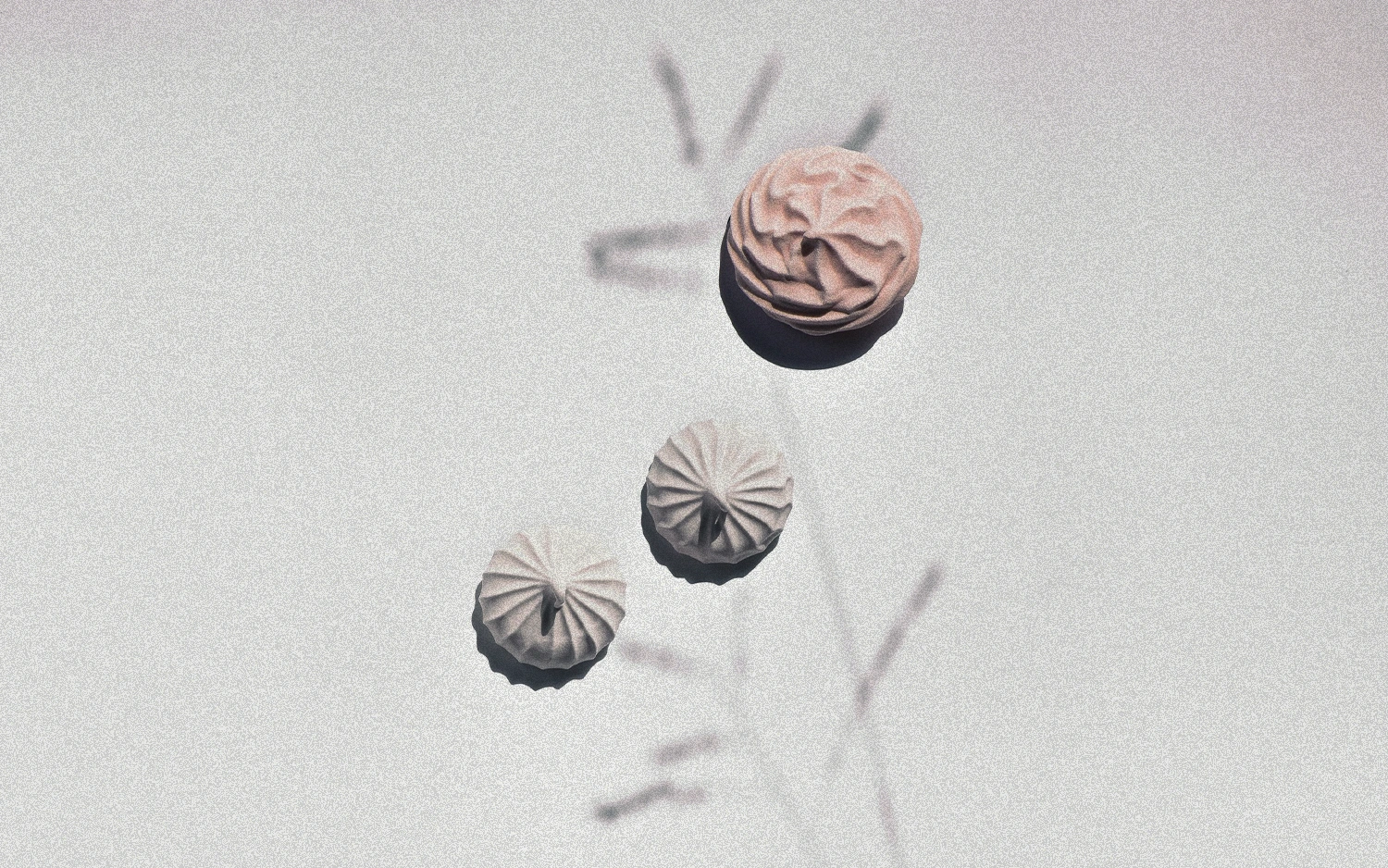
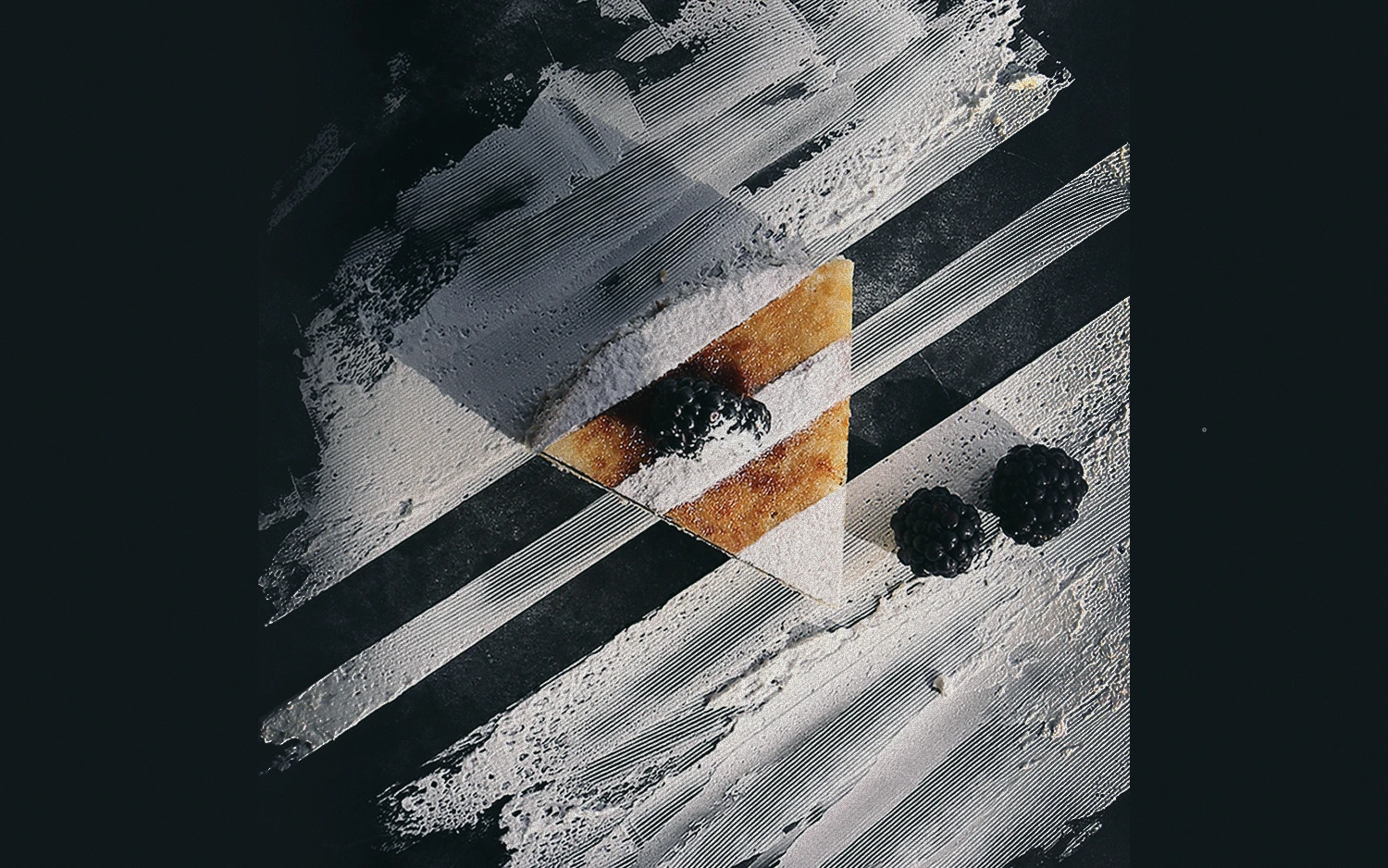
That is what I look for in hospitality photography. The hands behind the plate. The texture of an ingredient. Heat, light, preparation. All the small decisions that arrive together at the table.
I want the photograph to carry that work. Make you look closer. Make you hungry.
Table 4 needs more bread!
Brief just landed. Who’s on it?
Check the plate. Then send it.

Creative Director. Chilean. Based in Dubai.
I give brands a point of view and direct the work that makes it visible. Concept, art direction, brand worlds and campaigns. As Head of Creative at AIR, I work on OOKA. At noon, I led creative teams across five countries, creating work for the UAE, Saudi Arabia and Egypt.
I studied design at the Universidad del Bío-Bío in Chile, then built a career working across cultures and disciplines. Music, illustration, writing and permaculture are part of my personal practice. Different ways of looking. A wider frame for the work.
UNICEF, Noon, Emirates Skywards, Etihad Airways, Qatar Airways, Al Jazeera, Nokia, Microsoft, Manchester United, Coca-Cola, Nissan and Banco Estado.
Bronze Cannes Lion and Clio for UNICEF. Gold Achap and Effie for Banco Estado. Silver Cristal in animation and photography for Al Jazeera. Bronze Mena Cristal for Nissan and Lynx for Future Insurance.
Published in WIRED, Khaleej Times and Brownbook.
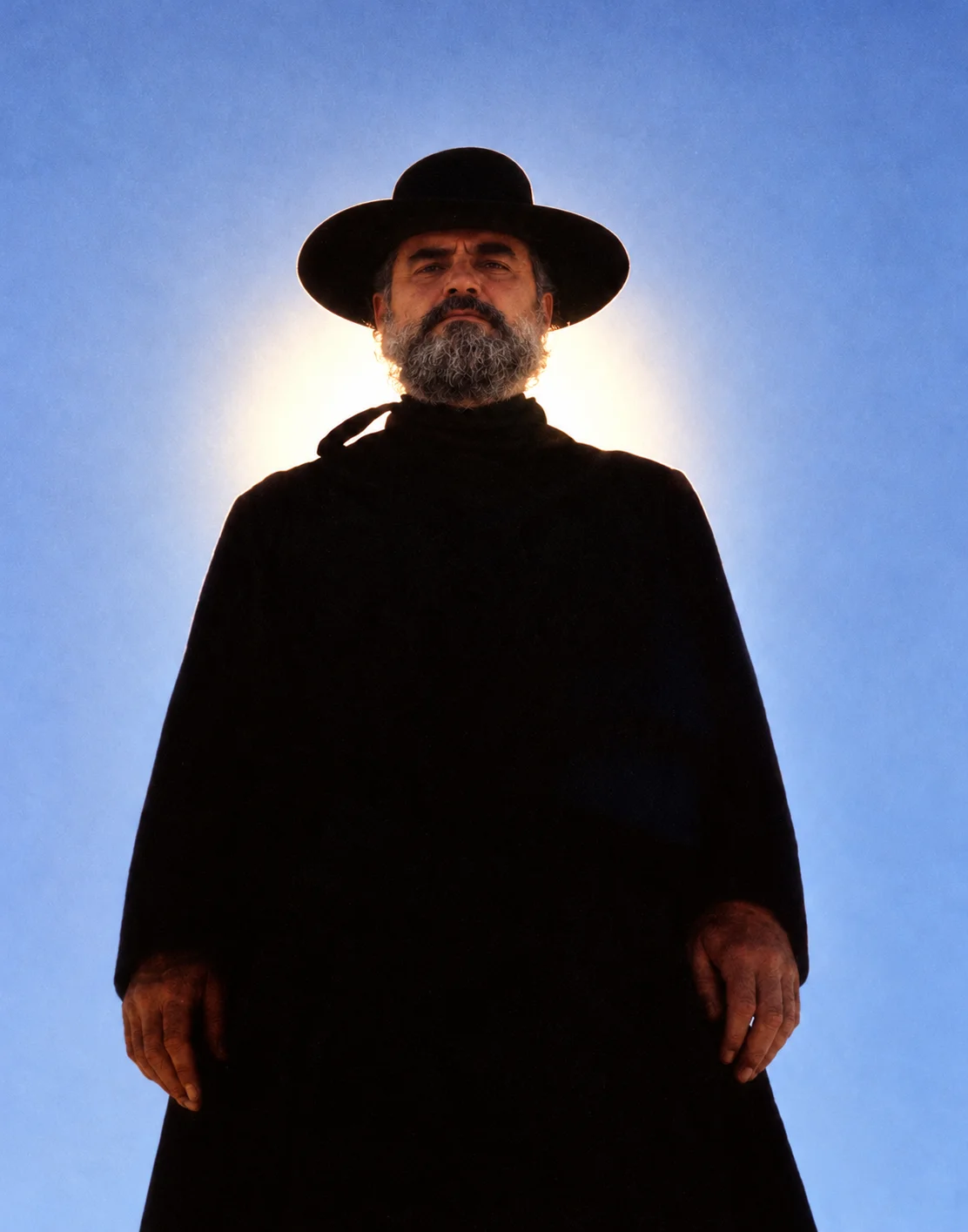
At work, they call me Creative Director.
I still care about both words. I just think they should come with evidence.
Creative: make something.
Director: give it somewhere to go.
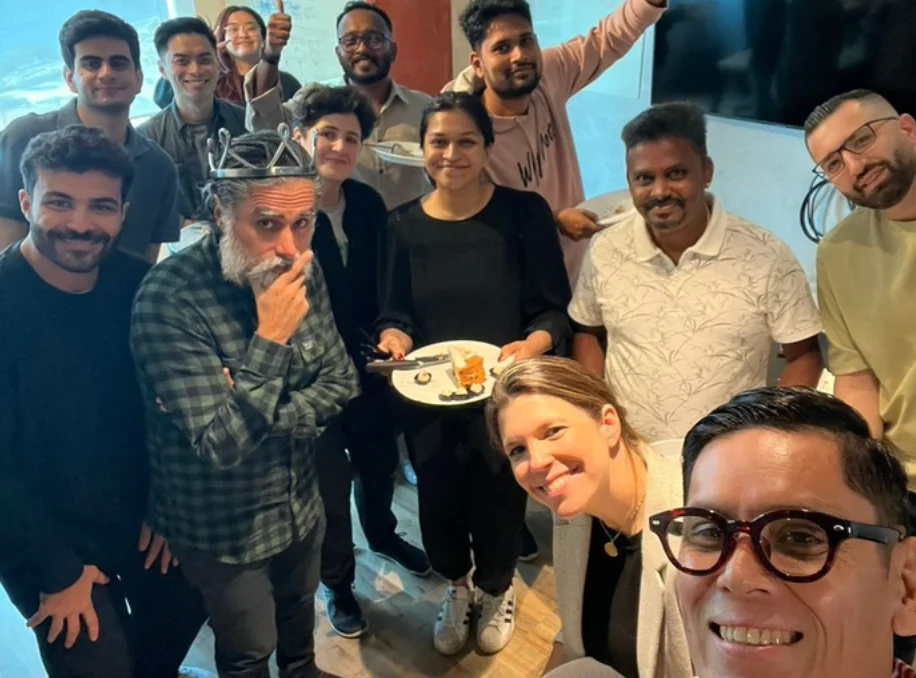
My team once called me Captain. Warmer. Probably more honest. Also a questionable endorsement if you’ve read Moby-Dick. There’s affection in it. Mud on the shoes. People trying to get something made before the whole thing catches fire. There’s also the possibility of one man becoming far too interested in a whale.
I keep that in mind.
Before design, I wanted to study marine biology. Fish, water, rocks. Things that exist without a brand platform. A crab needs no manifesto. A wave has never asked to look more premium.
I liked that honesty. I still do.
At school, a philosophy teacher took my questions seriously. He thought I should follow them into philosophy. When I told him I was going to study graphic design, he looked at me as though I’d announced a future as a napkin.
But I had a reason.
I wanted to understand people through the things we make and the things we want. Images. Objects. Clothes. Records. The strange machinery that turns attention into desire and desire into something you can buy.
Design put me inside that machinery.
I’ve been there ever since. Making images, building teams, shaping campaigns. Drawing things myself. Giving products a language and ideas a form. Learning what happens when something leaves the studio and enters somebody else’s life.
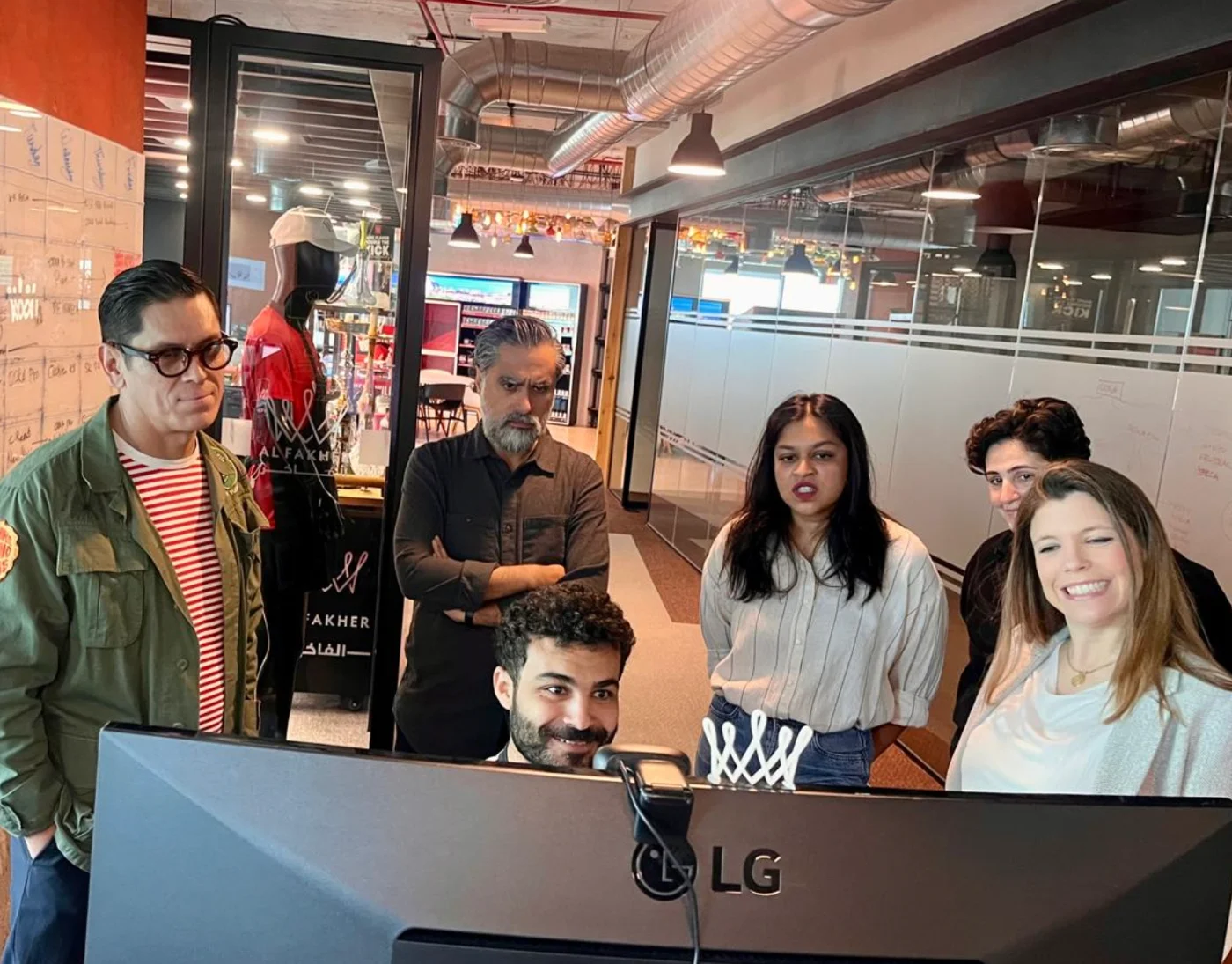
The work moves between brands, illustration, photography, music and objects. I carry things between them. A record can change how I approach a campaign. A drawing can become the starting point for a whole visual world. Something overheard in the street can be more useful than a week of research.
I collect, connect, edit and make. Then I make it again.
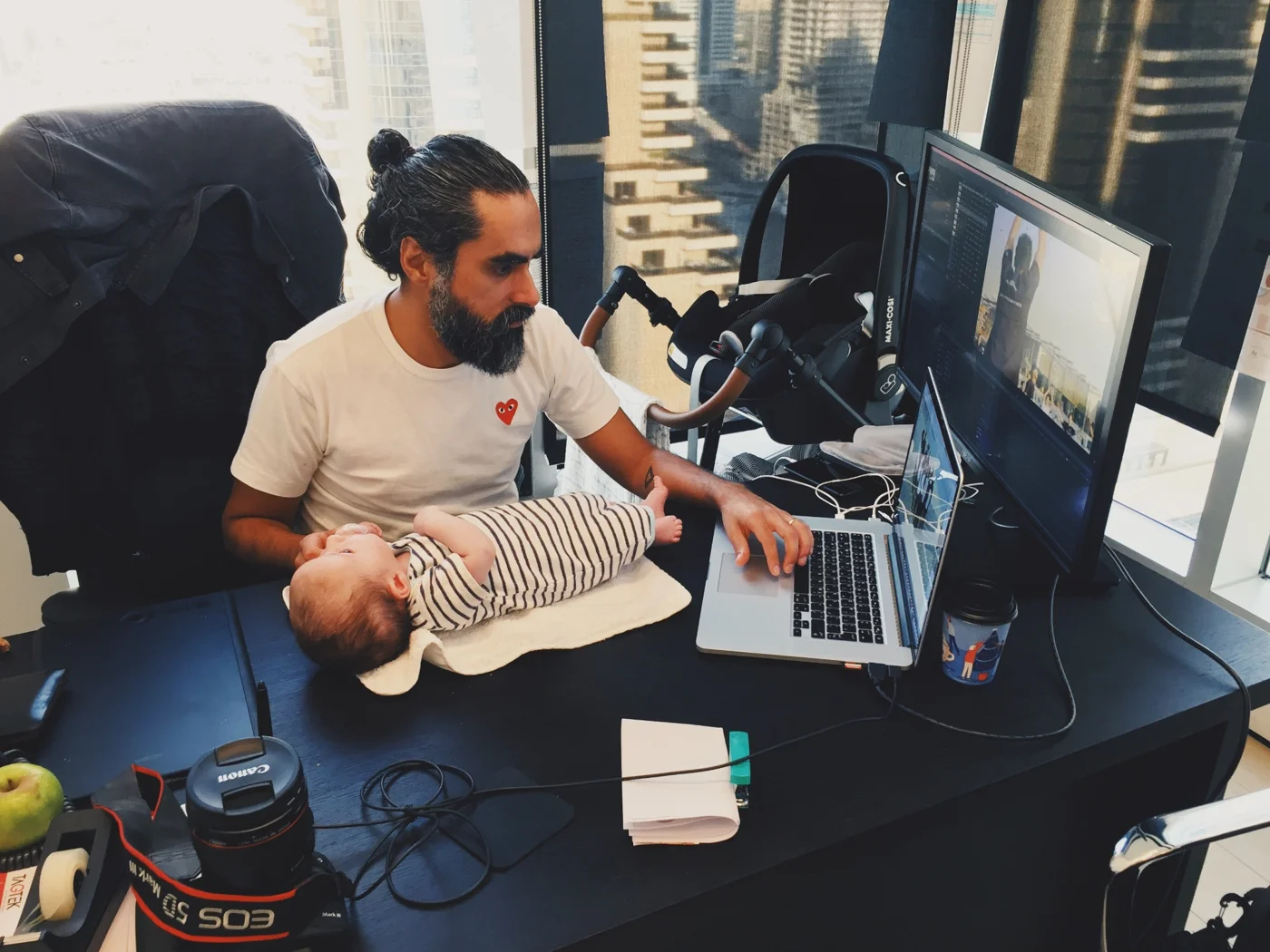
That is the part I trust: the work itself. The decisions you can point to. What you kept. What you removed. What you were willing to fight for.
I know the pleasure of an image coming together. I also know what it can do. A face can make a company feel human. A room can make money look like taste. An edit can change who appears to hold the power.
Knowing the trick comes with a responsibility to admit there is one.
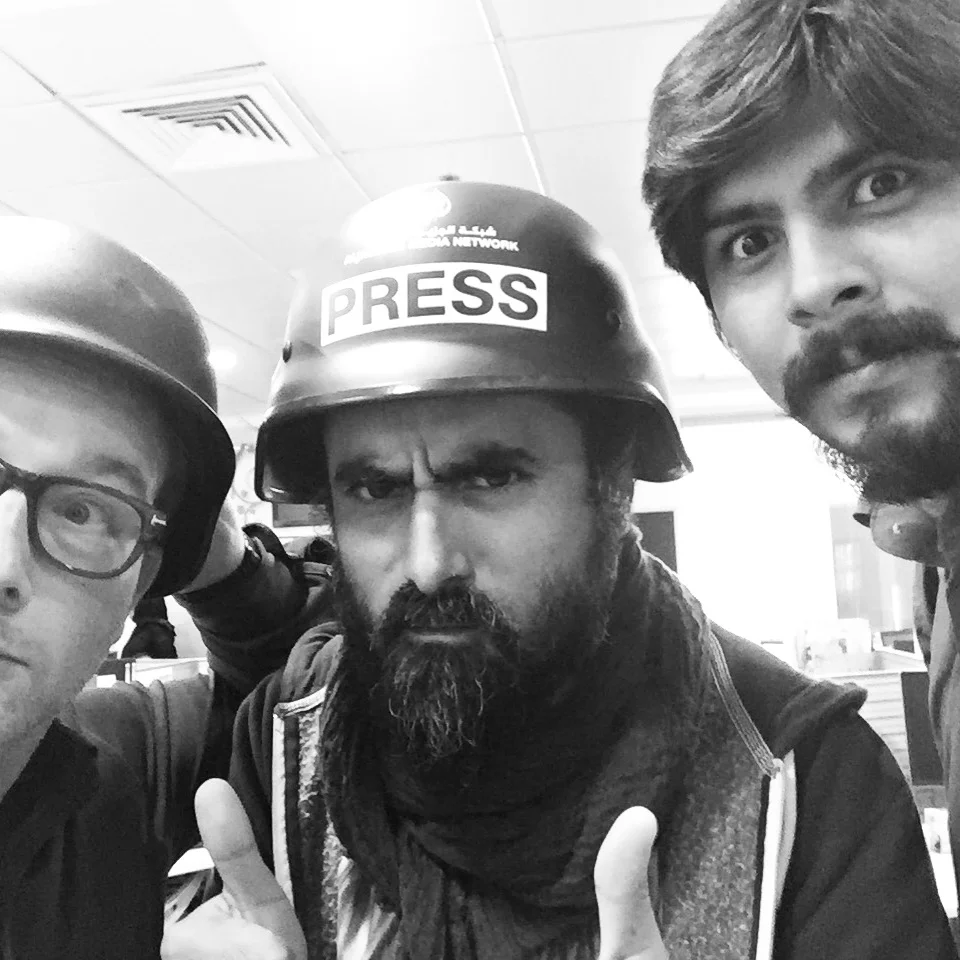
And still, I love images.
They keep people close. Give grief somewhere to sit. Let beauty travel. Carry evidence when somebody would rather we forgot.
They can also turn a person into a type, a target, a number. Something easier to desire, judge or sell.
That tension follows me into the work.
What are we asking people to want? What deserves their attention? What will this thing add to the world once we’re finished presenting it?
This website brings together what I make for others and what I need to make for myself. The commissions, the records, the drawings. Different places to keep working on the same questions.
I’m inside the picture, too.
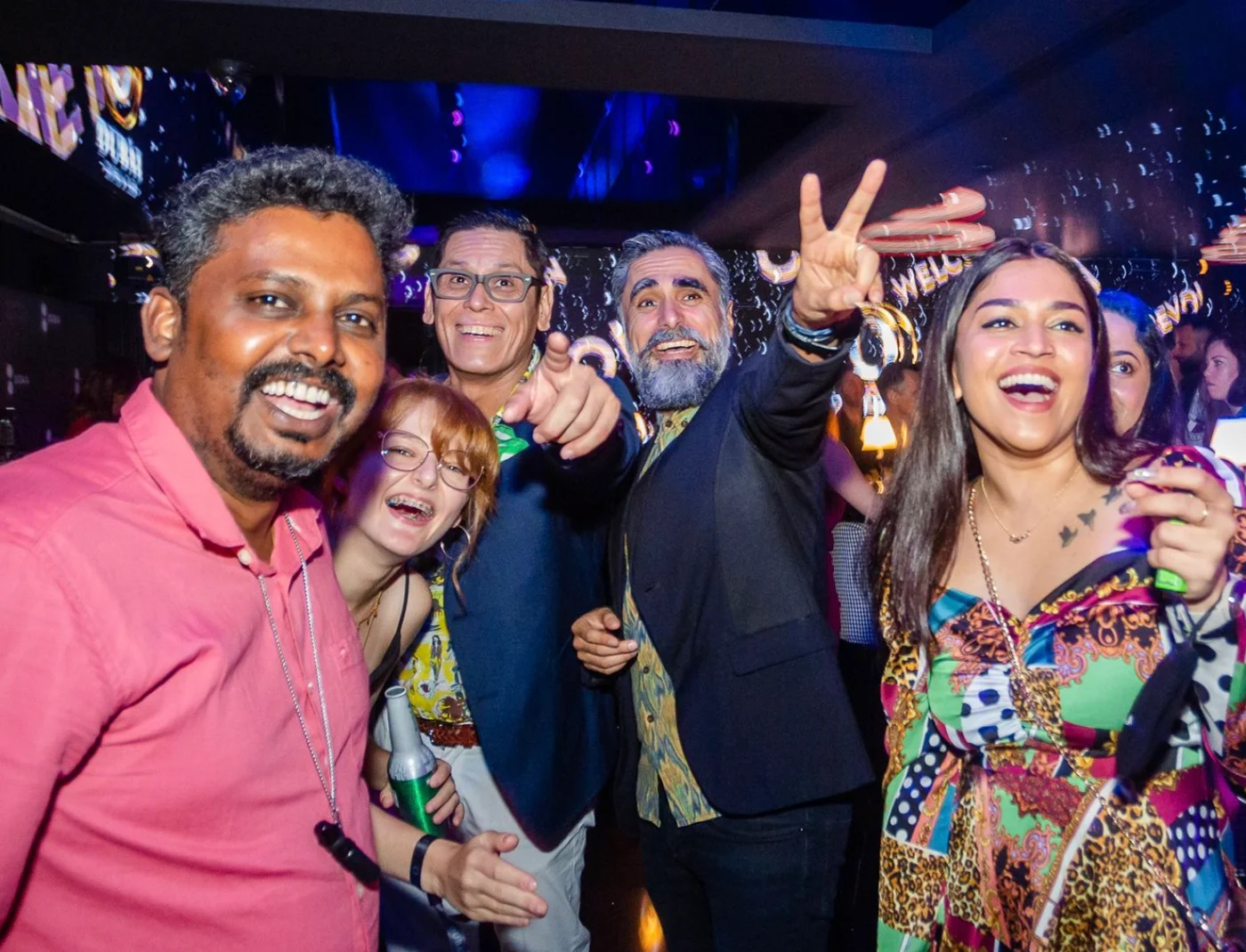
Making things. Looking closely. Asking what the hell we’re putting into the world.
What are we making?
A campaign. A drawing. A record. A place with something growing in it.
Tell me what you need, who it is for and when it has to be ready. We can start there.
A conversation with Vicente. Creativity, God and the ugly.
Back to Practice ←You can spend months choosing a chair.
Then let a random playlist decide how it feels to sit there.
I find that strange.
Music changes my reading of a place. The same table, the same light, the same people. Change the record and something shifts. A conversation finds its pace. Dinner becomes an evening. Or everyone starts shouting.
Sound belongs in the creative conversation from the beginning.
Before choosing a track, I want to know what is happening around it.
Someone ordering their first coffee. Friends arriving late. A waiter explaining a dish. A person trying to hear the person they came with.
Those are the scenes I’m designing for.
Tempo, texture, volume, timing. Each decision has consequences. A beautiful song can still be wrong for the room.
“Something upbeat” tells me almost nothing.
Neither does “premium.”
What kind of energy? Whose idea of sophistication? Where are we? What does this place have to say?
I approach sound with the same questions I bring to art direction. There needs to be a reason behind the choices. Something specific enough to recognise, with enough range to keep living.
A place should have its own ears.
I make music as La Internacional de San Antonio. Old records, samples, my own voice, family, distance and the sea.
Building tracks makes me pay attention to small decisions. How long a note stays. Where a voice enters. What happens when the bass disappears.
That attention follows me into commercial work.
What plays after this? When does the room need more movement? When should the music step back?
A playlist can look convincing on a screen. I want to hear what happens when people arrive.
In our rock band, my brother, friends and I played alongside an AM radio. I turned the dial while we played. News, callers, rural stations. Another voice entering the room without asking.
It taught me to listen to what was already happening.
I still think about that. The cups, the conversation, the kitchen, the street outside. A place already has a rhythm before we add anything.
Sometimes I want a dry snare and a trombone.
Sometimes a familiar record.
Sometimes the best decision is to turn it down.
People bring plenty of sound with them.
OOKA takes shisha into a pod-based, charcoal-free format. My role is to give that change a creative world people can understand and connect with.
As Head of Creative at AIR, I work across concept, art direction and launch campaigns. Technology gives us the product. People, their habits and the way they gather give me the story.


THE OBJECT CHANGES.
THE CULTURE DOESN’T DISAPPEAR.
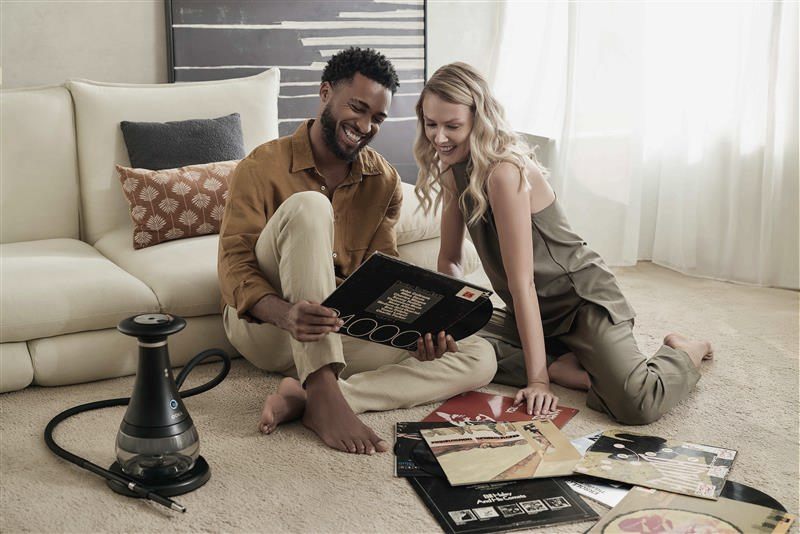

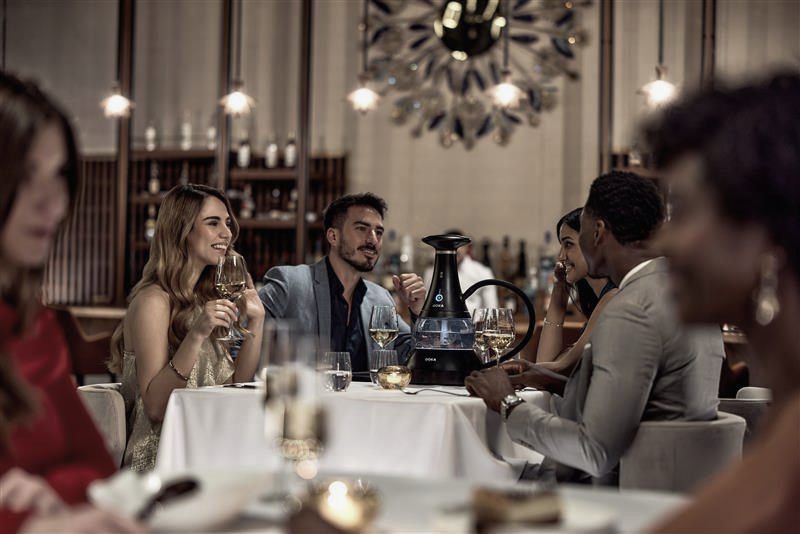
OOKA PRO brings the charcoal-free ritual to hotels, restaurants and cafés. At the table. Part of the evening.
MADE FOR THE WAY
WE COME TOGETHER.

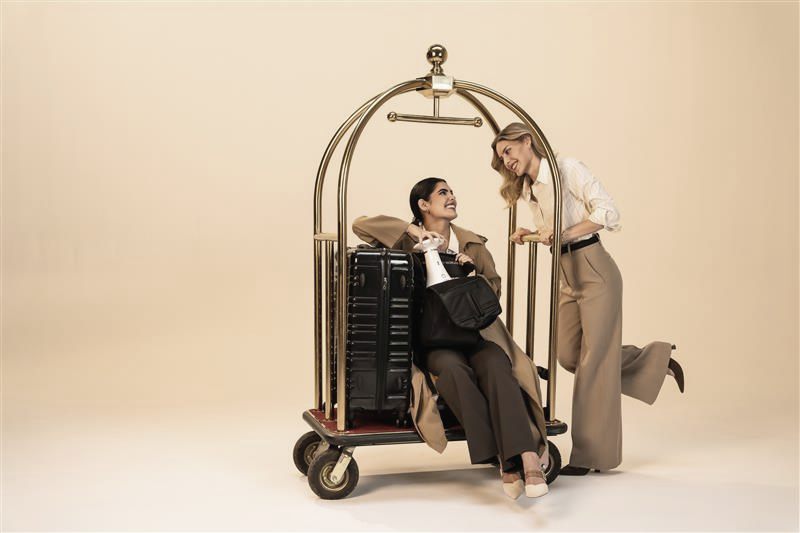
Check in. Slow down. A familiar ritual, somewhere new.
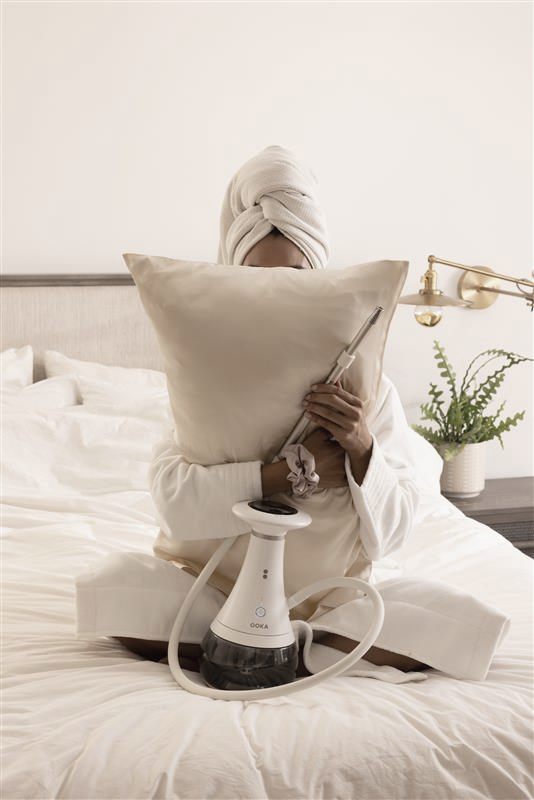
NOT JUST A PRODUCT.
A NEW PLACE IN EVERYDAY LIFE.
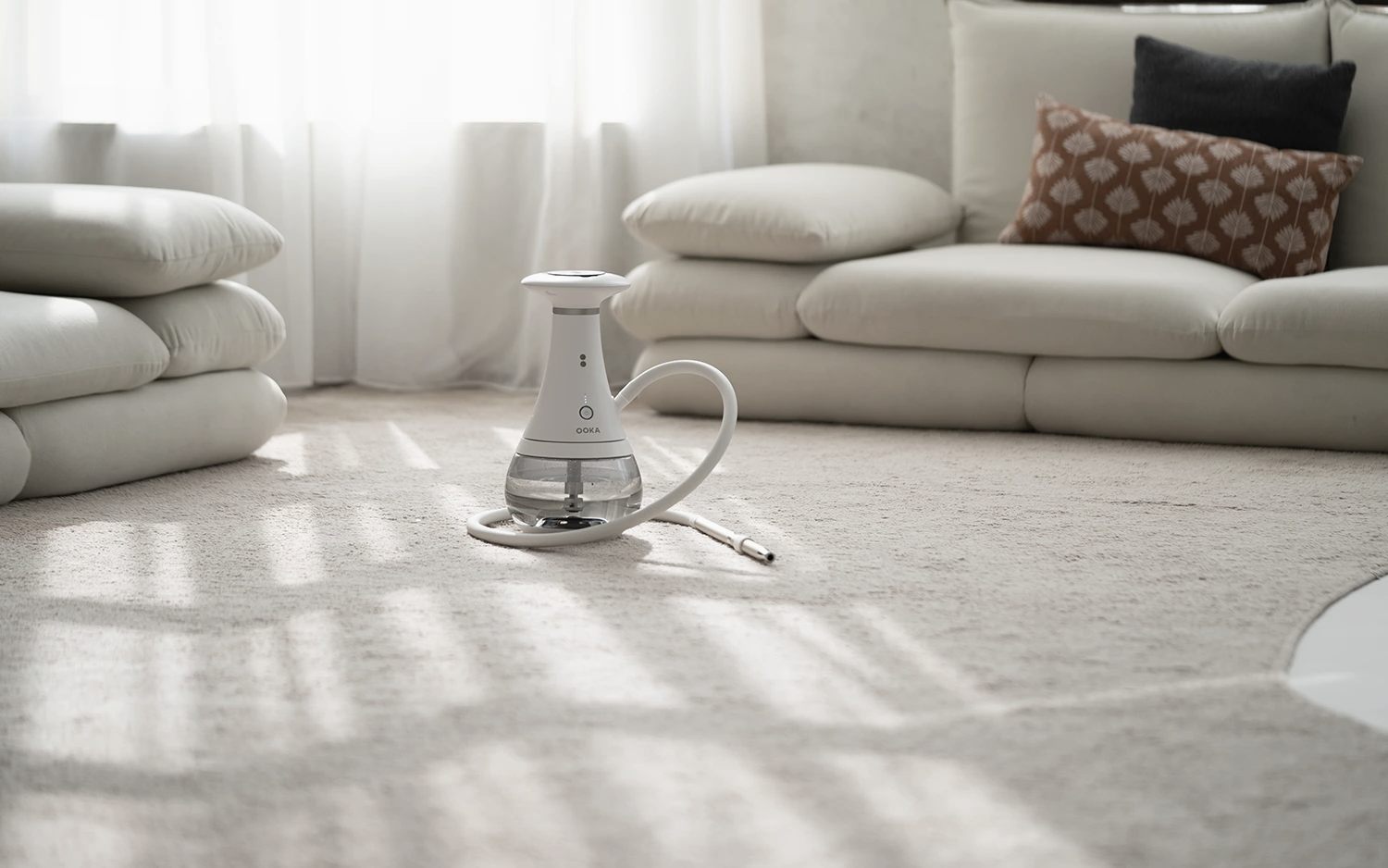
No charcoal. A different place in the room. The carpet setting makes that change visible.
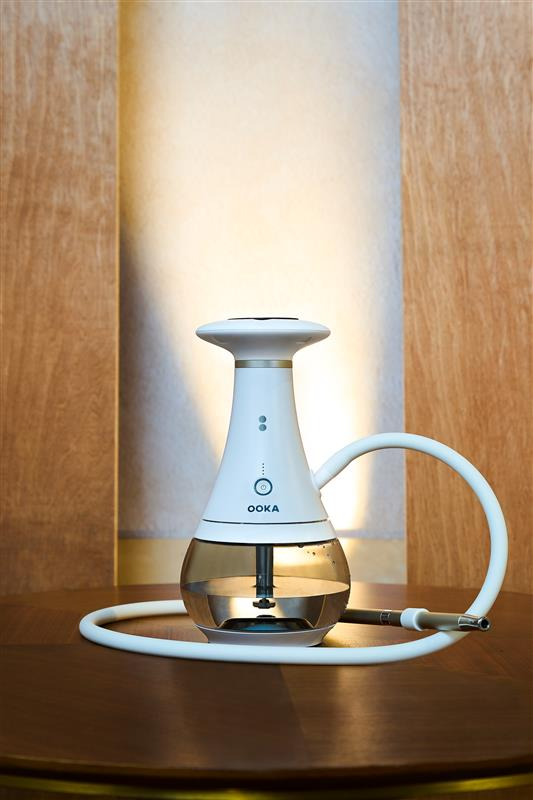
Paul Dawson. The thinking behind the product.
Understanding OOKA.
Millions of products.
There still needs to be a point of view.
Ramadan has a rhythm. Anticipation, gathering, giving, Eid. The work had to move with it.
From an app icon to a delivery van. Every surface had a job.
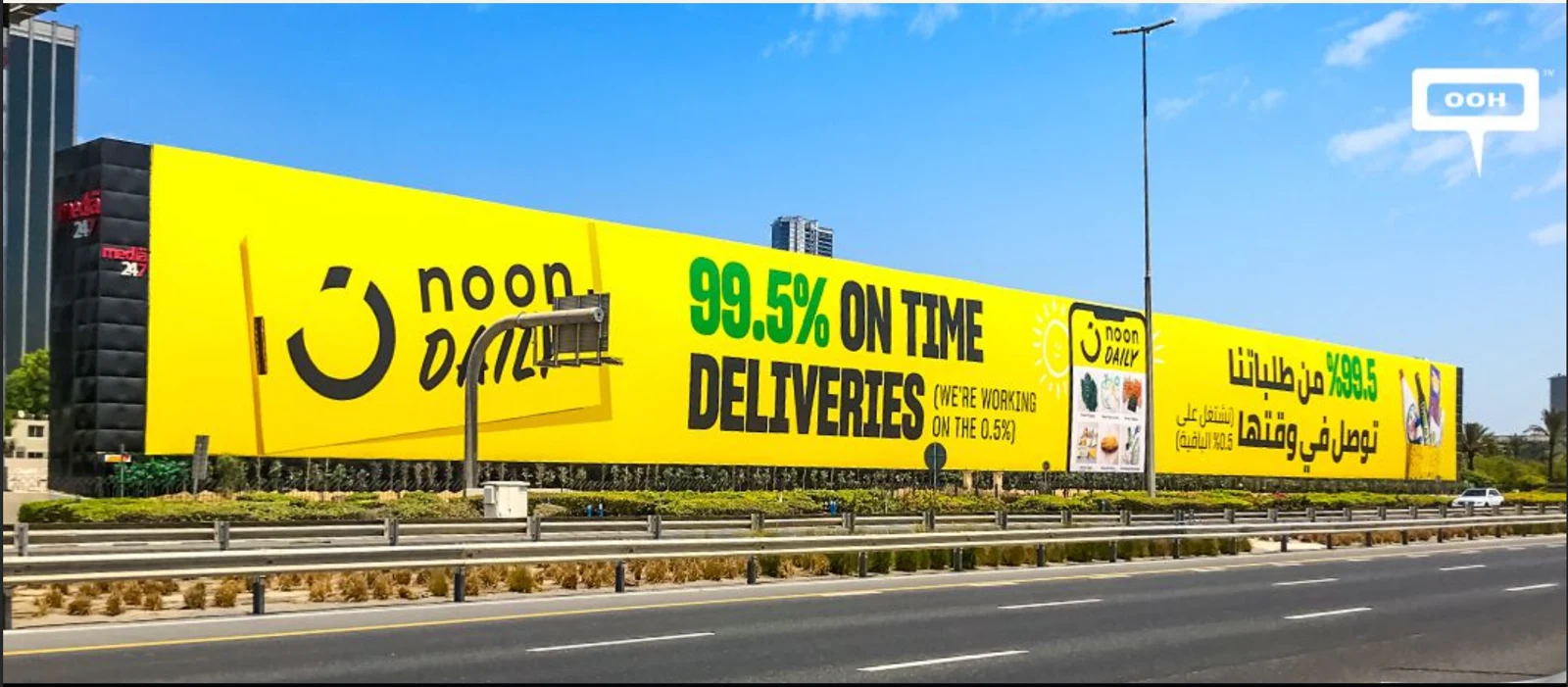
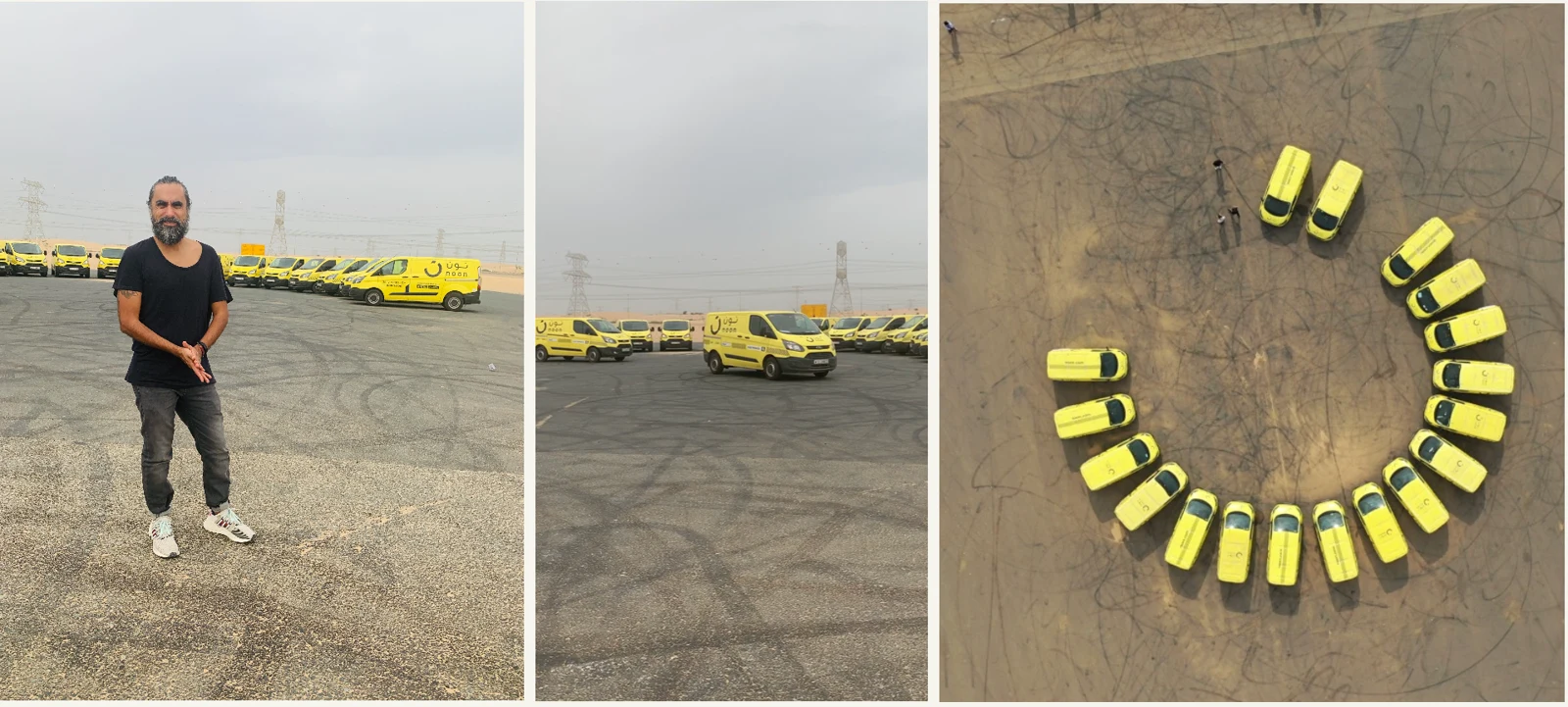
My job was to give the work direction. Then get into the details myself.

Campaigns, commerce, words, images. I worked wherever the idea needed me.
A story with every bite.
A café where news and food meet. In Doha, Al Jazeera Media Café brought dining, a museum, a shop and an interactive news studio into one place.
We took the news to the table. Miniature people. Real food. Stories unfolding between the plates.
My role: Senior Art Director, working with an international team to turn that idea into photography, print, outdoor and film.
Silver Cristal / Animation
Silver Cristal / Photography

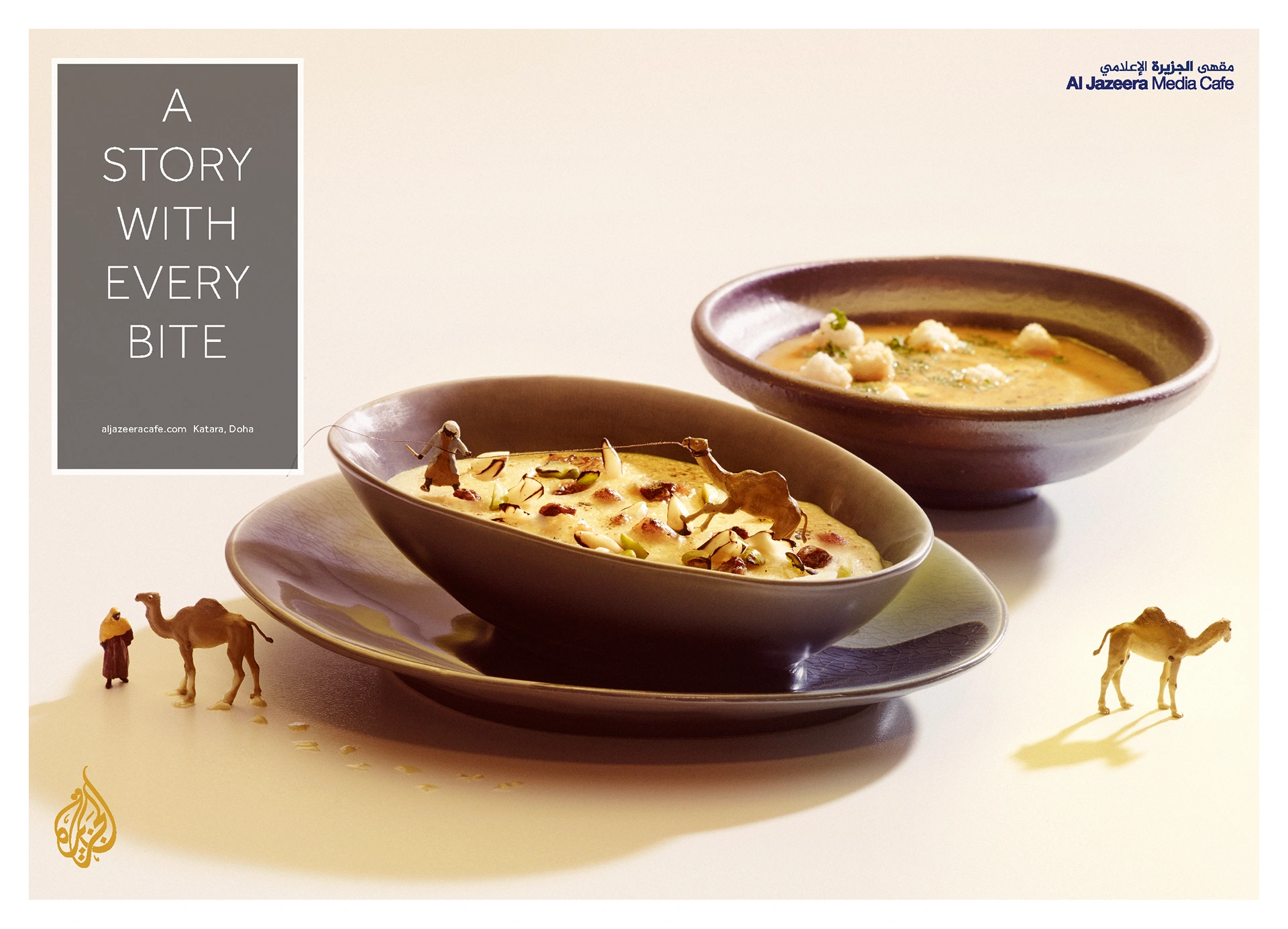
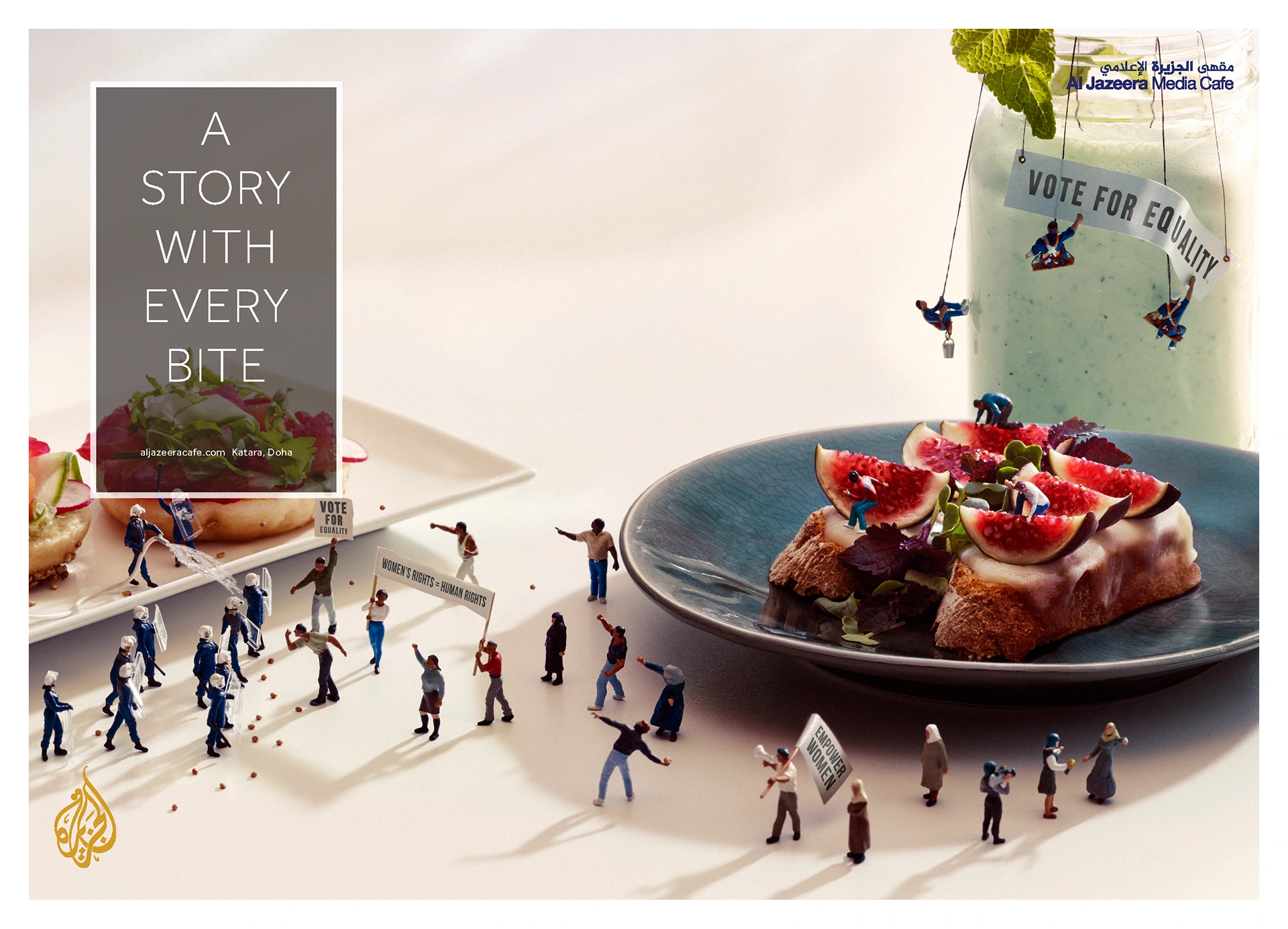

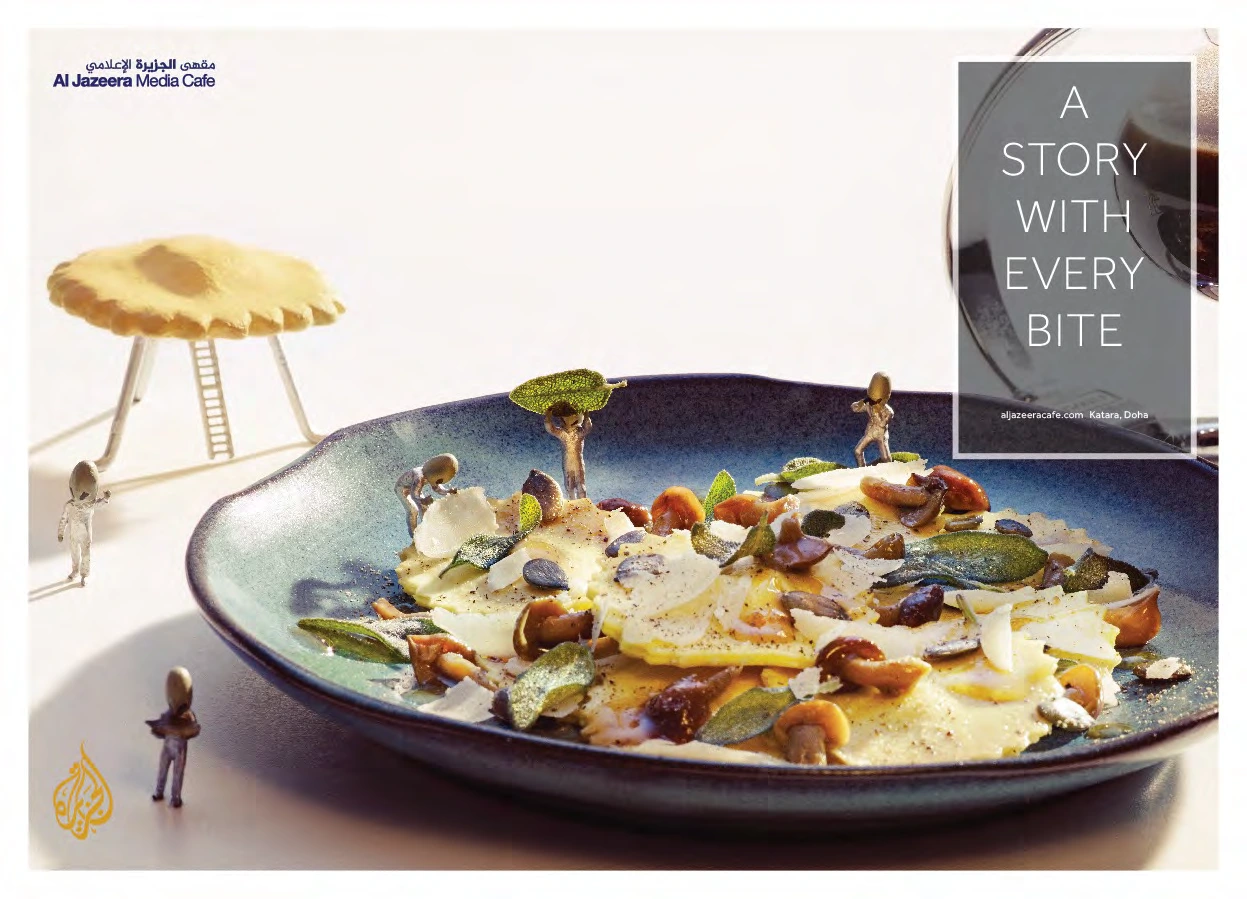
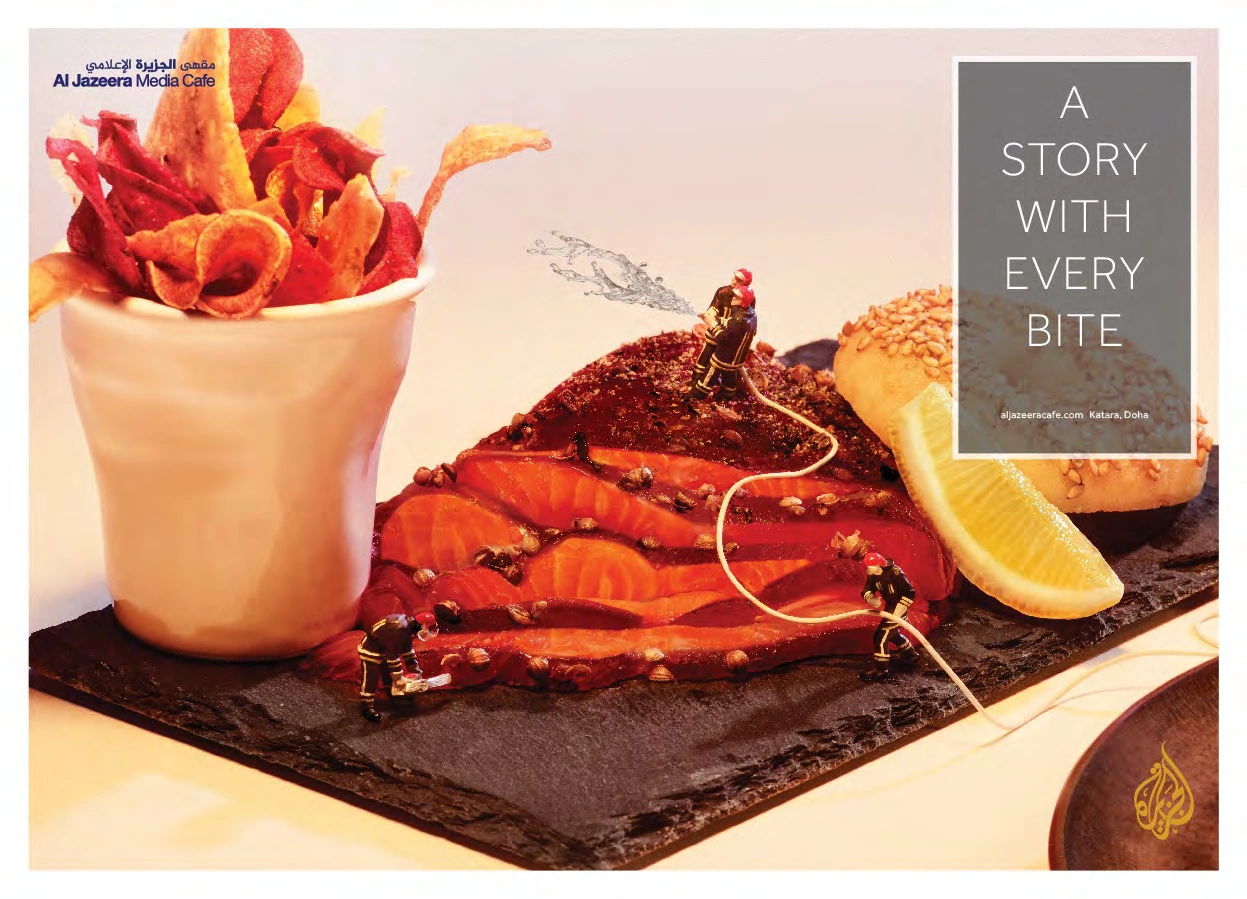
The Paris-based artist duo Minimiams created the miniature scenes around the chef’s food. The figures were only 1.7 centimetres tall. A small movement could bring a scene down.
After two months of planning together on Mural, the team met in Amsterdam for the shoot. Access to the set stayed limited; everyone else followed a live feed on phones and tablets.
We built one large table containing all the stories. The finished image was designed as a two-metre-high, seven-metre-wide artwork for the café. Individual scenes became the press and outdoor campaign.
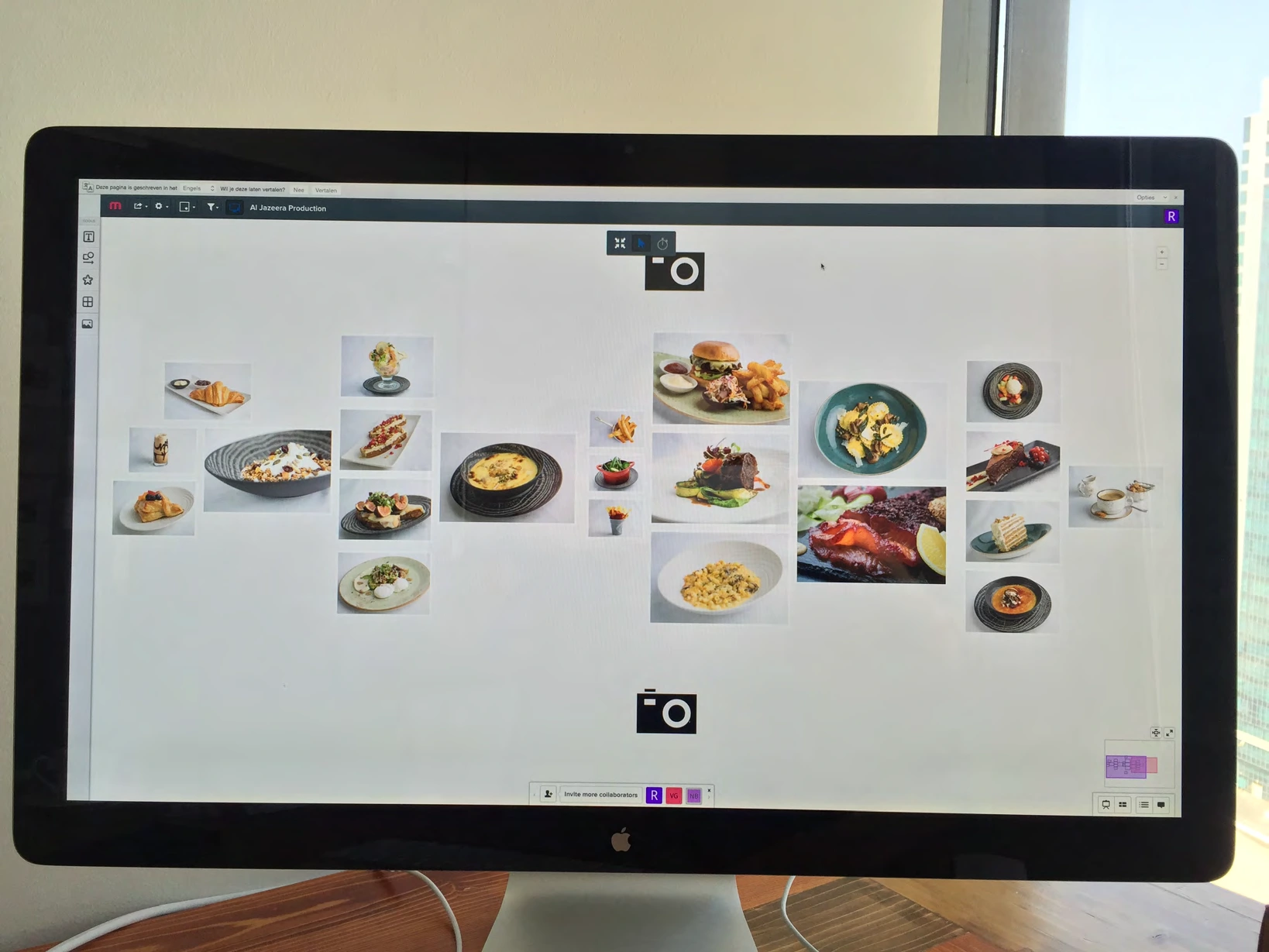
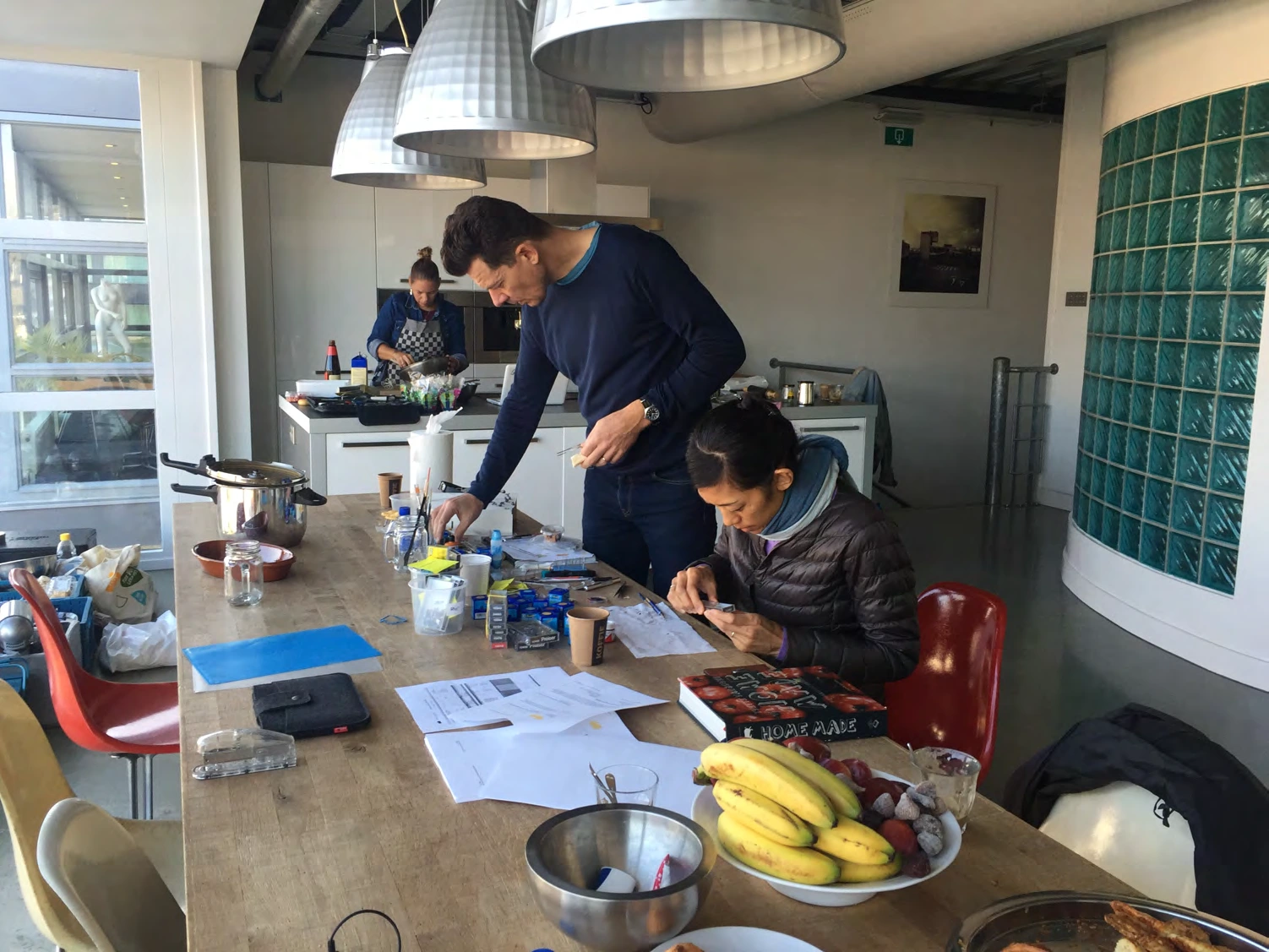
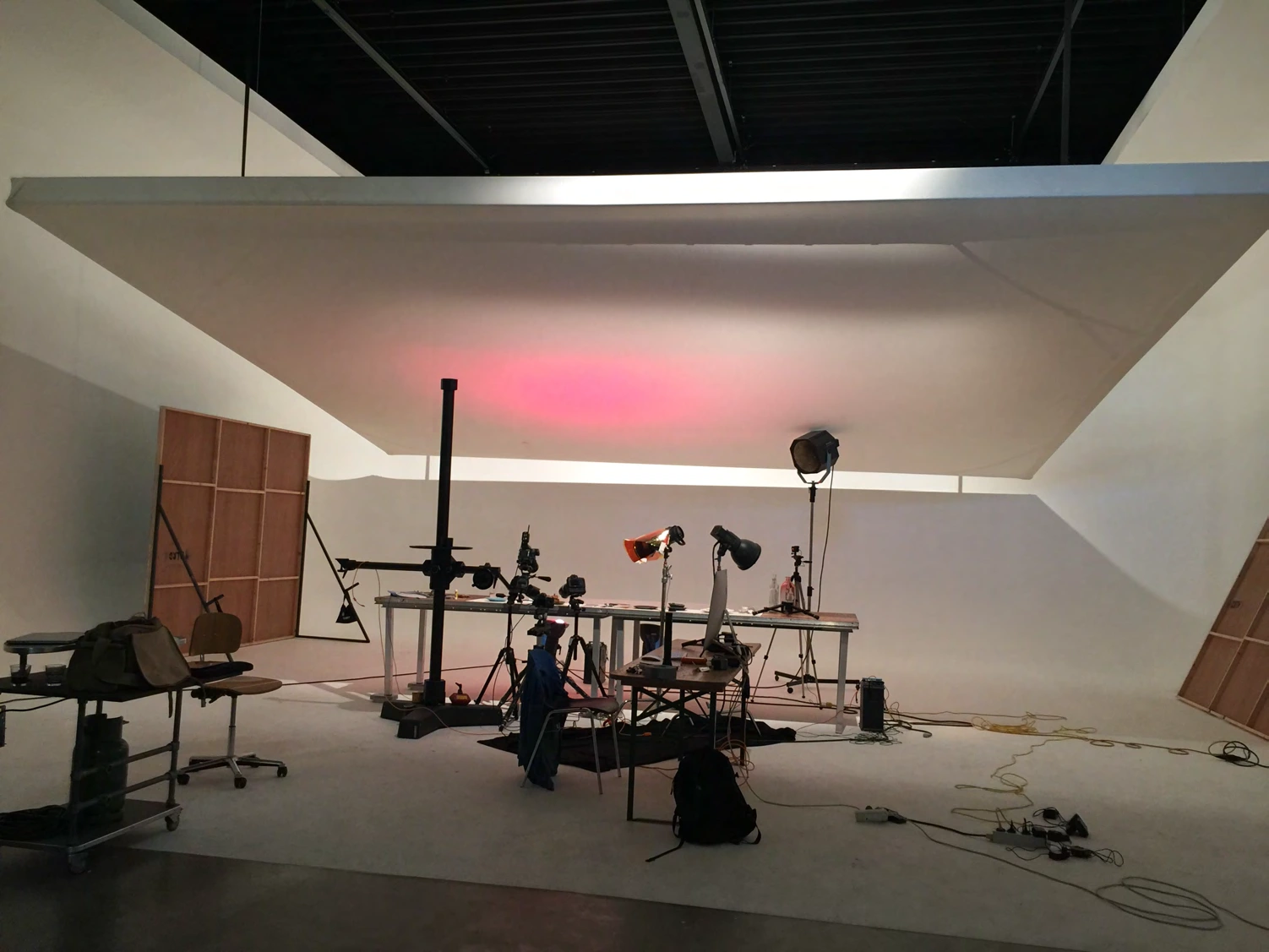
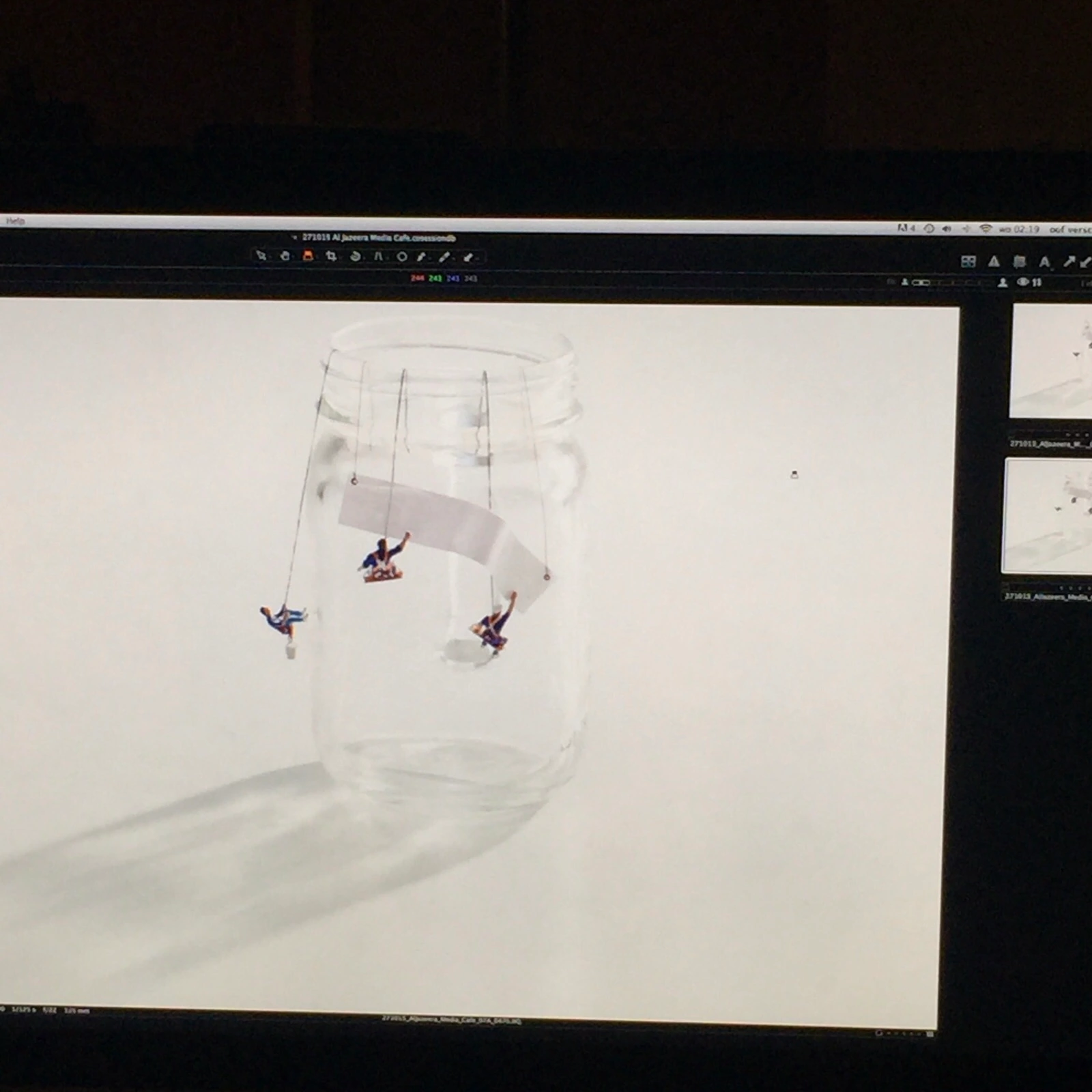
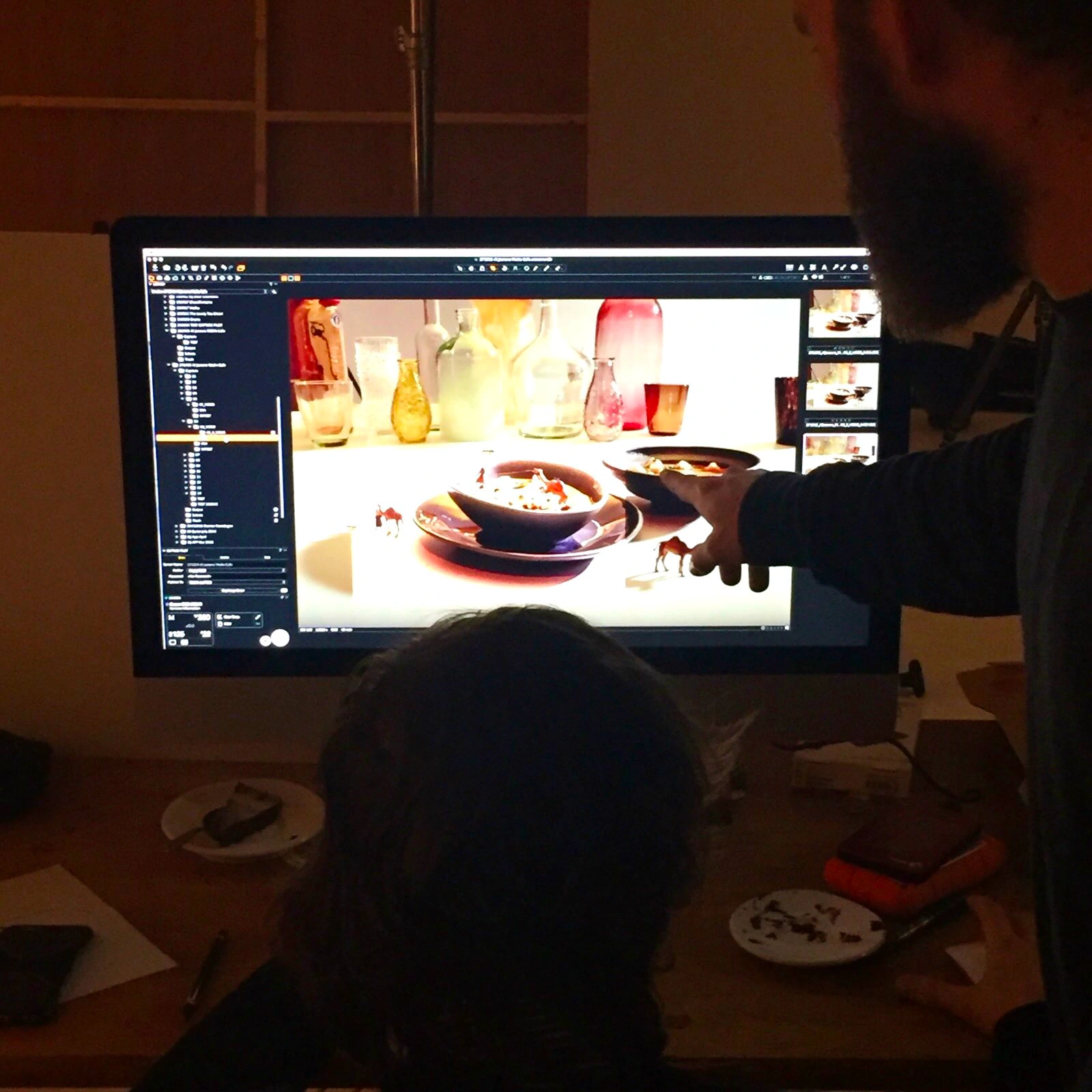
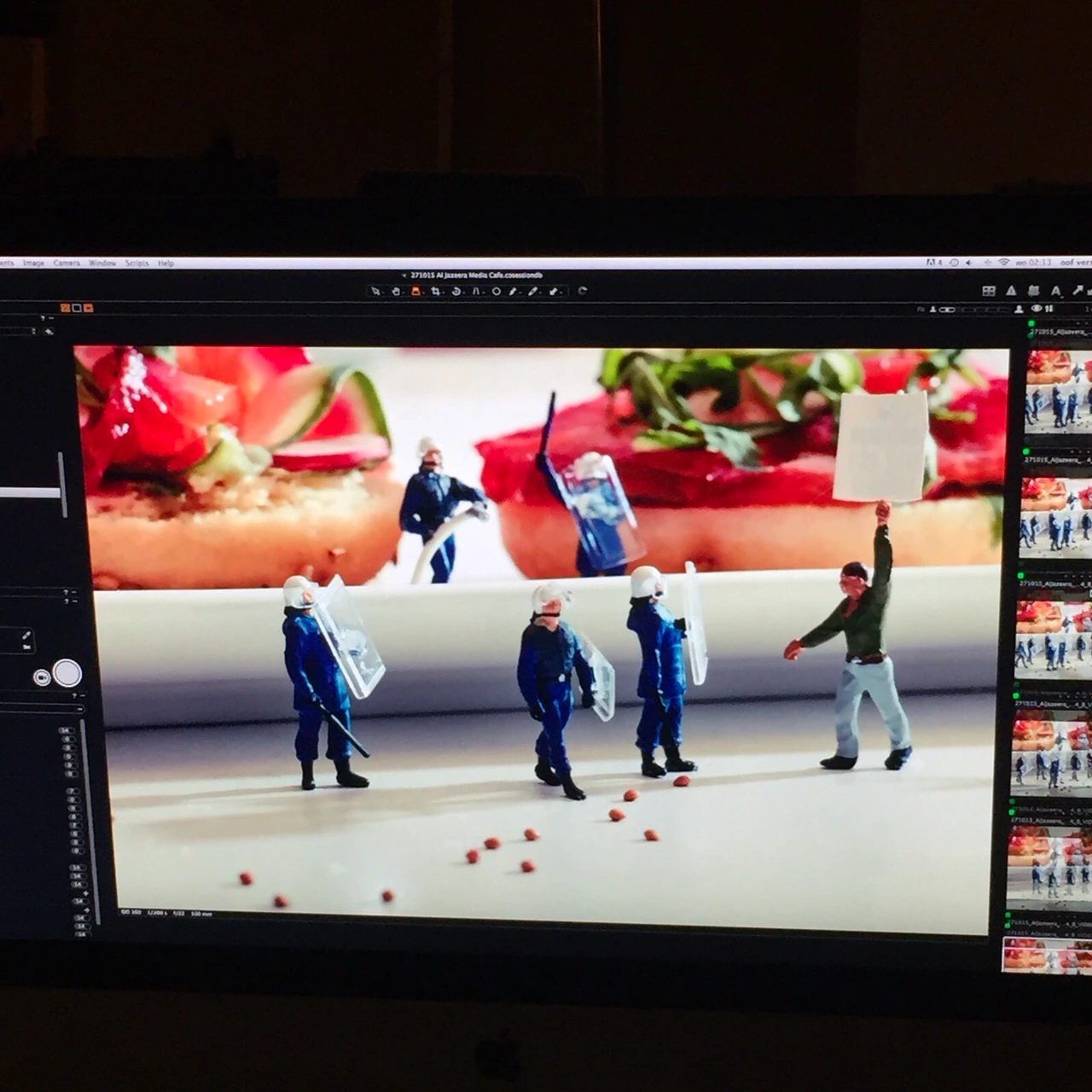
Four cameras worked on the same scenes. A Hasselblad captured the press and outdoor images. Three Canon 5Ds photographed different angles for the film.
Ambassadors used those images to build a 2.5D parallax film for cinemas in Qatar and other screens. The camera moves through a world made from still photographs.
Senior Art Director / Vicente Gutiérrez, TT
Executive Creative Director / Nathalie Brähler, 60 layers of cake
Miniature scenes / Minimiams, Paris
Photography / Oof Verschuren
2.5D parallax film / Ambassadors
Paris + Amsterdam + Patagonia + Mumbai + Dubai + Doha
Cristal Europe / Silver — Animation
Cristal Europe / Silver — Photography